From Sand to Suburban Steel: Jaisalmer’s Rail Revival
Desert Finally Gets Daily Delhi Link
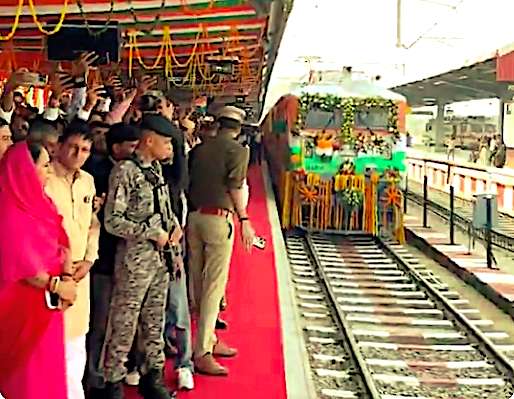
Jaisalmer: Union Minister for Railways, Information & Broadcasting, and Electronics & Information Technology, Ashwini Vaishnaw, along with Union Minister of Culture & Tourism, Gajendra Singh Shekhawat, today flagged off the inaugural run of the new daily Jaisalmer–Delhi (Shakur Basti) service from Jaisalmer station. Responding to decades of public demand, Vaishnaw announced on the spot that the train will permanently run as Swarn Nagari Express — a tribute to Jaisalmer’s title as the “Golden City”.
The overnight service, departing around 23:00 and reaching Delhi the next day near 12:45, connects western Rajasthan to the capital via Ramdevra, Phalodi, Jodhpur, Degana, Makrana, Jaipur, Alwar, and Rewari. Until yesterday, the same journey required multiple changes and routinely took 18–22 hours.
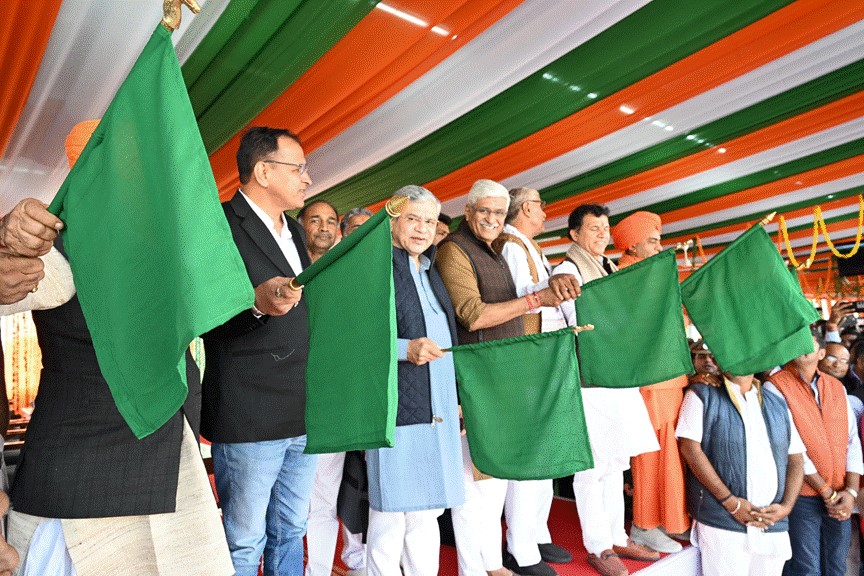
Vaishnaw framed the launch within the largest rail investment push Rajasthan has ever seen: projects worth ₹55,000 crore are currently underway, including the proposed Anupgarh–Khajuwala–Bikaner–Jaisalmer–Barmer–Bhabhar line. The state’s annual rail budget has risen from an average of ₹680 crore before 2014 to nearly ₹10,000 crore today. Visible outcomes already include six pairs of Vande Bharat, one pair of Amrit Bharat, eight new train services introduced in the last six months, and the ongoing redevelopment of 85 stations at a cost of ₹4,000 crore. Jaisalmer station itself has been rebuilt at ₹140 crore and is now substantially complete.
During the visit, the minister issued four “war-footing” directives: completion of the Ramdevra–Pokaran section via Bhairav Gufa and Kailash Tekri so that all trains stop at Pokaran; a second entry gate at Jaisalmer; an expedited coaching depot; and priority track renewal between Jaisalmer and Jodhpur.
The new link carries understated but significant strategic weight. Jaisalmer district shares 464 km of desert border with Pakistan – the longest border any single district in the state of Rajasthan shares with Pakistan – and hosts key military nodes, including the Longewala post of 1971 war fame. A reliable overnight broad-gauge connection enables faster troop rotations, medical evacuations, and — crucially — the quiet, dust-free movement of heavy equipment such as tanks and artillery that road convoys cannot match in sandstorm season. It is part of the 14 strategic border rail projects identified by the Defence Ministry in 2012, yet only two of those fourteen have reached full completion in thirteen years.
Local reaction at the platform was immediate. A Jaisalmer hotelier present at the event said the direct train would finally allow families to plan winter trips without overnight detours: “Our occupancy could rise 10–15 % in peak season.” A student from Ramdevra heading to Delhi for medical entrance coaching added that the service “cuts my travel from two days to one, letting me focus on studies instead of connections.”
The economic promise is real. Rajasthan’s desert tourism circuits have already shown strong responsiveness to better connectivity: domestic arrivals rose nearly 20 % year-on-year in 2023 (Rajasthan Tourism Department) and international visitors jumped 22 % in early 2025 (Deputy CM Diya Kumari). A dependable overnight train has realistic potential to push winter hotel and desert-camp occupancies well above the current 60–70 % average.
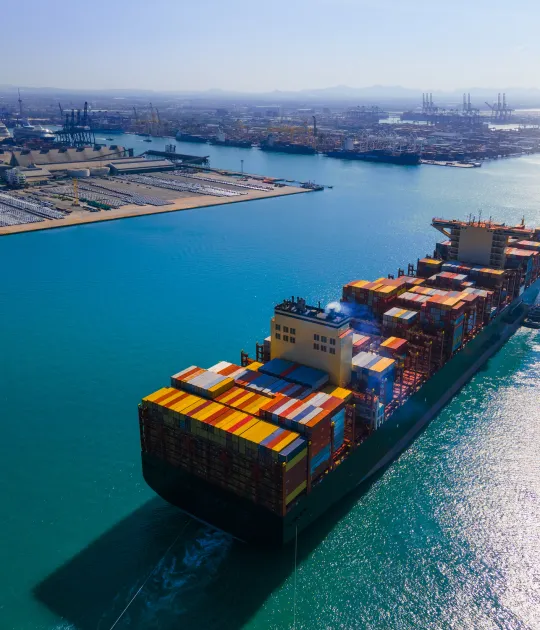
That potential, however, rests squarely on punctuality. Northern Railway’s long-distance trains recorded only 68 % strict on-time arrivals in Q2 2025–26 (Office of Rail Regulator). On this very corridor, the most persistent bottlenecks remain freight congestion in the Rewari–Jaipur section — where container trains from Mundra and Pipavav ports routinely delay passenger services — and spillover from chronically late trains originating in Ahmedabad.
Historical precedent sharpens the caution. The Pokaran–Jaisalmer doubling was sanctioned in 2015, tendered in 2017, but remained stalled until 2023 over land disputes with pastoral communities, leaving the route vulnerable to single-line bottlenecks for eight years. Semi-high-speed programmes have meanwhile seen 20–30 % cost escalations from imported components and design changes.
On balance, November 29, 2025, marks genuine progress rather than mere optics. The train is running, the investment pipeline is the largest in the state’s history, and the direction is right. The Swarn Nagari timetable over the next ninety days will be the first real barometer of whether promises are translating into sustained performance — for tourists, students, soldiers, and the border economy alike.
– global bihari bureau