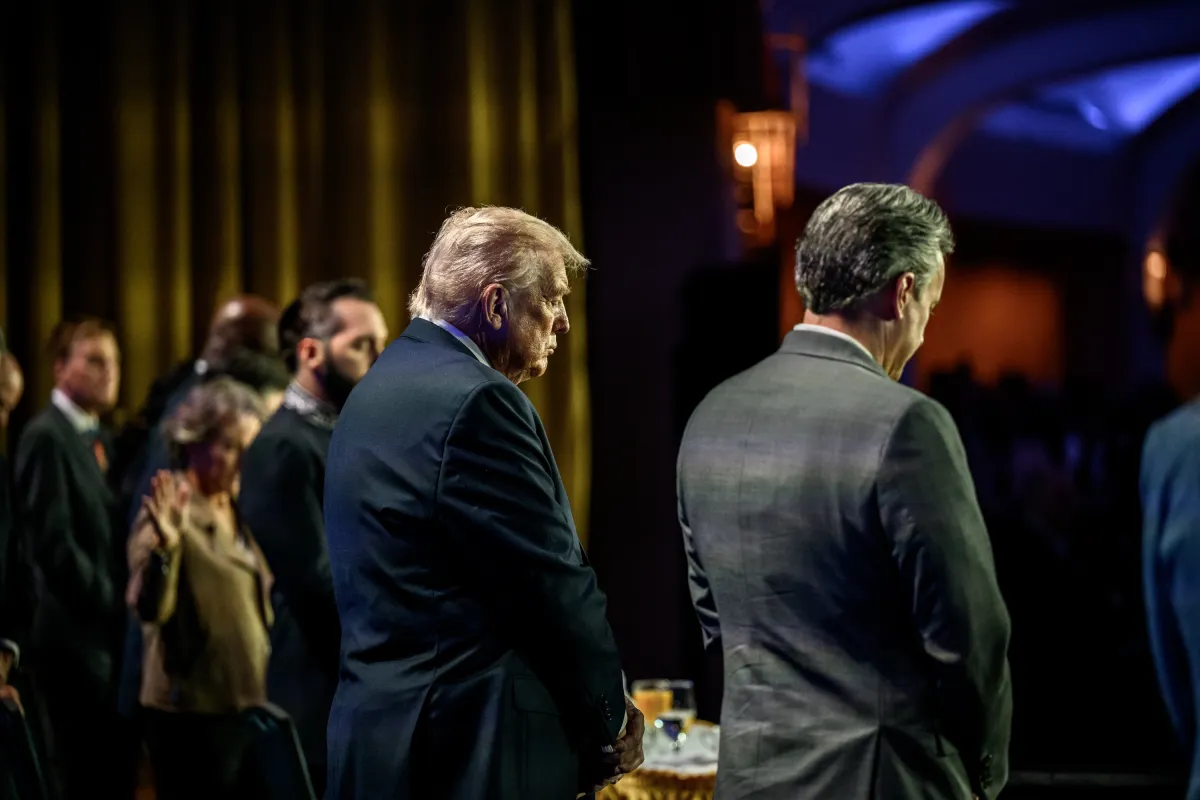
President Donald Trump of the United States of America.
Court Invalidates Emergency Tariffs: India Gains, China Adjusts
Legal Check Alters U.S. Trade and Geopolitical Landscape
Tariff Ruling Reaffirms Congressional Authority Over Trade
Washington: The United States Supreme Court today delivered a landmark ruling in the consolidated cases Learning Resources, Inc. v. Trump and V.O.S. Selections v. United States, invalidating broad tariffs imposed by President Donald Trump under the International Emergency Economic Powers Act (IEEPA).
Landmark 6-3 Ruling on IEEPA Tariffs
In a 6–3 decision, the Court concluded that only Congress holds the constitutional authority to impose tariffs, reaffirming the separation of powers and significantly limiting unilateral executive action on trade. Chief Justice Roberts authored the majority opinion, joined by Justices Gorsuch, Barrett, and the Court’s three liberal justices (Sotomayor, Kagan, Jackson). Justice Gorsuch’s separate concurrence emphasised that IEEPA does not delegate taxing authority, reinforcing that only Congress may impose tariffs. The dissent, authored by Justices Thomas, Alito, and Kavanaugh, argued that the statute granted the president sufficient authority to protect national economic interests and warned that invalidating the tariffs could create complex legal and administrative challenges, particularly regarding refunds and market stability.
Trump’s Immediate Response and Workaround
Immediately following the ruling, Trump held a press conference denouncing the decision as “deeply disappointing,” asserting he was “ashamed” that some justices lacked courage, and accusing the majority of being “lap dogs” to foreign interests and “unpatriotic” in their reasoning. He vowed to continue exerting economic leverage through a temporary 10 per cent global tariff under Sections 232 (national security), 301 (unfair trade practices), and 122 (balance of payments). Section 122 authority is capped at 150 days, and no prior president has applied these statutes at this scale, leaving legal challenges and potential congressional override as real possibilities.
Refund Process and Economic Uncertainty
The ruling has immediate implications for refunds. Over $142–200+ billion in tariffs collected in 2025–2026 may be subject to reimbursement. However, the Court remanded refund procedures to lower courts, including the U.S. Court of International Trade and Customs and Border Protection. Refunds are expected to be partial, covering duties not passed to consumers, and may include interest claims. Bulk importers may pursue class-action-style suits. Analysts note that the process is uncertain, with administrative and judicial hurdles likely to delay consumer benefits. Once effectively passed through supply chains, households could save an estimated $400–600, though timing depends on litigation and administrative processing.
Market Reactions and Sector Impacts
Economic impacts are wide-ranging. The invalidated IEEPA tariffs had generated annualised revenue of $200–230 billion, covering sectors from steel and aluminium to automobiles, electronics, and consumer goods. Market reactions reflected relief in import-heavy sectors such as retail and autos, while domestic steel and aluminium saw short-term price declines. Broader indices, including the S&P 500 and Dow Jones Industrial Average, experienced moderate volatility. The U.S. dollar strengthened slightly, and commodity prices, particularly for metals and energy, adjusted to the restored predictability in tariffs.
India Gains Predictability for Exports; Partial Relief for China and Global Partners
For India, roughly 55 per cent of exports to the United States were freed from the emergency duties, benefiting pharmaceuticals, petroleum products, textiles, engineering goods, and industrial components. Residual Section 232 duties on steel and aluminium—approximately $8–9 billion—remain in place, maintaining some export pressures. Indian exporters and the Federation of Indian Export Organisations (FIEO) welcomed the ruling, emphasising restored predictability and relief for supply chains. Chinese exporters also experienced partial relief as broad IEEPA tariffs were struck down, though Section 301 tariffs targeting intellectual property, technology, and specific industrial sectors remain, sustaining structural trade friction. Other global partners—including Canada, the European Union, Mexico, and the United Kingdom—expressed cautious relief, citing continued uncertainty around residual tariffs and administrative complexities.
The Supreme Court ruling also clarifies the broader landscape of U.S. tariff authority. While emergency powers were invalidated, Section 232 and Section 301 tariffs, along with first-term relic measures, remain in effect and could generate over $1 trillion in revenue over the next decade. The decision, therefore, limits the executive’s ability to impose sweeping unilateral tariffs while preserving significant targeted leverage across key sectors and trading partners.
Congressional dynamics are now central. With the tariff authority returned to Congress, any permanent measures require negotiation within a narrowly divided Senate and a Republican-controlled House. Procedural hurdles, such as the filibuster, complicate the rapid passage of legislation. Early congressional reactions included muted approval from anti-tariff Grand Old Party (Republican Party) or GOP lawmakers and cautious praise from Senate Democrats, signaling potential bipartisan dialogue for codifying or reforming tariffs. Future scenarios include oversight of Trump’s temporary 10 percent workaround and possible new legal challenges under updated trade statutes.
Geopolitically, the ruling occurs amid heightened U.S.–Iran tensions. In early 2026, the United States deployed military assets to the Gulf and Oman in response to Iranian missile tests and ongoing nuclear negotiations in Geneva, signaling strategic deterrence. While the tariff decision is legally distinct from military action, it intersects with broader discussions on U.S. tools of influence, highlighting the separation of economic and security measures.
Looking ahead to 2027, India is likely to benefit from restored market access, enabling trade, technology, and investment engagement. Chinese firms are expected to adjust to reduced short-term tariff volatility while managing ongoing exposure under Section 301 duties. Other partners—including Canada, the European Union, Mexico, and the United Kingdom—will continue adjusting trade strategies in response to sector-specific duties and administrative uncertainty. U.S. markets, households, and importers must navigate the dual realities of reduced emergency tariffs alongside continuing selective duties.
In summary, the Supreme Court ruling reaffirms constitutional limits on executive power, restores predictability for trade, and limits unilateral economic coercion. Trump’s temporary tariffs illustrate continued executive attempts to influence trade, while India gains immediate economic relief, China faces partial but manageable exposure, and Iran remains under independent strategic pressure. Markets, importers, and households are adjusting to restored legal clarity, and global partners recalibrate supply chains and strategies in response to residual tariffs. The decision highlights the enduring importance of constitutional checks, congressional oversight, and judicial review in shaping U.S. economic and geopolitical power.
– global bihari bureau