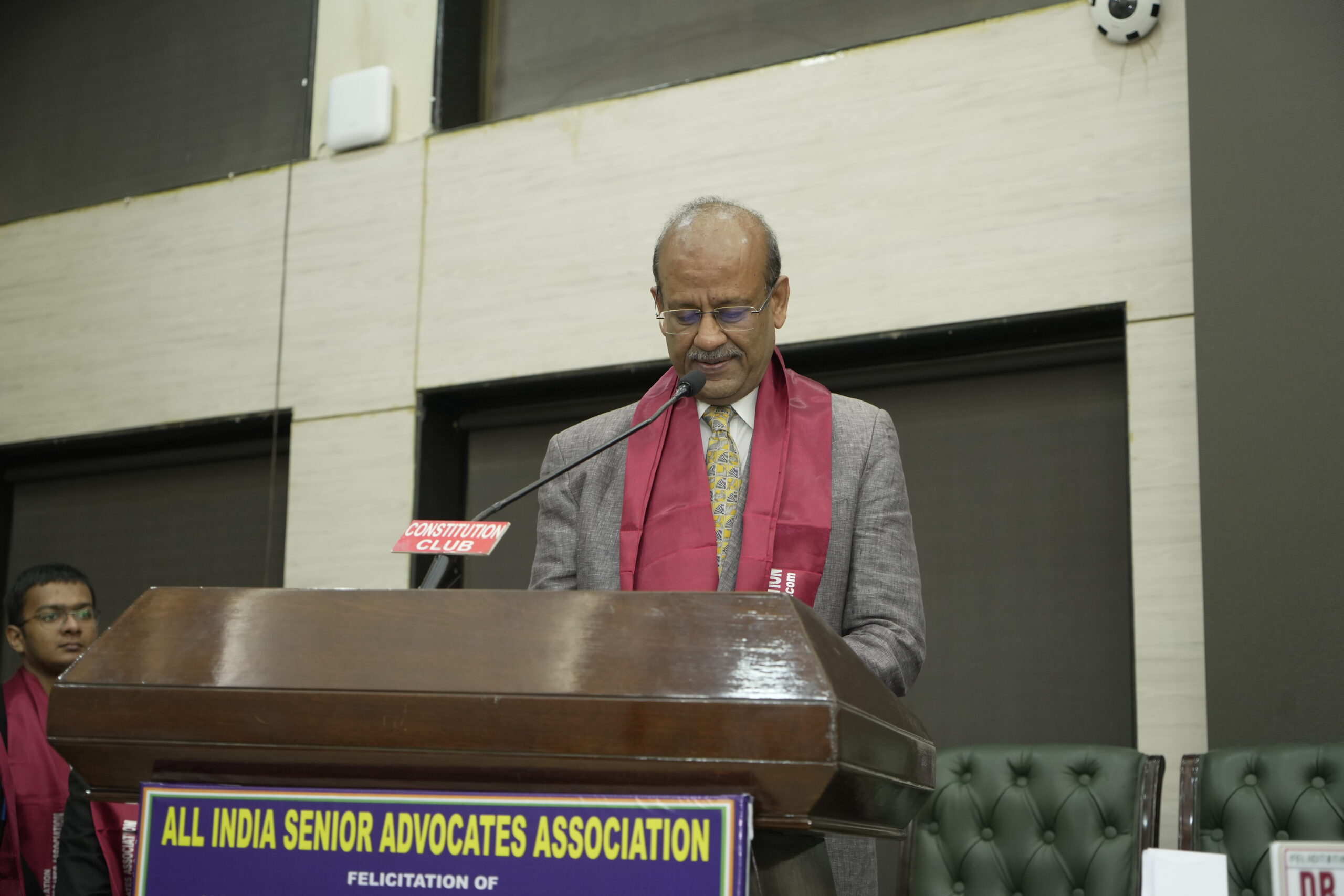
Justice Rajesh Bindal
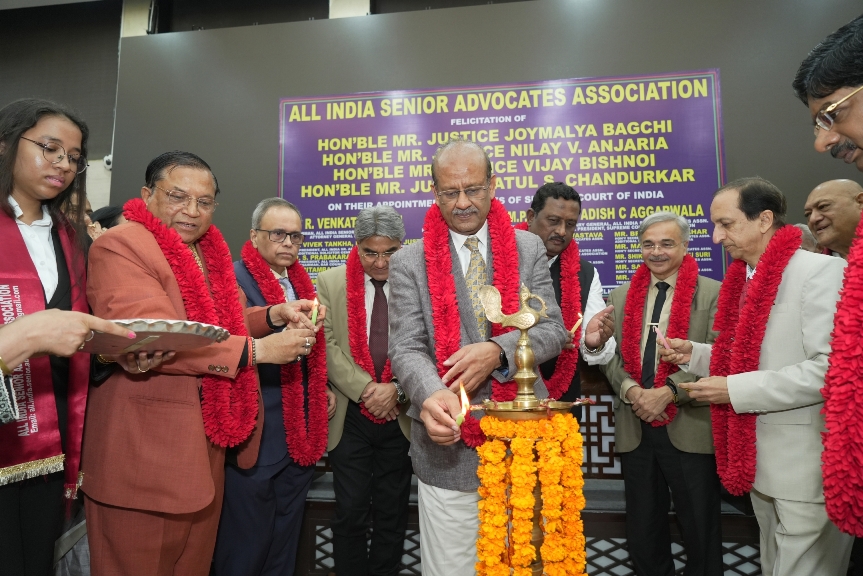
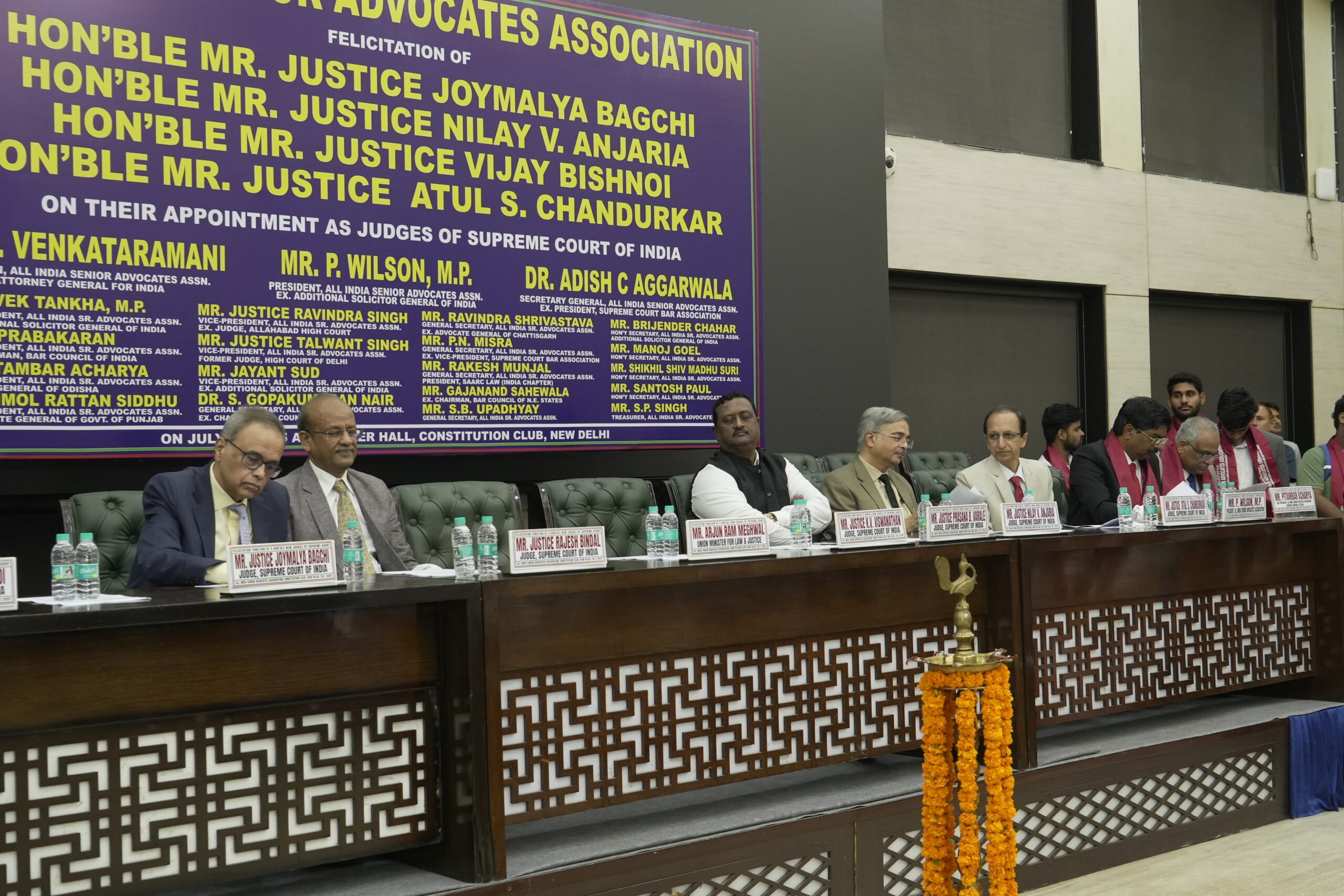
New Delhi: Justice Rajesh Bindal, a sitting Judge of the Supreme Court of India, has raised serious concerns over the growing misuse of Artificial Intelligence (AI) tools in legal research, warning that AI-generated “fake judgments” are increasingly being cited in courts by young lawyers. He spoke at a felicitation ceremony organised by the All India Senior Lawyers Association to honour four newly appointed Supreme Court judges – Justice Joymalya Bagchi, Justice Nilay V. Anjaria, Justice Vijay Bishnoi, and Justice Atul S. Chandurkar.
Justice Bindal stressed the vital responsibility of senior advocates in mentoring and guiding the younger generation of lawyers. “In India and in the USA, the use of AI search models by young lawyers has led to fake judgments being placed before courts,” he cautioned. “Sometimes, lawyers input just one or two keywords into AI tools and cite the results – these may be incorrect, from dissenting opinions, or entirely fabricated by AI. Yet they are presented in court without verification.” He called this trend a “danger mark,” emphasising that unchecked reliance on AI could compromise the integrity of the judicial process. “Senior lawyers must step up to guide and educate the Young Bar about these emerging risks,” he urged.
Justice Bindal also acknowledged the invaluable contributions of both junior and senior advocates to the administration of justice. “While judges pronounce the verdicts, the foundation often lies in the research conducted by junior lawyers and the arguments presented by senior counsel,” he noted.
Justice P.B. Varale, also present at the event, appreciated the contributions of the newly appointed judges during their tenures in various High Courts and fondly recalled his association with them. Justice Joymalya Bagchi likened senior advocates to a “banyan tree,” under whose shade the court and the rule of law flourish. “The jurisdiction and power of the Supreme Court are higher and wider than any court in the Commonwealth,” he added.
Justice Nilay V. Anjaria reflected on his early years at the Bar, saying, “Being a judge of the apex court carries a very high degree of responsibility. We have a duty to ourselves, to the institution, and to society. I pray for the strength to discharge this responsibility.”
Justice Vijay Bishnoi emphasised the need to uphold the dignity of the court, stating, “The Bar and the Bench are the twin pillars of the judiciary. Nothing is permanent, no one is indispensable – only the institution endures.”
Justice Atul S. Chandurkar described senior lawyers as “friends, philosophers, and guides,” and added, “We must ensure that justice remains not only a constitutional promise but also a lived reality.”
Dr. Adish C. Aggarwala, President of the International Council of Jurists (London) and former President of the Supreme Court Bar Association, praised the Indian judiciary, stating that the Supreme Court of India is among the finest in the world. He lauded its efficiency, fairness, and compassion in delivering justice, describing it as a beacon of hope with one of the highest case disposal rates globally.
Rajya Sabha MP and Senior Advocate P. Wilson, addressing the gathering, mentioned that he had introduced a Private Member’s Bill in Parliament to raise the retirement age of judges, an important step in the ongoing discourse on judicial reforms.
Advocate General of Odisha Pitambar Acharya, congratulating the newly appointed Supreme Court judges, expressed confidence that their wisdom and experience would further uphold the dignity and rich traditions of the Apex Court, which has preserved the majesty of law for over seventy-five years.
Justice Bindal’s remarks come at a time when concerns over the role of AI in legal proceedings are mounting. On July 20, the Kerala High Court issued a directive advising judicial staff against using AI tools such as ChatGPT for drafting orders, citing the risk of inaccuracies. The High Court also recommended formal training before incorporating AI in any judicial process, a landmark advisory in the Indian legal framework.
As AI continues to evolve, Justice Bindal’s warning serves as a reminder of the need for ethical oversight, human judgment, and mentorship in safeguarding the sanctity of the justice delivery system.
– global bihari bureau