IPC Warns of Deepening Hunger Crisis in Western Sudan
Donors Pledge $1.5 Billion as Sudan Crisis Worsens
Geneva: Levels of acute malnutrition have crossed famine thresholds in two additional localities of Sudan’s North Darfur state, signalling a sharp deterioration in the humanitarian situation as conflict, displacement and restricted access to aid continue to push vulnerable populations towards catastrophic conditions, according to a new alert issued by the Integrated Food Security Phase Classification (IPC) Global Initiative.
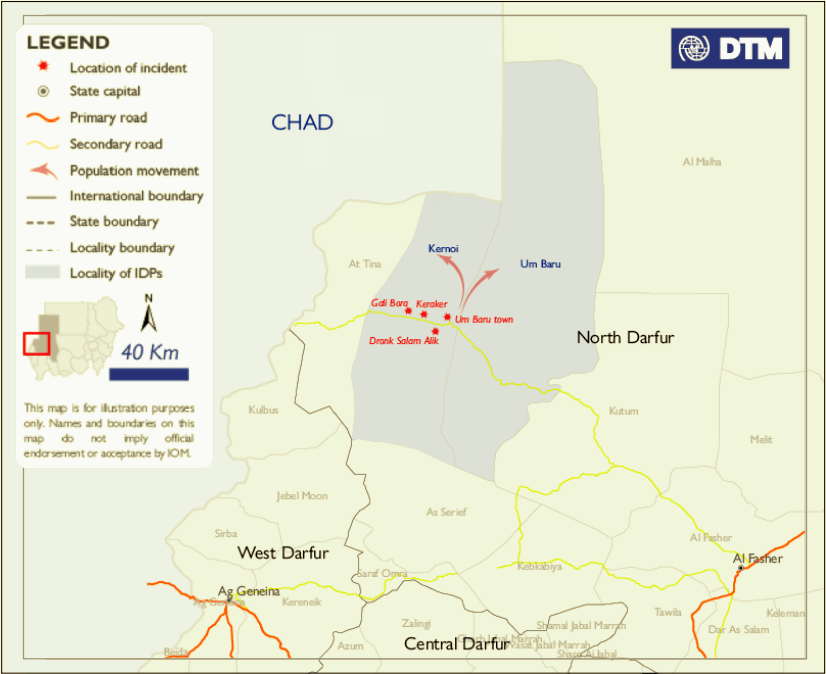
The alert said that following the mass displacement of people from El Fasher town in late October 2025 and the continuation of hostilities, famine-level malnutrition has now been recorded in Um Baru and Kernoi. Nutrition assessments conducted in December 2025 found global acute malnutrition (GAM) rates far exceeding the 30 per cent weight-for-height famine threshold among children aged six to 59 months. In Um Baru, GAM was estimated at 52.9 per cent, with 18.1 per cent of children suffering from severe acute malnutrition (SAM). In Kernoi, GAM reached 34 per cent, with 7.8 per cent of children classified as severely malnourished.
The IPC warned that many other conflict-affected or inaccessible areas may be facing similarly extreme conditions, though the full scale of the crisis remains unclear because of limited access and gaps in monitoring systems, particularly among displaced populations and in areas not covered by recent surveys.
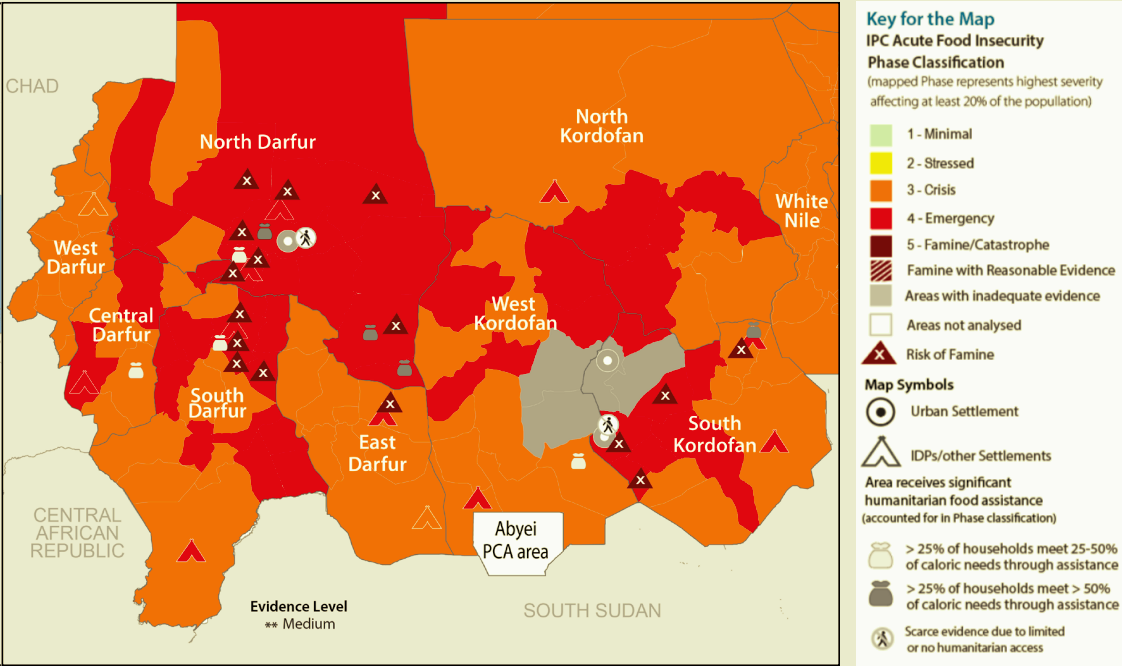
The latest findings come amid a rapidly worsening situation in Greater Kordofan, where intensifying conflict is driving a decline in food security and increasing the likelihood of extreme hunger, acute malnutrition and rising hunger-related deaths. Famine had already been confirmed in Kadugli town in the September 2025 IPC analysis, while very severe conditions were projected in Dilling and the Western Nuba Mountains. The current alert reflects evidence available up to 29 January 2026, with situational developments in Greater Kordofan incorporated up to 4 February.
The IPC stressed that the alert itself does not constitute a formal famine classification and does not provide population estimates. However, it highlights a worsening humanitarian trajectory following the IPC analysis published in November 2025, when famine (IPC Phase 5) was classified in El Fasher and Kadugli, and 20 areas across Greater Darfur and Greater Kordofan were assessed to be at risk.
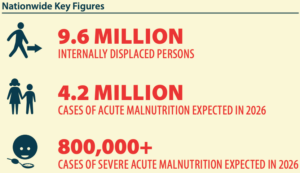
Across Sudan, acute malnutrition is expected to deteriorate further in 2026. The IPC estimates nearly 4.2 million cases of acute malnutrition among children aged six to 59 months and pregnant and breastfeeding women this year, including more than 800,000 cases of severe acute malnutrition. This represents a 13.5 per cent increase from 2025, when 3.7 million cases were recorded.
The situation in North Darfur has been shaped by the change in control of El Fasher town on 26 October 2025 and the subsequent expansion of Rapid Support Forces units into surrounding areas. These developments triggered large-scale displacement, dispersing populations already facing catastrophic conditions into wider and harder-to-reach rural areas. Monitoring systems have struggled to track new arrivals and internally displaced persons in both camps and host communities.
Thousands of civilians have fled from urban centres towards rural zones or towards the Chadian border along the El Fasher–Kutum–Um Baru–Kernoi–Tine corridor. As of mid-January 2026, at least 127,000 people had been displaced from El Fasher town and surrounding villages. Kernoi town is reported to be largely deserted, while residents of Um Baru avoid staying overnight because of insecurity.
Access to life-saving health and nutrition services is described as severely constrained across North Darfur, with the risk of excess mortality considered extremely high. In Um Baru, children suffering from severe acute malnutrition, including those with medical complications, have very limited access to treatment. In Kernoi, only about a quarter of children identified with SAM have been enrolled in treatment programmes.
Prolonged displacement has further weakened communities’ ability to cope. Households have been pushed into remote areas far from food and water sources and basic services, often in conditions marked by poor sanitation, hygiene risks and exposure to infectious diseases. Conflict and displacement around Um Baru, Kernoi and At Tine have disrupted pastoral livelihoods and seasonal migration patterns, while humanitarian assistance and local mutual aid have been severely restricted.
Food insecurity remains acute among internally displaced populations in North Darfur. Families face extremely high food prices, including the highest recorded sorghum prices in the state, and most have lost viable livelihood options. A food security survey conducted in December 2025 in At Tine and Um Baru found that 27 per cent and 24 per cent of households, respectively, had poor food consumption. Many reported reducing both the size and number of meals and relying on emergency coping strategies because of severe food shortages. Reports also pointed to pervasive violence, looting, destruction of property and chronic water shortages.
In Greater Darfur more broadly, the crisis has deepened as large numbers of starving and malnourished people have fled El Fasher into other conflict-affected areas. By the end of 2025, the total number of internally displaced persons originating from El Fasher locality had risen to about 1.22 million. Irregular access to El Fasher continues to limit support to surrounding localities such as Tawila, which hosts more than 650,000 displaced people, and Ad Dabbah, where local communities and aid agencies are struggling to cope with new arrivals.
Public health conditions in these areas remain fragile, compounded by outbreaks of cholera and measles and rising admissions for acute malnutrition. Security conditions have also worsened in South Darfur, particularly around the strategic town of Nyala, where civilian casualties continue to be reported, and attacks on airports and logistics sites have disrupted humanitarian services and supply chains.
In Greater Kordofan, the escalation of conflict has had similar effects on food production, markets and access to basic services. Local authorities and armed groups have imposed controls on movement and supplies, preventing communities from benefiting even from relatively favourable agricultural conditions. Markets in South Kordofan are among the least functional in Sudan, with prices of essential goods significantly higher than the national average. In Kadugli, the price of sorghum was more than four times higher in November 2025 compared with the previous year.
Surveys among newly displaced populations from Dilling and Kadugli in early 2026 reported critical levels of acute malnutrition and widespread severe hunger. In the Western Nuba Mountains, earlier nutrition surveys had already recorded GAM rates above 20 per cent before the latest escalation of violence, suggesting that conditions may now be even worse.
The IPC’s Famine Review Committee said available evidence indicates that famine conditions are likely continuing in parts of conflict-affected Sudan, even though severe access restrictions have limited the collection of up-to-date data. The committee noted that very high levels of acute child malnutrition in Um Baru and Kernoi signal a heightened risk of excess mortality and point to a severe and persistent crisis extending beyond the areas directly assessed.
The alert warned that the humanitarian situation along the El Fasher–Tine border corridor is expected to deteriorate further without an immediate cessation of hostilities and a large-scale humanitarian response. Instability along this corridor, which is critical for humanitarian and commercial supplies from Chad, could severely undermine food, nutrition and health conditions for millions of people.
Humanitarian access across Sudan remains heavily constrained by insecurity, unexploded ordnance, movement restrictions, administrative hurdles and interference in operations. At the same time, funding shortfalls are compounding operational challenges. The 2026 Humanitarian Needs and Response Plan seeks USD 2.9 billion but was only 5.5 per cent funded as of early February, while the 2025 plan received less than 40 per cent of the required resources.
Against this backdrop, the United States announced a major international push to mobilise fresh humanitarian support for Sudan. In a statement issued on February 4, Principal Deputy Spokesperson Thomas “Tommy” Pigott said the scale and severity of Sudan’s crisis required an urgent and sustained response. He said the United States had hosted an event with allies and partners that raised pledges of USD 1.5 billion in new assistance contributions to support humanitarian operations.
The United States invited more than 20 donor countries to the Donald J. Trump Institute of Peace, where it announced an additional USD 200 million in support through the Sudan Humanitarian Fund (SHF), alongside contributions from other partners. Washington said it continued to spearhead international efforts to secure access to people and areas most in need and to promote burden-sharing among donor countries.
The statement welcomed significant commitments from regional and international partners, including the United Arab Emirates, the Kingdom of Saudi Arabia, Qatar, Kuwait, Egypt, Chad, the United Kingdom and Norway, among others. While underscoring America’s role as the largest single donor, the U.S. administration said other nations must also shoulder a greater share of responsibility for sustaining life-saving humanitarian work in Sudan.
U.S. officials said the latest contribution formed part of a broader December 2025 memorandum of understanding and a USD 2 billion pledge to pooled funds managed by the United Nations Office for the Coordination of Humanitarian Affairs (OCHA). Under that agreement, OCHA committed to implement reforms aimed at improving the effectiveness, efficiency and accountability of UN humanitarian operations. The Sudan Humanitarian Fund is one of the pooled mechanisms supported by the U.S. anchor pledge and is intended to allow faster and more flexible responses to urgent needs on the ground.
The United States said it looked forward to a follow-up meeting of donors in Berlin on April 15, 2026, and called on more countries to join the international humanitarian effort for Sudan.
The IPC called for immediate action to end hostilities and open safe corridors for people fleeing conflict. It said that only through support for mutual aid, strengthening of community coping capacities and an unimpeded, large-scale humanitarian response could further loss of life be prevented and the spread of famine and human suffering halted.
– global bihari bureau