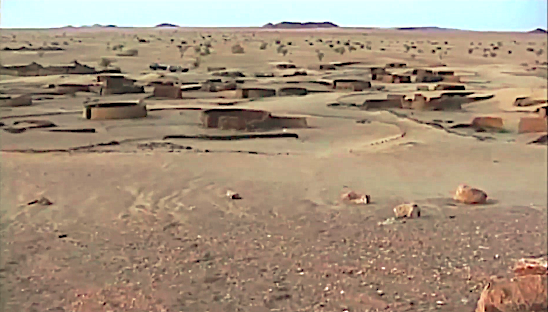
North Darfur, Sudan
Famine Confirmed in Sudan’s Besieged Cities
Rome/New York/Geneva: In Sudan, the battle lines of war have become the front lines of famine. While hunger has eased in places where the guns have fallen silent, starvation has now taken hold in the besieged cities of El Fasher in North Darfur and Kadugli in South Kordofan — areas cut off from trade and humanitarian relief for months.
A new joint analysis by the Food and Agriculture Organization (FAO), the World Food Programme (WFP), and UNICEF paints a deeply uneven picture of survival. It confirms that famine conditions — the highest level of the Integrated Food Security Phase Classification (IPC Phase 5) — are unfolding in El Fasher and Kadugli, where food consumption, acute malnutrition, and mortality rates have surpassed famine thresholds. Both towns were previously classified at IPC Phase 4 (Emergency) in 2024, but have deteriorated sharply under siege.
Across Sudan, food insecurity mirrors the geography of conflict. By September 2025, some 21.2 million people — roughly 45 per cent of the population — were facing high levels of acute food insecurity (IPC Phase 3 or higher). Yet, that figure represents an improvement of 3.4 million since the previous assessment, as violence eased in parts of Khartoum, Al Jazirah, and Sennar, allowing families to return, markets to reopen, and commercial and humanitarian flows to resume.
Harvest conditions and gradual market stabilisation are expected to reduce the number of people in crisis-level hunger to 19.3 million between October 2025 and January 2026. But these gains are fragile and highly localised. Many returnees have lost their homes, livestock, and livelihoods, limiting their ability to benefit from the harvest. The wider crisis has shattered the economy and left vital services and infrastructure in ruins.
“Seeds, tools and livestock are lifelines for millions,” said Rein Paulsen, FAO’s Director of Emergencies and Resilience. “Restoring access and enabling local food production are essential to saving lives and protecting livelihoods.”
In contrast, large parts of western and southern Sudan — including North and South Darfur, West Kordofan, and South Kordofan — continue to slide deeper into crisis. In El Fasher and Kadugli, months without access to food or medical care have left civilians in extreme distress. In Dilling, conditions are likely similar but cannot be classified due to a lack of reliable data caused by restricted access and ongoing fighting.
Also read: Sudan: ICC Probes Mass Killings, Rapes in North Darfur Conflict
Slight improvements have been observed in the Western Nuba Mountains, shifting conditions from “Risk of Famine” to IPC Phase 4 (Emergency), though the risk remains high if humanitarian access fails to expand. The Famine Review Committee warns that up to 20 additional areas across Greater Darfur and Greater Kordofan — including rural settlements and displacement camps — could face famine in the coming months, with several new hotspots in East Darfur and South Kordofan.
Malnutrition levels are alarming. Global Acute Malnutrition rates range from 38 to 75 per cent in El Fasher and reach 29 per cent in Kadugli — among the world’s worst this year. Outbreaks of cholera, malaria, and measles are worsening the crisis in areas where health, water, and sanitation systems have collapsed.
“The deadly combination of hunger, disease and displacement is placing millions of children at risk,” said Lucia Elmi, UNICEF’s Director of Emergency Operations. “Girls often bear the brunt, facing increased risks of malnutrition, violence, and being pulled out of school. Therapeutic food, safe water, and essential medicines can save lives, but only if we can reach children in time.”
In areas where access has been possible, WFP operations are helping to stave off further collapse. The agency now reaches more than four million people each month with food assistance, despite dangerous conditions for aid workers and repeated supply disruptions. “We see what’s possible when we can deliver,” said Ross Smith, WFP’s Director of Emergencies. “Families rebuild, markets revive, and children get the food they need to survive. But conflict still decides who eats and who does not. Too many communities are being pushed into starvation simply because we cannot reach them.”
Humanitarian access remains the defining factor. In El Fasher and Kadugli, markets have collapsed, prices for staple foods have soared, and most households have exhausted their reserves. Aid convoys often face long delays, denials, or direct attacks. Even as FAO, WFP, and UNICEF deliver integrated assistance — combining food, nutrition, health, water, sanitation, and agricultural support — the reach is inconsistent and the needs overwhelming.
Without safe and sustained access, adequate funding, and an end to hostilities, the agencies warn that famine will persist and could spread to new areas by early 2026, when food stocks deplete and conflict shows no sign of abating.
The IPC and its Famine Review Committee — an independent, evidence-based process involving multiple humanitarian organisations — emphasise that famine is not declared by any single agency. Rather, it is determined by technical consensus using data on food consumption, malnutrition, and mortality.
In Sudan, that data now points to a grim truth: where humanitarians can reach, hunger recedes. Where they cannot, famine follows.
– global bihari bureau