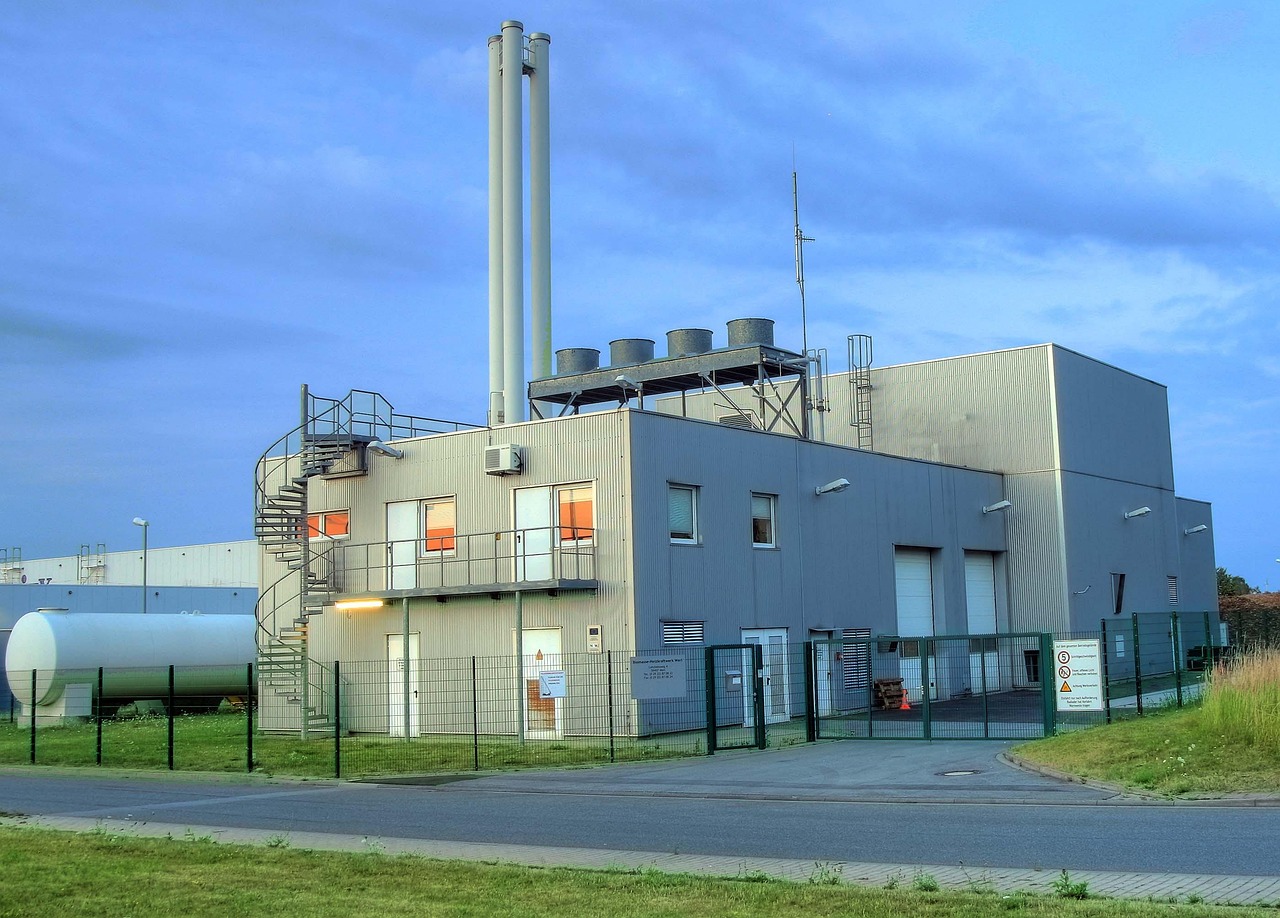
A biomass heating power plant
New Delhi: New rules simplifying monitoring, reducing paperwork, and enhancing financial flexibility are set to accelerate India’s clean energy push through biomass technologies as the Ministry of New and Renewable Energy (MNRE) announced revised guidelines for the Biomass Programme under Phase I of the National Bioenergy Programme today.
The revised guidelines would be applicable for the period Financial Year 2021–22 to 2025–26.
The purpose of the revised guidelines is to streamline operations and promote sustainable agricultural waste management. These changes make it easier for micro, small, and medium enterprises to adopt biomass technologies, supporting India’s goal of achieving net-zero emissions by 2070.
By replacing costly Supervisory Control and Data Acquisition (SCADA) systems with affordable Internet of Things-based monitoring or quarterly data submissions, the guidelines ensure accessible performance tracking, particularly for smaller businesses. Extensive clearance-related paperwork for briquette and pellet manufacturing plants has been eliminated, saving time and fostering a business-friendly environment. Developers are no longer bound by rigid two-year sale contracts for briquettes or pellets, as these have been replaced with flexible general sale agreements, allowing quick adaptation to market demands.
Financial support through the Central Financial Assistance is now performance-driven, offering full funding for projects operating above 80% efficiency and pro-rata support for those below, provided the plant load factor is at least 50%. Projects falling below this threshold receive no funding, ensuring transparency and rewarding efficiency. The performance inspection process has been streamlined, cutting the operational test period from an average of 16 hours over three consecutive days to just 10 hours, deemed sufficient to verify claimed capacities. Developers have an 18-month window to schedule inspections, starting from either the commissioning date or in-principle Central Financial Assistance approval, whichever is later, with the Ministry of New and Renewable Energy Secretary able to grant extensions to address operational challenges.
To tackle air pollution from stubble burning, a major issue in northern India, biomass pellet producers in Delhi, Punjab, Haryana, and the National Capital Region districts of Rajasthan and Uttar Pradesh can choose the most favourable support scheme from either the Ministry of New and Renewable Energy or the Central Pollution Control Board. This provision encourages sustainable management of agricultural waste, reducing environmental harm while promoting clean energy production. By easing compliance, aligning financial aid with performance, and fostering flexibility, these revisions pave the way for more biomass-based plants and ensure the timely delivery of approved subsidies. The updated guidelines strengthen India’s clean energy efforts, support micro, small, and medium enterprises, and address critical environmental challenges, marking a significant step toward a sustainable future.
– global bihari bureau