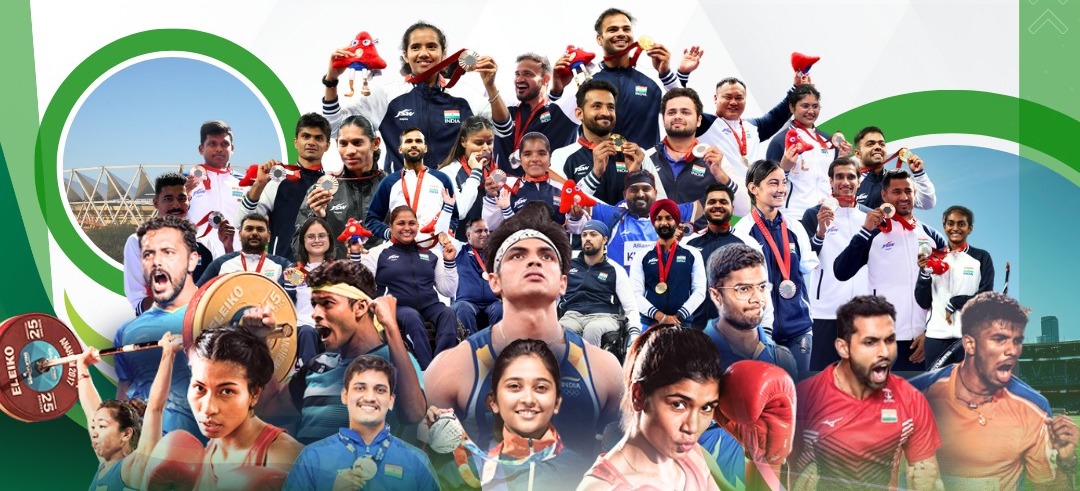
New Delhi: On August 12, 2025, the Indian Parliament passed the National Sports Governance Bill, 2025, and the National Anti-Doping (Amendment) Bill, 2025, drawing widespread attention from athletes, coaches, and administrators.
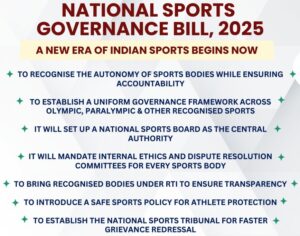 “The sports community has responded positively, viewing the legislation as a significant move to improve transparency, streamline administration, and prioritise athlete welfare in Indian sports,” the Ministry of Youth Affairs and Sports claimed today.

The Ministry referred to Badminton player Lakshya Sen sharing his thoughts on the social media platform X, describing the passage as a “historic moment” that raises standards for governance and athlete support. Para-javelin athlete Sumit Antil highlighted specific provisions, including the National Sports Election Panel, a Code of Conduct, a Safe Sports Policy, and a Grievance Redressal Mechanism, noting their potential to ensure fairness and give stakeholders a stronger voice in sports administration.

The Safe Sport Policy, a central element of the governance bill, mandates protections for athletes, including women, persons with disabilities (divyang), and minors, through frameworks for grievance redressal and safeguards against harassment. Para-athlete Avani Lekhara, a three-time Paralympic medalist, emphasised that the bill promotes safety, dignity, and equal opportunities for women and para-athletes.
Union Minister of Youth Affairs and Sports and Labour and Employment, Dr. Mansukh Mandaviya, described the National Sports Governance Bill, 2025, as a major reform, emphasising its focus on restructuring sports administration to prioritise athletes. Para-badminton athlete Sukant Kadam stated that the bill aligns with a vision for professional, audited National Sports Federations (NSFs), aiming to keep decisions focused on sports rather than external influences.
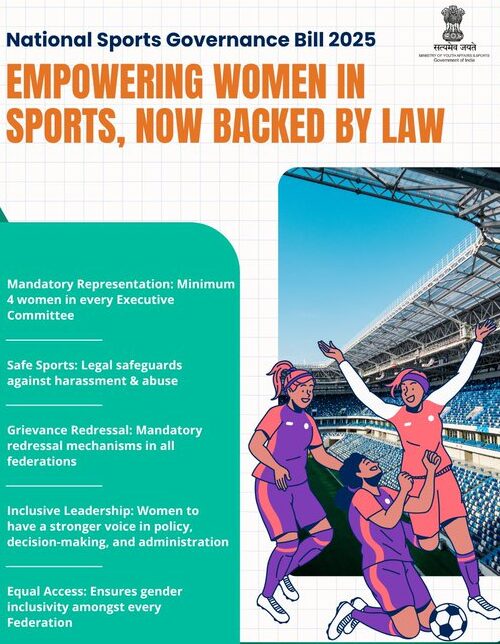
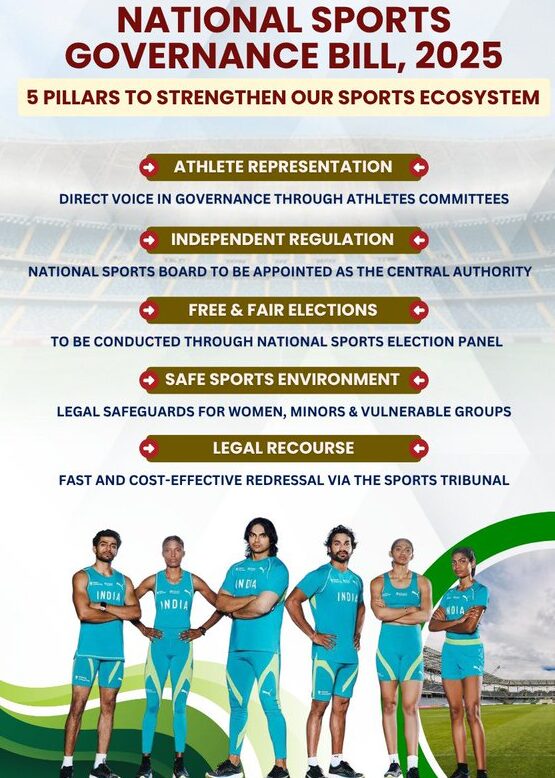
Kalyan Chaubey, President of the All India Football Federation (AIFF), outlined two key features: the establishment of a National Sports Board to oversee the registration and recognition of sports organisations, and a Sports Tribunal to resolve numerous legal disputes currently in courts. He noted that these changes could redirect resources toward sports development and ensure athletes remain free of doping, particularly as India prepares to host a major international sporting event.
Rohit Rajpal, captain of the Indian Davis Cup team, called the bills a necessary update to address delays caused by ongoing legal battles within sports associations, suggesting they could enhance sports promotion and development. As Chairman of the Indian Olympic Association (IOA) Anti-Doping Committee, Rajpal also commented on the National Anti-Doping (Amendment) Bill, 2025. Drawing on his experience with the National Anti-Doping Agency (NADA), he stated that the bill could expedite dispute resolution and clarify regulations for athletes and administrators. He stressed the importance of collaboration with sports bodies and increased athlete awareness, expressing readiness to work with the World Anti-Doping Agency (WADA) to strengthen anti-doping efforts.
The passage of these bills has generated significant discussion within the sports community, with many seeing them as a foundation for a more transparent and athlete-centred future for Indian sports.
– global bihari bureau