Spirituality: The Value and Place of Prayers
What is the value and place of prayers in a Hindu’s life?
Though gifted with many faculties, we are still limited in many ways. The three-fold powers — to know, to desire/ create, and to act- are given to us to live, to learn and to grow in our lives. Because they are limited, we often find ourselves helpless and in need of help. When we need help, the proper thing is to seek help. As Püjya Swamiji says, “Seeking help is living intelligently.”
A prayer is an act of seeking help from the Lord. We have the faith that he listens to and answers our prayers. The act of prayer is indeed based on the faith that there is a God who is all-knowing and knows how to give what is needed. That he is all-powerful and therefore has the capacity to fulfil desires. Prayer is invoking the benevolence, kindness and compassion of the Lord.
Prayer comes from the recognition that we need grace in our lives. Effort alone is not sufficient to accomplish our various endeavours. There are many factors, known, unknown, and out of our control, which influence the outcome. The universe functions around an order, and that order alone manifests as various laws. As humans, we have limited knowledge of some of the laws. We do not know all the variables—hidden and unknown. Even if they are known variables, we cannot change them. This being the case, there are many uncertainties in our lives. In order that the outcome of our action is what we desire, and that our endeavours are successful, all the other variables must favour us. Prayer is invoking the grace or favour of the Lord for our undertakings to be successful. This is one aspect of prayer.
We usually pray seeking a favour from the Lord for wealth, prosperity or other basic needs. Until we discover that they are not the ultimate goals in life, we will value them and associate success with their attainment.
Prayer can also be performed for spiritual resources, because negative tendencies such as anger, jealousy, temptations, frustration, etc., become obstacles to spiritual progress. When we cannot overcome these obstacles, we become helpless in the face of our own tendencies, and we need help. This is nicely symbolised in the Ramayana.
Lord Rama, Sita and Lakshmana were living in the Dandaka forest. As the story goes, when Sita was attracted to a golden deer, Rama went after it, leaving Sita under Lakshmana’s protection. It turned out that the deer was a demon, and so Räma killed it. While dying, the deer called out to Lakshamana for help, in Rama’s voice.
Sita commanded Lakshmana to go to help Rama, and was kidnapped by the ten-headed demon Ravana when left alone. She was separated from Rama, the Self, and Lakshamana, the sense of discrimination, by Ravana, the ten objects of our senses — five objects of perception and five objects of action. Sita, the mind was tempted by the fascination of sensory pleasures and was kidnapped by Ravana, who symbolises attachment and aversion. She was taken to Lanka and kept captive, surrounded by female demons symbolising negative tendencies of the mind. She sought the Lord’s help by chanting Lord Rama’s name and was rescued by the Lord she prayed to.
We can also pray to the Lord to help save us from our negative tendencies so we can gain freedom, which is our true nature. Hence, prayer can also be performed for spiritual progress and freedom from bondage.
Lord Krishna describes four kinds of devotees in the Gita: “Some remember and approach me when they are in tremendous distress, some approach me whenever they are in material need, others approach me seeking knowledge, and then there are those who have gained the knowledge and discovered oneness with me” (7:16).
Prayers are in four progressive stages. To begin with, a person prays when he is in difficulty. He then slowly realises that there is a Lord who does help, so he prays when in need of material things. He may then further grow to recognise that the need for knowledge is more real, and prays for knowledge that culminates in the realisation of oneness with the Lord.
Lord Krishna says in the Gita, “In whichever way the devotees approach me, in that way I bless them” (4:11). The blessing we receive depends on what we invoke from the Lord. Fulfilment of desire is what we seek through prayer. This is the usual understanding of prayer. There is faith and trust that the Lord is all-knowing, all-powerful and benevolent. There is a recognition of limitation, helplessness, and need on the part of the devotee. This recognition and faith in the Lord establish a beautiful relationship between the Lord and the devotee. This is how prayer enables one to invoke the devotee from oneself and the grace of the Lord. It is also how prayer becomes deliberate action. As every action has an appropriate reaction, each prayer yields its own result.
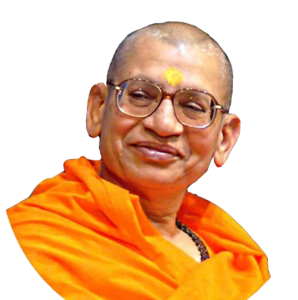
*Swami Viditatmananda Saraswati has been teaching Vedānta Prasthānatrayī and Prakaraṇagranthas for the last 40 years in Ahmedabad, Gujarat. Throughout the year, he conducts daily Vedānta discourses, accompanied by retreats and Jñāna Yajñas on Vedānta in different cities in India and foreign countries.