Hindu scriptures, epics and literature
The sacred books are the Vedas. There are four Vedas – Rig-veda, Yajur-veda, Säma-veda and Atharva-veda. The word Veda is derived from the root vid – to know. The Vedas are books of knowledge. In the Veda, it is the truth and not the one who reveals that is important. There is a popular saying that truth can be learnt even from a child. Most people do not even know the sages through whom the mantras were revealed. They know the mantras and the truth.
The Vedas are the most sacred books of Hinduism. They reveal the eternal values, truths of life – the truth of the universe, the truth of the individual, the truth of god and the relationship among the individual, world and God. They also tell us about how to live a life, which is in keeping with the realities of life. That way of life is called dharma.
Dharma and Brahman are the two main subjects that are discussed in the Vedas. Brahman or God is the ultimate reality of life, and dharma is the righteous way of life that is in keeping with this reality. If life is in harmony with this reality, then there is a harmony within and around. Vedas teach us how to live a harmonious life that is conducive to happiness and growth, so that ultimately the truth can be realised.
Vedas reveal that the Truth is not apart from me. It is my very nature. I am as though separated from the truth that is my own self due to ignorance. Living a dharmic life is conducive to slowly shedding this ignorance. Ignorance brings about many false notions, complexes and perceptions. Living a life of dharma, the mind becomes sättvic, pure, and perceptions become clearer, and emotions become mature. Ultimately, a stage comes when one is ready to devote one’s life exclusively to the pursuit of knowledge of truth.
Vedas teach the two ways of life – a life of activity and a life of contemplation. In the life of activity, also knowledge is very much involved because when one lives a life based on dharma, it is a life that is in keeping with the truth. Slowly, the truth becomes evident; it manifests in one’s life. That is how one gains a glimpse of the truth, and as a consequence, there arises a keen desire to know that truth or the reality. That is how a person becomes adhikäri, fit to devote himself or herself to the pursuit of knowledge.
Even though in the Vedas there are instructions of do’s and don’ts, they are not mandates as much as they are, in fact, statements of knowledge. When the Veda says ‘do this’, it is for you to know that that conduct will be conducive to your well-being, and when it says ‘do not do this’, then it is to save you from harm. Vedic statements teach us a way of life. It is up to us to follow them.
Hindus will say that knowledge is the most important thing in life. Whatever we do is determined by our understanding. If one has the right understanding, one’s actions also will be right. Rather than emphasising what to do and what not to do, the Vedas seek to educate the person as regards what is helpful and what is harmful. Human has free will, the faculty of choice and the responsibility to make the right choices. Because he has the freedom to choose, he may make a wrong choice. Therefore, it becomes necessary to educate and guide him to know the right and wrong choices.
Therefore, the first section of the Veda teaches dharma—what is in keeping with the obtaining order of harmony. Dharma, the righteous way of living, becomes the subject of the first section of the Veda called Karma-kanda, and brahman, the God or the Truth, becomes the primary subject of the second part of the Veda called jnana-kanda. So the Vedas are broadly divided into two sections: karma-kanda and jnana-kanda.
Karma-kanda deals with karma or activity. Jnana-kanda deals with knowledge. The first part of human life is pravrtti, activity. The later part of life may be devoted to nivratti, the pursuit of knowledge and contemplation. These two lifestyles are taught by the Vedas. It is necessary for a human to be active in a righteous way. It is conducive to his/her personal growth and contribution to society. Dharma, the righteous way of life, is in tune with the universal harmony. By living that life consciously and intelligently, one comes to a point when activity and paramount actions have served their purpose and have given emotional maturity. One gains the purity of mind, and in that mind, a keen desire for knowledge arises. That is the time when one is ready to give up all activity and embrace a life of contemplation. Sometimes it is called the life of renunciation. So the first part of life is for worshipping God, and the second part is for knowing God. Worship is the first stage, and knowledge is the second stage.
Karma-kanda instructs about various rituals, various codes of conduct, how to make our lives worshipful, prayerful, a life that is based on responsibility, a sense of gratitude, sensitivity about one’s place in the universe and the grace that is enjoyed, awareness of how to make one’s contribution in response to the privileges one enjoys. It is a beautiful way of life that the Vedas teach us. For a common person, it is difficult to understand and interpret the Vedic truths. Therefore, there is another body of literature called the småti. Traditionally Vedas are called çruti, that which is heard, seen and known. In ancient times, the method of passing on the teaching was from the teacher to the disciple. It was an oral method. Smritis means memory.
Remembrance or memory is based on experience. You can remember only what you have experienced. Great sages who experienced the truth revealed by the Vedas expressed that truth in their own words so that the common people could understand the teachings of the Vedas. Smritis are texts composed by great sages. They are also highly revered in the Vedic tradition. Their words are taken as authentic knowledge. Smritis explains in great detail how to put into practice the eternal values taught by the Vedas.
Vedas would say satyam vada, speak the truth; dharmam chara, follow righteousness in life; himsam na kuryät, do not hurt any living being. What do these statements mean to us? How do we interpret these values? Universal values require to be interpreted in particular situations. What do truth and ahimsä mean in a given situation to a given person? The småtis help us interpret these various values in specific situations. They tell us about the code of conduct as to how one should conduct oneself. Depending upon one’s stage in life, caste, and various conditions, how to implement these codes of conduct is one of the important teachings of the småtis. They also talk about the creation, various gods, duties of the kings, politics, the system of justice, etc. There are parts that talk about castes and stages of life, the code of conduct, the righteous way of living, knowledge and so on. It is a body of literature that addresses the entire spectrum of life.
Smritis are said to be eighteen. Of these, the Manu-småti, the code of Manu, is the most famous. Some of the other famous smritis are those of Yajnavalkya, Parashara and Gautama. The third body of literature is the Puranas, mythological literature. The truth in the Vedas is told to us in a symbolic way in the form of various stories of incarnations of gods, devotees of god, saints and kings and good and evil people. The conflicts between devas, gods representing the divine tendencies and asuras, demons representing the devilish tendencies, are also portrayed in the puranas and how the devas, with the grace of God, were able to win over the demons.
Grace of God, its place in one’s life, the devotee and devotion to the Lord are very beautifully depicted in the Puranas. Shruti, Smriti and Puranas are the three-fold philosophical, religious and mythological literature upon which one could say Hinduism is based. It keeps evolving. Subsequently, when different teachers came along, their works were also looked upon as authentic ones.
Where did the Upanishads come from, and what is their importance in Hindu philosophy?
The Upanishads are a part of the Vedas. Vedas can be broadly classified or divided into two sections – karma-kanda and jnana-kanda. Upanishads form the jnana-kanda that deals with the knowledge of the realities of life. The word upaniñad is derived from the root sad, with prefixes upa and ni. The word is explained differently by different people. One explanation is upa – in the vicinity; ni – below; – sad to sit. Some western scholars explain the Upanishad as knowledge that is imparted by the teacher to the student when he/she is sitting at the feet of the teacher. Some Upanishads are in the form of a dialogue between the teacher and student. Typically, an aspirant approaches a wise person and asks a question. The wise person replies, and that is the Upanishad. It gives us an insight into the nature of the reality of the Self, the Universe and God.
Questions naturally occur in the human mind because the intellect wants to know. The desire for knowledge is expressed through various questions. The teacher unfolds the nature of the truth to the disciple.
Ädi Shankaracharya explains the word upanishad in this way: upa – samipye, in the vicinity; ni – niscitam, that which is ascertained; nad comes from the root nad. Shankaracharya explains that the root nad, as told by sage Paniné, has three meanings: gati – going, visharanam – loosening and avasädanam – destroying. First, the Upanishad is knowledge about that which is very close, when the closeness is without any restrictions. What is that which is closest to me? It is nothing but me. The Upanishad is the knowledge of the Self. The prefix ni reveals the nature of that knowledge. It is ascertained knowledge that is free from doubts and errors. The root ñad reveals the purpose of the knowledge.
Since we are born ignorant of the true nature of ourselves, the knowledge of the Self is extremely important. Unfortunately, we also entertain false notions about ourselves. The upaniñads reveal that each one of us is a whole and complete being. Aham brahmäsmi – I am Brahman, limitless, whole and complete, is the truth about myself and about everyone. But by birth, I take myself to be incomplete. Even though Self is immortal by nature, I take myself to be mortal; Self is knowledge by nature, I take myself to be ignorant; Self is happiness by nature, I take myself to be unhappy. Thus, I entertain totally contrary views about myself and suffer because of them. I cannot accept myself when I find myself to be mortal, unhappy and ignorant. This is the cause of all sadness. Humans are striving to become free from sadness. Chhandogya Upanishad says, “Knower of the Self crosses the ocean of grief”. Grief or sadness is caused by the ignorance of the Self. Knowledge of the Self will completely remove that ignorance.
As the teacher unfolds my true nature, the false notions that I entertained begin to fall off. Thus, I progressively become free from the nagging sense of smallness. This is called visharanam, loosening of the bondage of false notions, followed by avasadanam, destruction of the notions born of ignorance and gati, leading to the true nature of the Self that is Brahman, wholeness and completeness. This is the primary teaching of the upaniñads. They are considered to be great treasures of Hinduism. Many great Western scholars were also highly impressed by this treasure when they were exposed to the teaching of the upaniñads. They have expressed a great sense of gratitude and fulfilment from their study.
…to continue
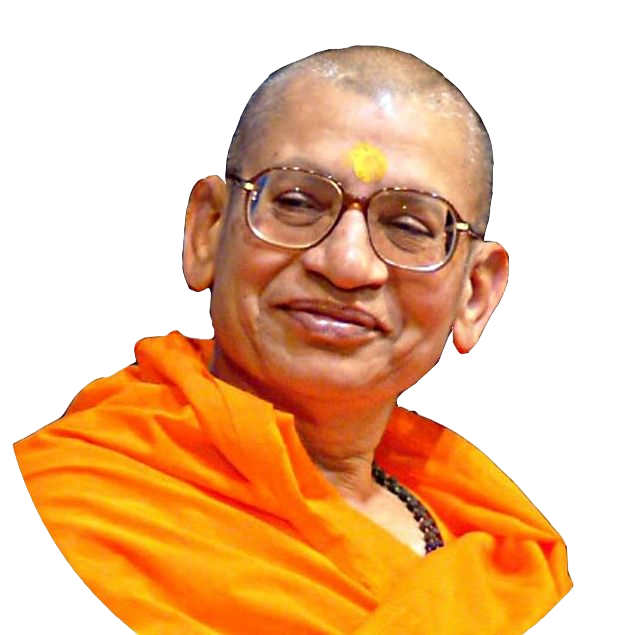
*Swami Viditatmananda Saraswati has been teaching Vedānta Prasthānatrayī and Prakaraṇagranthas for the last 40 years in Ahmedabad, Gujarat. Throughout the year, he conducts daily Vedānta discourses, accompanied by retreats and Jñāna Yajñas on Vedānta in different cities in India and foreign countries.