Spirituality: Püjä is the best means to achieve spiritual success
By Swami Viditatmananda Saraswati*
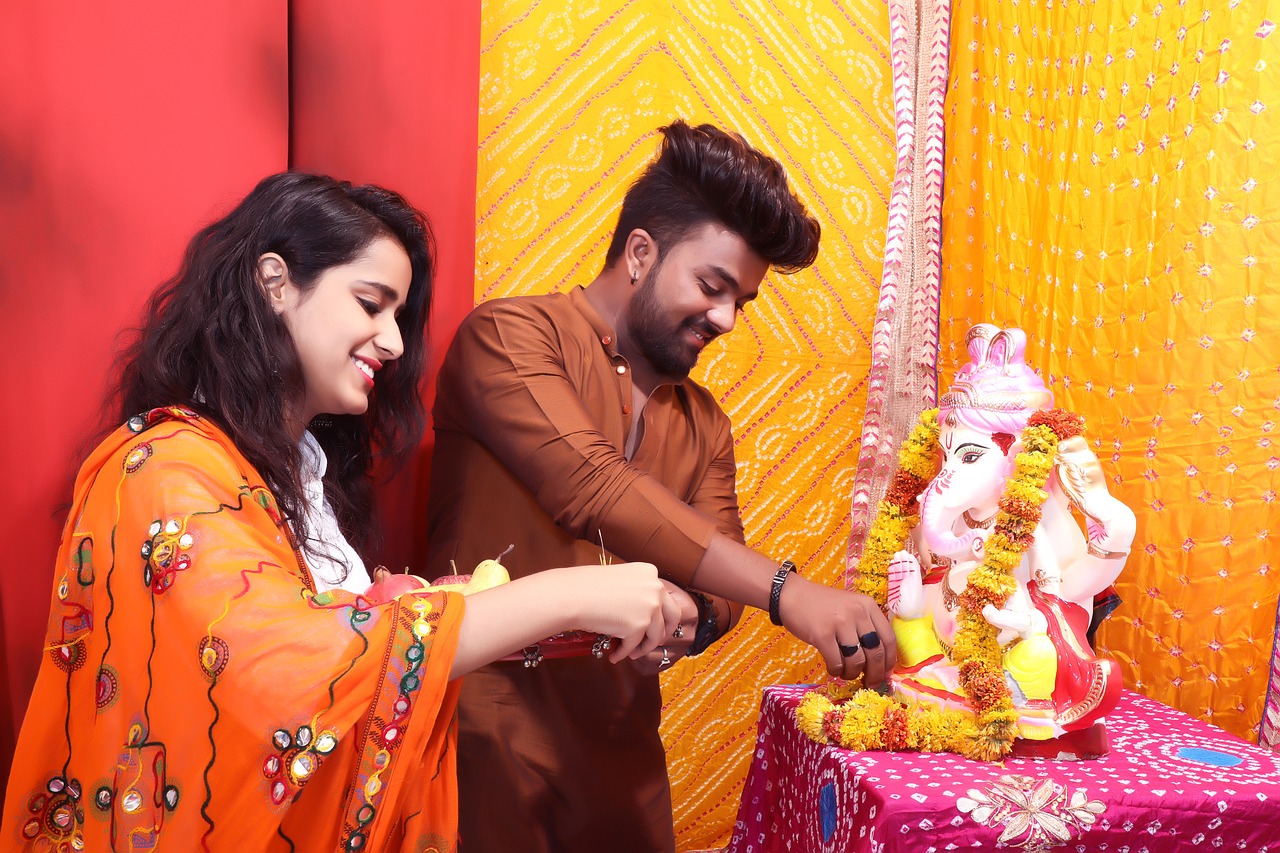
To worship, to offer flowers, to revere, to welcome with respect, or to offer gifts — are the meanings of the word Püjä.
Lord Krishna says in the Bhagvad Gītä, that the one who faithfully worships me with his mind completely dedicated to me is the most exalted amongst all the Yogīs. Thus, it is desirable that the mind of the devotee is completely focused on the Lord while worshipping Him. Performing Püjä is the best practice for focusing the mind; as the devotee’s whole personality — his body, his speech and his mind — is involved in Püjä. For example, while bathing the altar of the Lord during Püjä, hands are involved in pouring water or other material, the speech is reciting a mantra or a hymn and the mind full of devotion revels in the Lord. Thus, the whole personality of a devotee is involved in Püjä, where the chances of distraction or being mechanical are very less.
In Püjä, there is a sequence and also a method for offering different materials. One needs to be alert to observe the sequence and to follow the rituals. This helps the mind develop alertness and concentration. Also, the devotee can make each step of Püjä more interesting as per his own liking. In this way, the creativity and the art hidden in the devotee blossom. Therefore, Püjä is the best means to achieve spiritual success.
Püjä provides an environment which invokes a devotee in us. By performing regular Püjä, we can establish a beautiful and healthy relationship with God. This relationship will help invoke emotions from one’s heart to flow towards God. I may relate to God as my father, mother, master, friend, son or a beloved one. And so, I select such a form of God which nourishes the desired emotions in me in congruence with my relationship to Him. For this purpose, in the Vaidika Sanätana Hindu Dharma, the scriptures and the gurus give us numerous names and forms of God, with the help of which we can invoke God at the altar and invoke the devotee within us.
Devatäs in Vaidik tradition
Sometimes a misunderstanding is seen even amongst the Hindus that we believe in many Gods, and that all the Gods are different from one another. That is to say that one particular God is superior to the other God and inferior to another one. There are many religious sects in India, which is a praiseworthy thing, because though every human being’s goal is the same, everybody’s liking is different. Therefore, the variety of religious sects is in congruence with the differences in the likes of different human beings. But unfortunately, every devotee thinks that his own religious sect alone is superior and all others are inferior.
However, the truth is that there is only one God. This one, the immutable God, only takes various names and forms by his unimaginable power and performs divine play. It is said in the Vedas:
indram mitram varunamagnimähuratho divyah sa suparëo gurutmän,
ekaà sadviprä bahudhä vadanti agnim yamam mätarisvänamähuh.
The truth is only one. The wise men call it by different names as Indra, Mitr, Varuna, Agni, Divya, Suparna, Garutmän, Agni, Yama and Väyu. Rigveda 1-164-46
The God possesses infinite qualities. He simultaneously performs infinite actions in this world, like creation, sustenance and destruction. God is the one who presides over all the actions and is the giver of the fruits of all the actions, and also the ruler of the universe. He blesses the devotees, controls the evil and establishes the righteousness. He is the intelligent cause of the creation; that is, He is the intelligent consciousness who creates the universe. Also, He is the material cause of the universe – the substance from which the whole universe is made. In this way, the creator is God, and that which is created (the universe) is also God. He is omnipresent (present everywhere) and at the same time, He transcends everything. From one viewpoint, God is said to be different from the individual soul and from another viewpoint, the individual soul is said to be part of God; however, the ultimate truth is that there is no difference between Jiva (individual soul), Jagat (creation, i.e. universe) and God. The glory of God is beyond mind and speech. The scriptures also cannot describe God as “this is how He is” (meaning do not objectify Him in the realm of words). Thus, the human mind cannot completely perceive or objectify God. So, different varieties of forms of God are given for fulfilling the different needs of the varieties of devotees, so that everyone can worship God and establish an emotional relationship with God, endowed with qualities that appeal to that particular devotee. We call such forms of God deities. Every deity specifically highlights specific qualities and actions of God. As a creator, God is called Brahmä. As a sustainer, He is called Vishnu. As a destructor, He only is called Rudra. Most of the deities have their power as an accompanying consort. Sarasvati, Lakshmi and Pärvati (Durgä) are respectively the consorts (power) of Brahmä, Vishnu and Siva. Besides this, Lord Vishnu is worshipped in his various incarnations (Avatär). Lord Siva and Goddess Pärvati are also worshipped in their various manifestations.
Also, certain deities are worshipped for certain special purposes. For example, Lord Ganesha is worshipped to remove obstacles in work; Goddess Lakshmi is worshipped to attain wealth, and Goddess Sarasvati is worshipped to attain knowledge. However, there is no fixed rule in this matter. These deities (or, for that matter, any other deity) can be worshipped for any other purpose or without any purpose or personal desire. A devotee can worship his favourite deity (ista devtä) for any purpose. Lord Krishna says in the Bhagvad Gitä that whenever a devotee worships a deity in a particular form with whatever faith, I make his faith stronger in that particular form itself. That devotee worships that particular form with faith, and alternately, he attains the rewards produced by Me only. Thus, only one single God manifests as different deities (devatäs) and He alone gives the fruits of the Püjä to the devotees worshipping Him as these devatäs. Thus, each of the devatäs like Brahmä, Visnu, Mahesa, Ganesa, Äditya, Durgä, etc, not only represents a particular quality or power of the God, but each of these forms also represents the God as all knowing, omnipotent and having all the virtues. Also, the form of each devatä does represent the God as Supreme Self, which is formless and attributeless, and that which transcends all the forms and attributes.
Thus, each devatä has a specific quality and specific power to give specific rewards (of actions/püjä performed) as compared to other devatäs. However, each devtä being God in its essential nature, has all the powers and all the virtues.
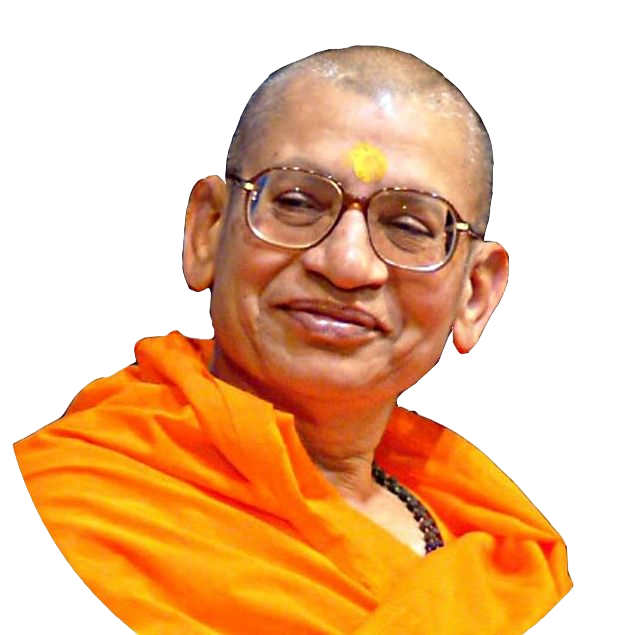
*Swami Viditatmananda Saraswati has been teaching Vedānta Prasthānatrayī and Prakaraṇagranthas for the last 40 years in Ahmedabad, Gujarat. Throughout the year, he conducts daily Vedānta discourses, accompanied by retreats and Jñāna Yajñas on Vedānta in different cities in India and foreign countries.
Image by deepak meena from Pixabay