Spirituality: Gita’s Timeless Wisdom for Inner Peace
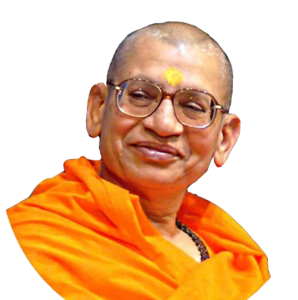
By Swami Viditatmananda Saraswati*
Krishna’s Teachings Free Arjuna’s Grief
Q: The Bhagavad Gita is considered to be the essence of Hindu dharma. Is it a scripture? Why is it so much loved as a text?
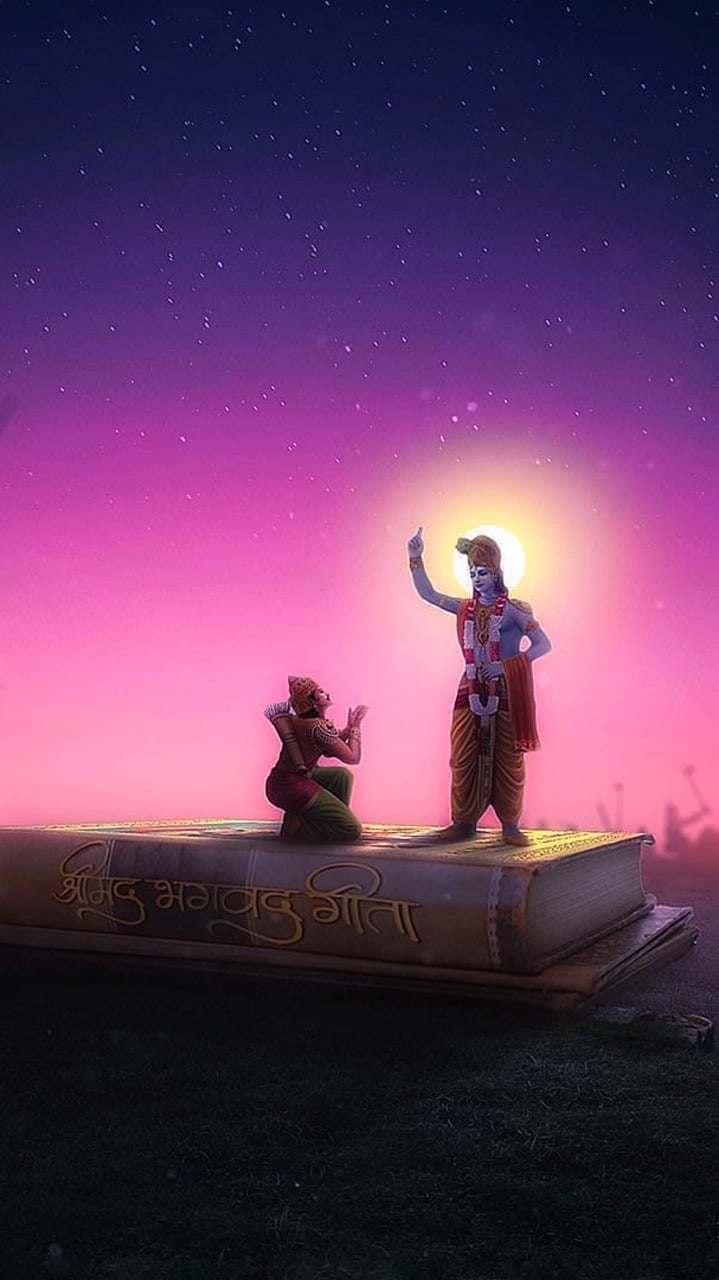
A: The Bhagavad Gita is the teaching imparted by Lord Krishna to Arjuna in the midst of the battlefield when Arjuna was grieving at the prospect of the death of his near and dear ones. Because of grief, he lost all motivation to fight the battle.
His grieving mind also justified why the battle should not be fought. He submitted to Lord Krishna, saying that he would not fight. But in his heart, he also knew that this battle was meant to protect dharma, and it was his duty as a kshatriya to fight against the evil of adharma, which the other side stood for. Thus, there was a conflict between duty on one hand and attachment on the other. This conflict intensified the grief. But in that state of mind, Arjuna also got the insight that it is not just a given situation but something more fundamental, which is the cause of human grief. So he asks the Lord, “Please teach me that by which I can gain the ultimate good in my life, by which I can gain complete freedom from sadness, culminating in fulfilment in life.” This is the background in which the teaching of the Bhagavad Gita starts.
Arjuna became instrumental in the imparting of this teaching. He represents a human who has lived the life of dharma, struggled and fought in his life and made great achievements. So there is no reason for grief as far as material accomplishments are concerned. But still, he finds himself grieving because of the conflicts arising in his mind. The teaching of the Bhagavad Gita is a solution to human grief, which is the fundamental human problem.
The reason why the Bhagavad Gita is so appealing is that it addresses the very fundamental human problem of grief, sadness, bondage and limitation. A human cannot accept them. He is constantly striving to become free from them.
Lord Krishna teaches how to free oneself from grief, how to own up to one’s true nature, which is wholeness and how to gain freedom. It is the ignorance of one’s true nature that causes misconceptions about oneself, because of which one entertains a variety of false notions and complexes about oneself. They are the cause of grief or sadness. Lord Krishna addresses two important misconceptions that a human entertains about himself. One is that he is a mortal being. This notion arises on account of taking the physical body as the Self, and hence birth, death, etc., of the body are taken to belong to the Self. Hence, the death of oneself or of the near and dear ones becomes a cause of grief. With reference to this, Lord Krishna says, “The Self is never born nor does it die. It is unborn, eternal, everlasting and ancient; even though the body is slain, the Self is not (2:20). Weapons cannot cut it, nor can fire burn it; water cannot wet it nor can wind dry it (2:23). Just as boyhood, youth and old age belong to the body but attributed to the Self, even so the attainment of another body. The wise man does not get deluded about this (2:13). The wise do not sorrow over the dead or the living (2:11).” Hence, if the Self is truly known for what it is, there is no occasion for grief.
Another notion that causes grief is the sense of accomplishment, which also gives rise to the sense of experienceship. These cause guilt and hurt, respectively, which are major causes of sorrow. Lord Krishna says, “He who takes the Self as an agent of the act of killing (meaning, takes the Self to be a doer) and he who takes the Self to be killed (meaning, takes the Self to be an experiencer)—they are both ignorant because the Self neither kills nor is it killed (2:19). Arjuna, the one who knows the Self to be imperishable, eternal and free from birth and decay —how and whom will he cause to be killed, how and whom will he kill?” (2:21). An act of killing and the experience of being killed are representatives of all actions and experiences. The Self does not perform an action, nor does it become an object of someone else’s action. There can be no guilt or hurt if the Self is known as such.
Lord Krishna teaches how we can make our lives a process of growth and maturity so that the mind becomes prepared for the knowledge, and one gains the ultimate goal, which is liberation. The Gita teaches karma-yoga, performing actions in the spirit of worship of the Lord. This attitude of yajïa— reaching out and self-offering—is a way of freeing oneself from small-mindedness, self-centeredness, fears and insecurities. It enables one to discover satisfaction and joy from one’s own self. It is a process of self-purification. The impurity is nothing but self-centeredness, which arises from a sense of insecurity caused by ignorance. By not validating the insecurity but deliberately adopting the attitude of self-offering, which is based on security, one invokes the inner richness, which is the nature of the Self. This process of performing actions is conducive to discovering inner strength.
The teaching of karma-yoga may briefly be stated this way. ‘May you perform your actions with a sense of duty and responsibility. Recognise that you are not an isolated being but a member of the whole universe. You are enjoying the benefit of what the universe does for you. Therefore, you should appreciate this and perform your actions with a spirit of gratitude. The whole universe functions around the concept of yajna – offering oneself. Every element in nature offers itself to the totality. So may you also adopt that same spirit of offering to the totality, which is nothing but God. Perform the actions as they should be performed and gracefully accept the outcome as prasada, the grace of the Lord.
Only a devotee of the Lord can do this. A person with discrimination can discern that what one is seeking in life is to be found in one’s own self by undertaking a process of self-growth. Only such a person has a value for performing actions as an offering to the Lord and accepting the results as the grace of the Lord. While performing an action and receiving the result, the mind is centred on the Lord. Thus, for a karmayoga, one who performs actions with an attitude of yoga, the life becomes a constant remembrance of the Lord. That is how he gets connected to the Lord.
The Bhagavad Gita has eighteen chapters. The subject matter can be divided into three. The first six chapters deal with karmayoga and the nature of the Self. The second six chapters deal with bhakti-yoga, devotion to the Lord, the devotee and the nature of the Lord. These chapters expound the nature of the Lord and explain how the Lord is both the efficient and the material cause of the creation.
He is the transcendent principle becoming immanent as the whole universe. There is only God, one without a second. There is nothing but God. The universe is the glory of the Lord. The 11th Chapter presents the Lord as the cosmic being.
We do not look upon devotion as something different from karma-yoga. When we say that we perform an action as an offering to the Lord, it means there is an understanding of the Lord. Receiving the result as the grace of the Lord also requires an understanding of the Lord. Karmayoga is essentially a bhakta or a devotee of the Lord. Devotion and its glory are highlighted in the second section. Various kinds of devotees are also described.
The 12th Chapter, which is the last chapter of the second section, beautifully describes the devotee who has gained the knowledge of oneness with the Lord. In his mind, there is nothing but the Lord.
The last six chapters describe jnanam, knowledge revealing the identity between the devotee and the Lord. While performing karma and while worshipping the Lord, a seeming duality is there. But when one lives the life of devotion, which is expressed through one’s actions, speech and thoughts, he becomes ready to appreciate the fact that the Lord is not separate from him. Particularly, chapters 13, 14 and 15 reveal the identity between the individual and the Lord. Chapters
16 and 17 describe basic values that are required to prepare the mind. This discussion continues through the first half of Chapter 18. The latter half of the 18th chapter is the summary of the entire teaching. In the 66th verse of this chapter, concluding the teaching, the Lord says, “Giving up all pursuits, may you take refuge in me. I will release you from all obstacles. Do not grieve.”
The Lord means to say, “Submit to me, recognising me as your only goal in life. I am the one without a second. I am your very Self. Surrender and devote yourself completely to me, and all obstacles will be removed by my grace. You will then discover total freedom from grief. You will get established in your nature of fullness.”
This is briefly what the Bhagavad Gita teaches. It is said to be the essence of the teachings of all the upaniñads. It is traditionally said that if all the Upanishads are compared to cows, then the Gita is the very milk of the cows. It is milked by Lord Krishna for the calf Arjuna. The nectar of the Gita is available to all the pure-hearted people, devotees and aspirants. Thus, making Arjuna an apparent cause or pretext, Lord Krishna imparts this eternal teaching to mankind.
The Bhagavad Gita is not confined to any particular tradition or sect. It is not a sectarian text. Its teachings apply to every human, at all times, places and conditions. It is a universal teaching because humans are primarily the same whether in ancient times or modern. The fundamental problem of humans everywhere is the same. Their aspirations are also the same. The true method of fulfilling those aspirations is also the same, which is by knowing the Lord as one’s own Self. For that knowledge, devotion to the Lord is the means. The Bhagavad Gita presents devotion as the means to that knowledge. Karmayoga is not different from bhakti or devotion. Thus, the Gita teaches brahma-vidya, knowledge of the truth and yoga-shastra, means of gaining that knowledge.
The scope of the Gita is somewhat more than that of the Upanishads. Upanishads are usually taught to qualified students. They are taught either on the banks of the rivers, in the forests or in the places of solitude and sanctity where the right kind of atmosphere obtains for this contemplative thinking and teaching. But the Gita is taught in the midst of a battlefield. It is a revolution. The student of the Bhagavad Gita is not as highly evolved as that of the upaniñads. But the Gita gives solutions to the problems of those who are going through the conflicts and battles of life, so as to come out victorious. The battle of Kurukshetra can be symbolised as the battle going on in the human mind as with Arjuna, for whom on one hand, it was his duty as a kshatriya to fight the battle because it was for protecting dharma, but as an emotional person he could not accept the pain that would ensue due to this war because it would involve the death of his kith and kin. It was duty versus attachment.
Thus, following the basic values involves pain and struggle. One has to gain victory over this struggle. The Lord identifies the enemy within, with whom the human has to fight. It is one thing that Arjuna had to fight with his external enemy, but there was also the inner enemy. Lord Krishna says, “It is desire that gets transformed into anger, which is like fire that can never be satiated. It is the cause of the violation of all the values.”
The Bhagavad Gita does not teach war or violence as some may think. It teaches the importance of performing one’s duty, whatever response a situation calls for. What is duty depends on one’s role and the situation in which one is placed. Every situation expects a certain response from an individual. A correct response often requires inner courage, conviction and strength. The Lord lays emphasis on duty, what one needs to do, even if the result is painful. Results of righteous actions that may seem painful in the short term will ultimately bring about gain. There is no gain without pain. If the pain is sustained with maturity, then it becomes a means of inner purification.
We have an active, an emotional and an intellectual personality. All these must be dedicated to the Lord. The dedication of the active personality becomes Karmayoga, that of the emotional personality becomes Bhaktiyoga, and centring the intellect upon the Lord becomes Jnanayoga. There should be a synthesis of all three. They cannot be compartmentalised. Karma, bhakti and jnana cannot be three different paths. A person is not just performing actions. He is an emotional person also, and has an intellect that also wants to know. The entire personality has to evolve. There has to be an integration and evolution of the entire personality. This is outlined in great detail in the Gita. It is a complete teaching.
Describing a wise person, Lord Krishna says, atmanyeva atmana tushtah, “He is satisfied in the Self by the Self.” That also brings about a satisfaction with the entire creation as it is. A wise person recognises the whole universe as the manifestation of the Lord, as a manifestation of his own Self. He has no raga or dvesha, attachment or aversion. All there is is only love from his heart, embracing everybody and accepting everybody. Since he has no agenda anymore, his life is totally available for the well-being of mankind. The Gita describes in more than one place the jivan-mukta, one who is liberated while living. Moksha, freedom is possible right here. Perfection is to be attained in this life itself. Humans will not be satisfied unless this perfection is gained. This is an ongoing process. In every life span that is lived on the basis of dharma and devotion to the Lord, a certain amount of purity and clarity is gained, which moves one towards perfection. The beauty of the whole thing is that the Self is perfect. This has to be recognised. This can happen only when you are alive in a human body. It can be made to happen right here.
It is very comforting and inspiring that this goal of unconditional freedom can be attained here. At the same time, it places great responsibility on us that it has to make it happen. One cannot be complacent and take things for granted. One must exert the utmost to make it possible right here. In case it does not happen in this lifetime, there is no need to despair because this process will continue. One who is on the right path of devotion and righteousness can never lose. His evolution will continue.
Many beautiful things are said in the Bhagavad Gita that give us comfort, direction, promises, insights, attitudes, values, etc. that we need in our lives. There is no scriptural text in such a short span that gives such profound material as is required by an aspirant. That is why the Bhagavad Gita is so appealing to everyone. It stands on its own without any mechanism of propaganda. It has caught the attention free from all doubts. I will do your bidding” (18:73). Arjuna is freed from all conflicts and grief and has no difficulty in doing what is to be done. of great people all over the world. Mahatma Gandhi said, “Whenever I have any problem, I open a page of the Bhagavad Gita and I get inspiration and an insight into the solution.” It seems that the Gita has solutions not only for spiritual problems but all problems. Ultimately, all the problems arise from spiritual problems because humans are spiritual beings. All the problems and conflicts—the topical problems in day-to-day life—have their source in spiritual problems.
People find a lot of material in the Bhagavad Gita applicable to management situations, also, because it teaches self-management. Everybody is a manager since everyone has to manage some situation or the other. But people pay attention to the things that are to be managed, overlooking the fact that one has to manage oneself also. Managing others becomes easier when one can manage oneself. After receiving the teaching, Arjuna says to Lord Krishna, “By your grace my delusion is gone, and wisdom has been gained. I stand free from all doubts. I will do your bidding” (18:73). Arjuna is freed from all conflicts and grief and has no difficulty in doing what is to be done.
*Swami Viditatmananda Saraswati has been teaching Vedānta Prasthānatrayī and Prakaraṇagranthas for the last 40 years in Ahmedabad, Gujarat. Throughout the year, he conducts daily Vedānta discourses, accompanied by retreats and Jñāna Yajñas on Vedānta in different cities in India and foreign countries.