Spirituality: Epics Weave Dharma into Hindu Soul
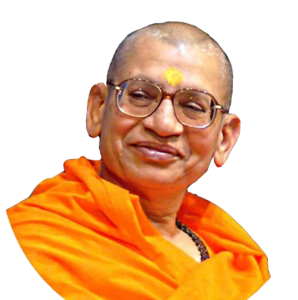
By Swami Viditatmananda Saraswati*
Ancient Tales Shape Modern Morality
Can you tell us about the importance of the great epics Ramayana and Mahabharata as they apply to the Hindu way of life?
These epics are also called itihasa, history. The word itihasa is derived in this way: iti-ha-asa – thus-it was-indeed, this is indeed how it was. These epics are based on the facts of life, legends of actual happenings. The composers were great sages who were also great poets.
Ramayana is said to have been composed by the sage Valmiki. He is credited with being Adikavi, the first poet. Ramayana is said to be adi kavya, the first work of poetry. It is also called Mahakavya. Kavya, a poem, is that which highlights any one of the rasas, sentiments, whereas Mahakavya, a great poem, highlights all the nine sentiments. There are other mahakavyas also subsequently composed by great poets. Valmiki Ramayana is composed in Sanskrit and has 24,000 verses.
Ramayana is based on the life story of Lord Rama. Being a kavya, it has poetic license also. The story involves various situations, events, people and places. The incidents are very descriptive, eloquent, symbolic, inspiring and often exaggerated. That is how the story of Lord Rama and all others associated with him becomes so inspiring. Lord Rama is said to be the incarnation of Lord Vishnu. The principle of incarnation has been explained before.
Ramayana is the story of the Lord incarnated as a prince. In the Valmiki Ramayana, Rama is presented essentially as an ideal human. We see him facing difficult emotional conflicts. Sometimes we find him joyful, and other times full of sadness. All these sentiments are very well portrayed. We can see what it takes to follow a life of dharma. Lord Rama is said to be an embodiment of dharma. Lord Rama is an embodiment of values such as obedience, reverence for elders, honesty, truthfulness, resistance against evil, and others that were cherished in Vedic times. Ramayana has played and continues to play a very important role in moulding the lives of Hindus. For us, Lord Rama is not just an unconnected historical figure. The stories of Ramayana and Mahabharata are so much woven into the lives of Hindus that the characters depicted in them have become a part of their life. They become role models. It is a beautiful way of teaching values.
Suppose values are presented as commandments, as absolute values. In that case, it becomes difficult to understand and follow them because we do not know what it means to be honest and truthful in various situations. Values have to be interpreted according to time, place and conditions. Following a value brings about conflicts and calls for sacrifice. All this is demonstrated by people who lived a life of righteousness. We learn these values from their lives and not by mere statements. Values are difficult to follow. They cause guilt when we are unable to follow them. But we see that great people also have erred and gone through conflicts while trying to follow dharma.
In the story of Ramayana, when Sitaji spotted the golden deer and wanted Lord Rama to get it for her, he went after it. The deer happens to be a demon, Maricha. His true form becomes evident at the time of the deer’s death. In the voice of Rama, he screams, “Hey Lakshmana, Hey Sita.” Hearing this, Sita felt that Lord Rama was in danger and in need of help. So she asks Lakshmana to go for Shri Rama’s help. Lakshmana says, “Mother, I cannot go because Shri Rama has asked me to stay with you and not leave you alone. This region is infested with demons, and you need protection.” But Sita insists. There is a conflict here. Should Lakshmana follow his elder brother’s directions or obey his elder bhabhi’s order? We learn from the choices made by people in times of conflicts and sufferings, etc., and of triumph also – satyameva jayate, ultimately, truth wins. Following the truth may involve a great amount of struggle and suffering before it wins. Ramayana shows us that dharma wins. It also tells us what it means to be a father, a brother, a wife, an enemy, etc. All the various roles are beautifully depicted. It is a story commonly known to people in India. It has guided the people through the ages. The same Ramayana is rewritten by other authors in regional languages also.
Another famous version is Ramcharitmanas, composed by saint Tulsidas about five hundred years ago.He chose to compose it in the dialect prevalent at that time so that common people could have access to it. He depicts Rama more as God than a human. Bhakti, devotion, is the principal message delineated in this work. The Emphasis in the Valmiki Ramayana is on righteousness. The Ramayana inspired many saints to rewrite it in several Indian languages. Though the basic story is the same, there are variations because every poet or author may describe certain events in his/her own way.
The Mahabharata is perhaps the longest poem, consisting of one hundred thousand couplets. It is said to be composed by sage Veda Vyasa. It has such an importance in the Indian way of life that it is called the fifth Veda. That is the kind of reverence it enjoys in the Indian tradition. It is also a Dharma-shastra. It is the story of the lives of the Pandavas, the five sons of Pandu, and what they had to endure to follow righteousness.
It is a story of great suffering on the part of the Pandavas because of the injustice done to them by their own cousins Kauravas. The conflict between them culminates in a battle in Kurukshetra. This is called the great war of the Mahabharata.
The great scripture Bhagavad Gita, was taught to Arjuna on this battlefield. The important thing in this work is that Lord Krishna was always on the Pandavas’s side. Pandavas were great devotees of the Lord. We learn that to follow the life of dharma, it is important to have the grace of the Lord. Only when God is present in our lives is it possible to follow dharma because following it involves much conflict, pain and suffering. Our faith is very often challenged. In times of crisis, what comes to our aid is the trust in the Lord and the grace of the Lord.
The Pandavas always invoked the grace of Shri Krishna, who is portrayed as the Lord. He was a great friend of the Pandavas. He was there to help and guide them in all situations. Because of him, they were able to win the battle against the powerful Kauravas.
The Mahabharata is a great epic. The descriptions are fascinating, and the dialogues are educational and enlightening. The teaching of Brahma Vidya is also delineated in this epic. Different kinds of codes of conduct are also taught. It has a tremendous impact on the lives of Hindus. They continue to take lessons from this story even today.
In several instances in the Mahabharata, it seems that Lord Krishna compromised the values of dharma to save the Pandavas. What are your thoughts on that?
We find some instances where the values were bent in cases such as the killing of Drona, Karna, Duryodhana, etc. It looks that way. That is why we say that the interpretation of values is very important. Values such as non-violence, fairness, etc., are no doubt universal. What fairness means in a given situation is, however, a matter of interpretation. We look upon Lord Krishna as an embodiment of fairness. There was no partiality on his part between the Pandavas and Kauravas. But then the basic law of cause and effect is that good begets good and evil begets evil. If you live a virtuous life, it will result in success and happiness. A life of violation of dharma results in suffering and defeat. This is the fundamental law. Therefore, defeat does not mean unfairness. Success does not mean partiality. If Lord Krishna is found favouring the Päëòavas, it is only for the well-being of humanity in general. In the Srimad Bhagavatam, we read how Lord Krishna’s life is full of trials and tribulations. He faces the challenges and adopts the path of righteousness to solve them.
This is what the Mahabharata wants to teach us. We find that in the battle of Kurukñetra, Lord Krishna appears to favour the Pandavas. It is the rule that where there is truth and righteousness, there is the grace of God. God is the basic niyati, order or law. Lord Krishna represents that universal order. When we live a life conforming to that order, naturally that order will be favourable to us. It is a live, conscious order. Since the Pandavas lived a life of dharma, the order was favourable to them. This indicates the grace of the Lord. Though the Lord’s decisions seem to support the Pandavas, he was supporting only dharma so that adharma would come to an end. Then only harmony will prevail in society.
Destroying many people on the battlefield was like the act of a surgeon, who may find it necessary to amputate a limb to protect the rest of the body. Similarly, it becomes necessary to destroy evil forces to save the rest of society. When we study the Mahabharata as a whole, we find that Drona, Karna, etc., were destined to die in a certain way. Lord Krishna is also karma-phala-data, the dispenser of the results of the actions. It becomes his role to create conditions so that people receive the appropriate results for their actions. The Lord created those conditions. Despite this, the Lord is fair, and that becomes evident later on. Abhimanyu’s child was killed while still in the mother’s womb. There was a great sadness because the Pandava lineage would come to an end. There was no successor left. When Lord Krishna was prayed to for help, he declared, “If throughout the battle of Kurukshetra, there was no partiality or cruelty in my mind towards either of the parties, let this child come to life.” The child became alive and was called Parikshit. This shows the Lord’s fairness. The epics show how the values were actually lived in various situations. We have to understand the spirit and learn from the lives lived. That learning can then be applied to our particular situations.
*Swami Viditatmananda Saraswati has been teaching Vedānta Prasthānatrayī and Prakaraṇagranthas for the last 40 years in Ahmedabad, Gujarat. Throughout the year, he conducts daily Vedānta discourses, accompanied by retreats and Jñāna Yajñas on Vedānta in different cities in India and foreign countries.