Spirituality: Recognising self as brahman
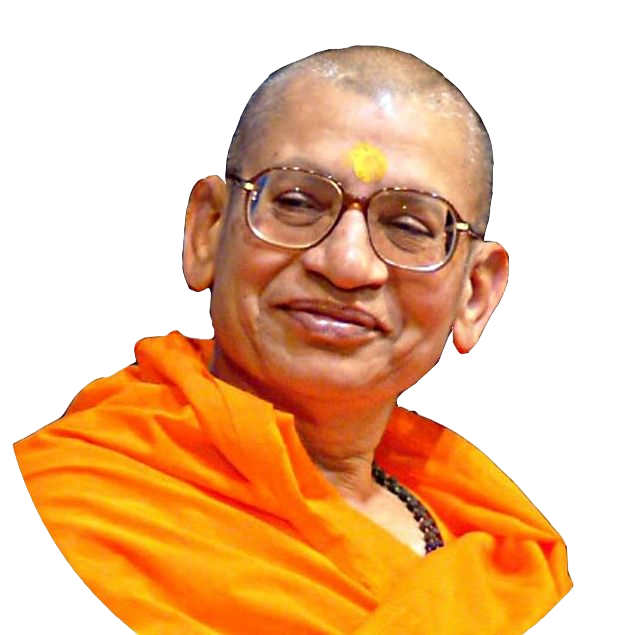
By Swami Viditatmananda Saraswati*
Contemplate on nirguṇa-brahma as I
Through śravaṇam, listening to the teaching of the Upaniṣads and the Bhagavad Gita from the teacher, the devotee comes to know that brahman is ātma; there is only one self; I am brahman. By mananam, asking questions and inquiring into the meaning of the teaching and the nature of the self, the student gains clarity in what he has heard. But even while knowing that vision of Vedanta through śravaṇam and mananam, the devotee might still be under the spell of habitual error and still retain a sense of individuality, a sense of subject-object duality, a sense of separation from brahman. The viveka, discrimination between self and not-self, is not yet complete.
The intellect always wants to understand, so it is always questioning. The mind, on the other hand, always seeks gratification, experience. Thus, it is not enough merely to understand that I am brahman; the knowledge that I am brahman must culminate in recognition or “experience” that I am brahman. That is when the real satisfaction comes. To know the nirguṇa as one’s own self, the ego must be offered in the wake of the knowledge that the ego is false. Thus, now the nature of the devotion changes to perfecting viveka, discriminating the self from the nonself, through contemplation, nididhyāsanam. That is the meditation in the jñāna-yoga stage of devotion.
Objects can only be revealed in the mind by the light of consciousness. The subject objectifies the objects in the mind by the light of consciousness, but the subject, the consciousness itself, is self-revealing. We always know that “I am,” but what we don’t know and need to know is that “I am brahman.” Knowing that in the mind is possible because brahman is self-revealing consciousness; brahman reveals itself as my self. What is required is that the mind that is normally looking outward to the objects must now be turned inward. In that mind, the self reveals itself and thereby the knowledge of self takes place.
It is possible to recognise the self as brahman in a mind that is purified of attachment and aversion and is totally committed to brahman. Knowing brahman is the only agenda of the jñāna- yogī who has chosen the self and is totally devoted to recognising that I am brahman. When that recognition takes place, the mind and intellect get resolved in the self because ātmā is the very essence of the mind and intellect. Discrimination between self and not-self is complete. All false notions about the self are given up. The mind no longer superimposes the body, mind, and senses onto the self. The individuality, ego, ahaṅkāra, is negated by the recognition that it is false, unreal, mithyā.
When the mind stops superimposing the human being onto ātmā due to identification with the body, then it sees the fact that I am ātmā; the self reveals itself. Then what remains is “I am,” which is the limitless brahman. The knowledge takes place without subject-object or seer-seen duality because brahman is self-revealing; it does not need to be objectified to be known. The culmination of contemplation on nirguṇa-brahma is knowledge of the identity between jīva and īśvara where not even a trace of separation remains.
Just as the actor is the truth of both roles, the beggar and the king, nirguṇa-brahma is the truth of both the jīva and īśvara. All the apparent differences in dimension, power, and qualities are differences in māyā- upādhi only. The reality of everything is one nirguṇa-brahma, asti, bhāti, priyam. One consciousness is the truth of everything. In the wake of this knowledge, identity with the ego is given up. The devotee surrenders the ego, offering it to īśvara, and abides in the self.
Knowledge is the culmination of devotion
Abiding in this knowledge is mokṣa, freedom from sorrow. That is jīvan- mukti, freedom while living. The person who abides in this knowledge is called a jñānī, wise person, and a jīvan-mukta, a person who is free while living. This is mokṣa, which is the goal of life, and it can be achieved right here in this life.
Lord Krishna describes this jñānī, wise person, throughout the Bhagavad Gita: Giving up all desires and becoming totally free from cravings, he moves about in the world, happy in himself with himself alone. Having become free from the sense of I and mine, he gains peace or liberation while living. Freed from the sense of doership and attachment to the results of action, he is ever content and free from all dependence. He is one who is happy with what he gets by chance, is above all the pairs of opposites such as heat and cold, pleasure and pain, praise and censure, has no animosity toward anyone, and is the same in benefit or privation. In spite of appearing ever engaged in action, in reality he is not doing anything.
In spite of performing actions, he is not bound by them. His intellect is steeped in brahman, his self is brahman, he abides in brahman, his one and only goal is brahman. His puṇyas, virtuous deeds, and pāpas, unbecoming deeds, are burnt by the fire of knowledge. He does not have to take rebirth. He is the same toward a brāhmaṇa who is endowed with knowledge and humility, towards a cow, an elephant, a dog, and even a dog- eater. His mind abides in the sameness that is brahman and has won over the cycle of birth and death, which is saṁsāra, even while living in the body. Thus, the culmination of bhakti, devotion, is in knowledge, in mokṣa, and in jīvan-mukti, liberation even while living.
Lord Krishna describes four kinds of devotees in the Bhagavad Gita, according to the degree to which the devotee has taken refuge in īśvara: the ārta remembers īśvara only in the midst of pain and adversity; the arthārthī remembers īśvara when a desire is to be fulfilled; the jijñāsu desires to know the truth of īśvara, and the jñānī knows īśvara as himself. By following the program of devotion, the devotee progresses through these degrees of devotion toward the culmination of devotion, mokṣa in the wake of knowledge, from which there is no fall at all.
Praising the jñānī, Lord Krishna says, “The jñānī is distinguished among all of these devotees. His devotion has resolved into oneness and he is always united with me. I am very dear to him and he is very dear to me. All these devotees are exalted, but the jñānī is myself alone. This is my vision, because he whose mind is absorbed in me has indeed reached me, the end beyond which there is no other end. Does this mean that īśvara has partiality among his devotees? No, Lord Krishna says “All are equal to me, I have no partiality toward anyone. Those who seek me with devotion are in me and I am in them. Being totally devoted to īśvara, the jñānī has invoked the grace of īśvara to reveal himself as the self. Grace is favorableness. The Lord becomes favorable and reveals himself. Being completely absorbed in īśvara, the jñānī has negated even the slightest trace of separation from īśvara by knowing that the separation is only a notion caused by ignorance.
There can be no higher end, nothing more or greater to achieve than the limitless, imperishable self. Knowing the limitless imperishable as the self, īśvara’s most beloved devotee cannot suffer any loss or destruction; na me bhaktaḥ praṇaśyati. Being birthless and deathless brahman, the jñānī does not die when the body dies. All injury, affliction, and change happen at the level of the body and mind. The self transcends the body and mind and remains unchanged, completely unaffected by anything that happens to them. Thus, īśvara’s devotee attains the goal of limitless happiness. That is the Lord’s promise.
Om tat sat!
*Swami Viditatmananda Saraswati has been teaching Vedānta Prasthānatrayī and Prakaraṇagranthas for the last 40 years in Ahmedabad, Gujarat. Throughout the year, he conducts daily Vedānta discourses, accompanied by retreats and Jñāna Yajñas on Vedānta in different cities in India and foreign countries.