PM Flags Off New Vande Bharat Trains from Varanasi
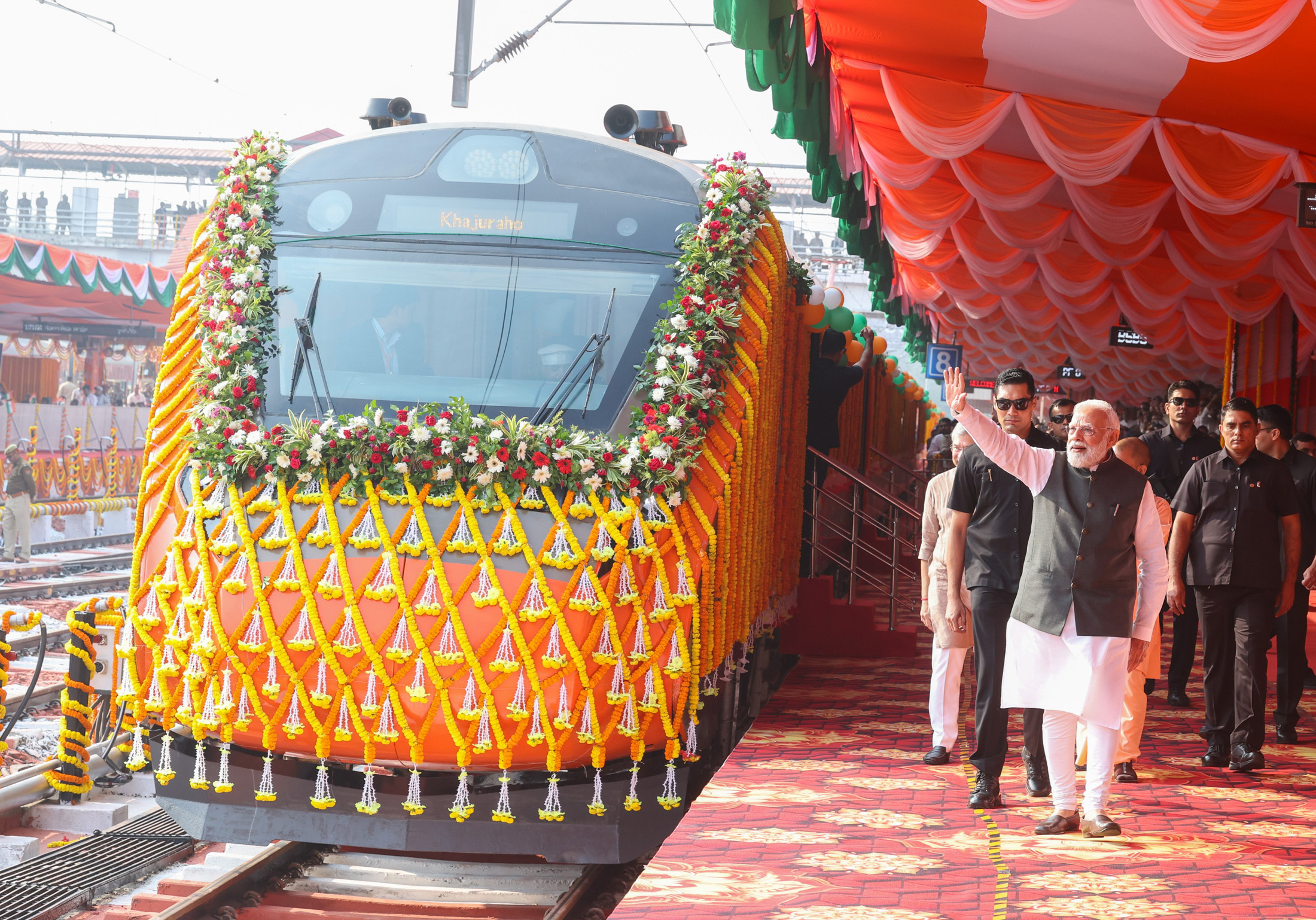
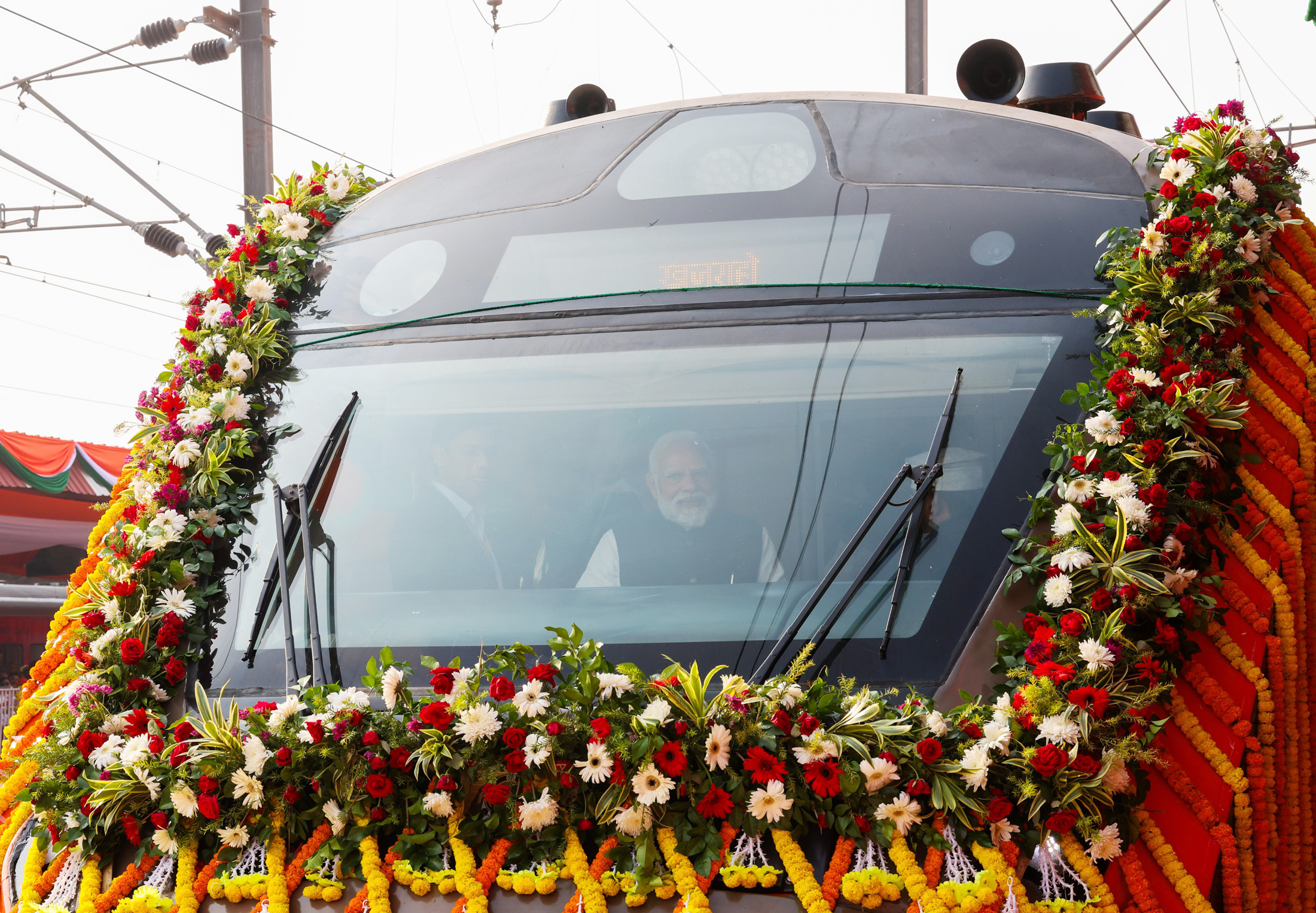
Varanasi: Prime Minister Narendra Modi today flagged off four new Vande Bharat Express trains from Varanasi, marking another milestone in India’s ongoing effort to expand modern, high-speed passenger rail services. The new trains — Banaras–Khajuraho, Lucknow–Saharanpur, Firozpur–Delhi, and Ernakulam–Bengaluru — are expected to significantly reduce travel time between major destinations, enhance regional mobility, promote tourism, and support economic growth across the country.
The Prime Minister said that trains such as Vande Bharat, Namo Bharat, and Amrit Bharat are laying the foundation for the next generation of Indian Railways. He described Vande Bharat as a train made by Indians, for Indians, and of Indians, symbolising national confidence and technological capability.
Under the new rollout, the Banaras–Khajuraho Vande Bharat establishes direct connectivity between key religious and cultural centres, including Varanasi, Prayagraj, Chitrakoot, and Khajuraho. It will save nearly two hours and forty minutes compared to the current travel time, and provide pilgrims and tourists with a faster, more comfortable journey to the UNESCO World Heritage Site of Khajuraho.
The Lucknow–Saharanpur Vande Bharat, completing the journey in approximately seven hours and forty-five minutes, will benefit passengers from Lucknow, Sitapur, Shahjahanpur, Bareilly, Moradabad, Bijnor, and Saharanpur. It will also improve access to Haridwar via Roorkee, facilitating faster intercity movement across central and western Uttar Pradesh and contributing to regional development.
The Firozpur–Delhi Vande Bharat will be the fastest train on its route, covering the journey in six hours and forty minutes. The service will enhance connectivity between the national capital and Punjab’s major cities, including Firozpur, Bathinda, and Patiala, strengthening trade, tourism, and employment prospects in the state’s border regions.
In southern India, the Ernakulam–Bengaluru Vande Bharat will reduce travel time by more than two hours, completing the route in eight hours and forty minutes. Connecting key IT and commercial hubs, it will provide professionals, students, and tourists with a modern, efficient, and comfortable travel option while stimulating economic cooperation and tourism among Kerala, Tamil Nadu, and Karnataka.
Addressing the gathering, Modi said that robust infrastructure had been a defining feature of every developed nation and that India was progressing swiftly on the same path. The addition of these four trains takes the total number of operational Vande Bharat Express services across the country to more than 160.
The Prime Minister said that linking pilgrimage sites through the Vande Bharat network represents a convergence of India’s culture, faith, and development. He referred to centres such as Prayagraj, Ayodhya, Haridwar, Chitrakoot, and Kurukshetra, noting that their enhanced connectivity is transforming heritage cities into symbols of progress.
Highlighting the economic dimension of pilgrimage, Modi said that 11 crore devotees had visited Varanasi last year and more than 6 crore had visited Ayodhya since the construction of the Ram Temple, generating thousands of crores of rupees in economic activity across Uttar Pradesh. He said this growth had created sustained opportunities for hotels, traders, transporters, artisans, and local businesses, especially in Varanasi.
Reviewing development works in the city, which is also his parliamentary constituency, Modi said Varanasi was witnessing expansion in hospitals, roads, gas pipelines, internet connectivity, and sports infrastructure, including the Ganjari and Sigra stadiums and the ongoing ropeway project. He said the government aimed to make visiting and living in Varanasi a distinctive experience while strengthening its position as a regional health and cultural hub.
The Prime Minister cited the Mahamana Cancer Hospital, Shankar Netralaya, BHU’s Trauma Centre and Centenary Hospital, and the divisional hospital at Pandeypur as examples of improved medical access for Varanasi and neighbouring states. He said schemes like Ayushman Bharat and Jan Aushadhi Kendras had enabled lakhs of poor patients to save crores of rupees, helping Varanasi emerge as the health capital of eastern Uttar Pradesh.
During the event, Modi interacted with students who took part in competitions themed on Viksit Bharat and Surakshit Bharat. He praised their creativity and suggested holding a children’s literary meet to showcase their poems and drawings across the country.
Uttar Pradesh Chief Minister Yogi Adityanath and Union Minister for Railways Ashwini Vaishnaw attended the ceremony in Varanasi. Governor of Kerala Rajendra Arlekar, along with Union Ministers Suresh Gopi, George Kurian, and Ravneet Singh Bittu, joined the event through videoconference.
According to official information, the new trains are expected to boost tourism and trade, facilitate faster movement of passengers across regions, and strengthen India’s rail network as part of the government’s vision of providing citizens with world-class, efficient, and comfortable travel.
– global bihari bureau