With funding from the African Development Bank, FAO provided Paulo with seeds for growing other vegetables, allowing him to improve his family’s nutrition. ©FAO/María Legaristi Royo
From sea to soil in crisis-ridden Mozambique, Paulo Benedito’s life was once defined by the rhythmic pull of the ocean. Born and raised in Quissanga, a small coastal town in northern Mozambique’s Cabo Delgado province, he came from a long line of fishermen. For Paulo, the sea was more than a livelihood—it was a legacy, a way of life woven through generations, as constant as the tides.
Each morning, he would set out before sunrise in his wooden boat, the horizon his guide, returning hours later with enough fish to sustain his family. On good days, the surplus catch brought a modest income at the market, enough to send his children to school, support his wife, and contribute to the well-being of his tight-knit community. In Quissanga, Paulo’s life was anchored in stability, purpose, and a deep sense of belonging.
But in 2021, that world shattered. Armed Islamist insurgents in Mozambique—locally known as Ansar al-Sunna or “al-Shabab,” linked to the Islamic State—swept through Cabo Delgado with unrelenting violence. They burned homes, looted villages, kidnapped civilians, and forcibly displaced tens of thousands. The terror tore through Paulo’s community, claiming loved ones and turning the place he called home into a battleground. Overnight, everything changed.
Forced to flee, Paulo arrived at the Meculane Centre for Internally Displaced Persons with his wife and seven children—four of his own and three orphans he had embraced after their mothers were killed in the violence. The transition was jarring. The sea, his lifelong companion, was gone. His boat, his tools, his home—all lost. Farming, an unfamiliar craft, loomed as a daunting necessity. The idea of starting over in a new profession felt overwhelming, yet survival demanded it.
“At first, I didn’t know what to do,” Paulo recalls, his voice carrying the weight of loss. “The sea was all I had ever known. But when we arrived here, I realised I had to learn something new to survive.”
Determined to provide for his family, Paulo joined agricultural training sessions offered by the Food and Agriculture Organization of the United Nations (FAO) in the community. His resolve shone through, and it wasn’t long before he stood out as one of the most promising students. With each lesson, he traded the uncertainty of the sea for the promise of the soil.
“Now, I prefer the land to the sea,” Paulo says, a quiet pride in his words. “Farming is a profession that makes me happier. It’s less risky, and even if I don’t sell anything, at least I know my family will have something to eat.”
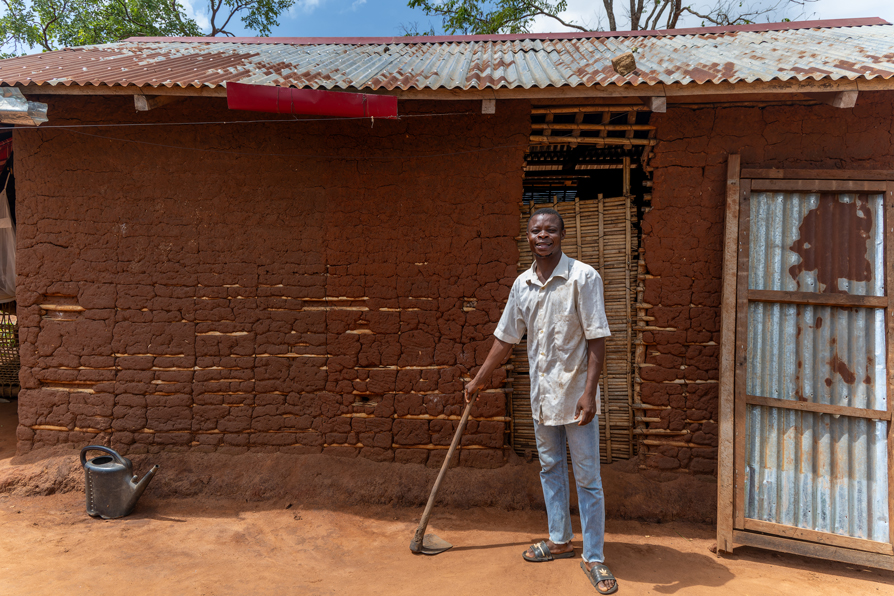
Since arriving in Meculane in 2021, Paulo has rebuilt his life from the ground up. What began as a daunting challenge—learning to farm in unfamiliar terrain—has become a daily rhythm of purpose and perseverance. After four years of toil and learning by doing, Paulo and his wife now manage two one-hectare plots, cultivating a variety of crops year-round. They take turns tending the land, a partnership forged in resilience. On weekends, their older children—aged 10 and 12—join them in the fields, learning skills that sustain the household while carrying forward their father’s determination.
Paulo grows beans, maize, watermelon, peas, peanuts, okra, and cassava, dividing the harvest with care: some for family meals, some saved as seeds for the next season, and the surplus sold at the local market. The income covers school fees for the five children in class, clothes, medicine, and small savings for the future. Yet, selling at the market in Chiure, 25 kilometres away, brings its own challenges. The motorcycle journey costs up to 150 meticais (over USD 2)—a significant expense that gnaws at his limited earnings.
In 2022, FAO provided Paulo with four chickens, a small gesture that sparked new possibilities. His flock has since grown to 15, yielding eggs, meat, and extra income from selling chicks. In 2024 and 2025, FAO, with funding from the African Development Bank, introduced a new project, supplying Paulo with seeds for cabbage, onion, tomato, and pumpkin. These crops diversified his family’s meals and bolstered their nutrition, offering a glimpse of stability.
But nature dealt another blow. In December 2024, Cyclone Chido roared through, flooding Paulo’s home, tearing down parts of the roof, and destroying most of his stored seeds. Yet, even in the face of this latest crisis, support arrived. The Government of Mozambique and FAO, backed by World Bank funding, launched an emergency seed distribution program. Paulo received new seeds and a hoe, tools to restart his farming just in time for the next planting season.
Paulo is rebuilding once again, one seed at a time. “I had to start from zero,” he says, his resolve unbroken. “But I know how to work, and now I have a new way to take care of my family.”
In Chiure and across Cabo Delgado, crises—whether fueled by conflict or climate—are a harsh reality. Yet Paulo’s story is a testament to resilience. He dreams of expanding his plots, raising more livestock, and building a safer home for his children. With the Government of Mozambique and FAO’s continued support, communities like Paulo’s are finding ways to grow stronger, sowing seeds of hope amid uncertainty, determined to cultivate a better future.
Source: The FAO News And Media Office, Rome
– global bihari bureau