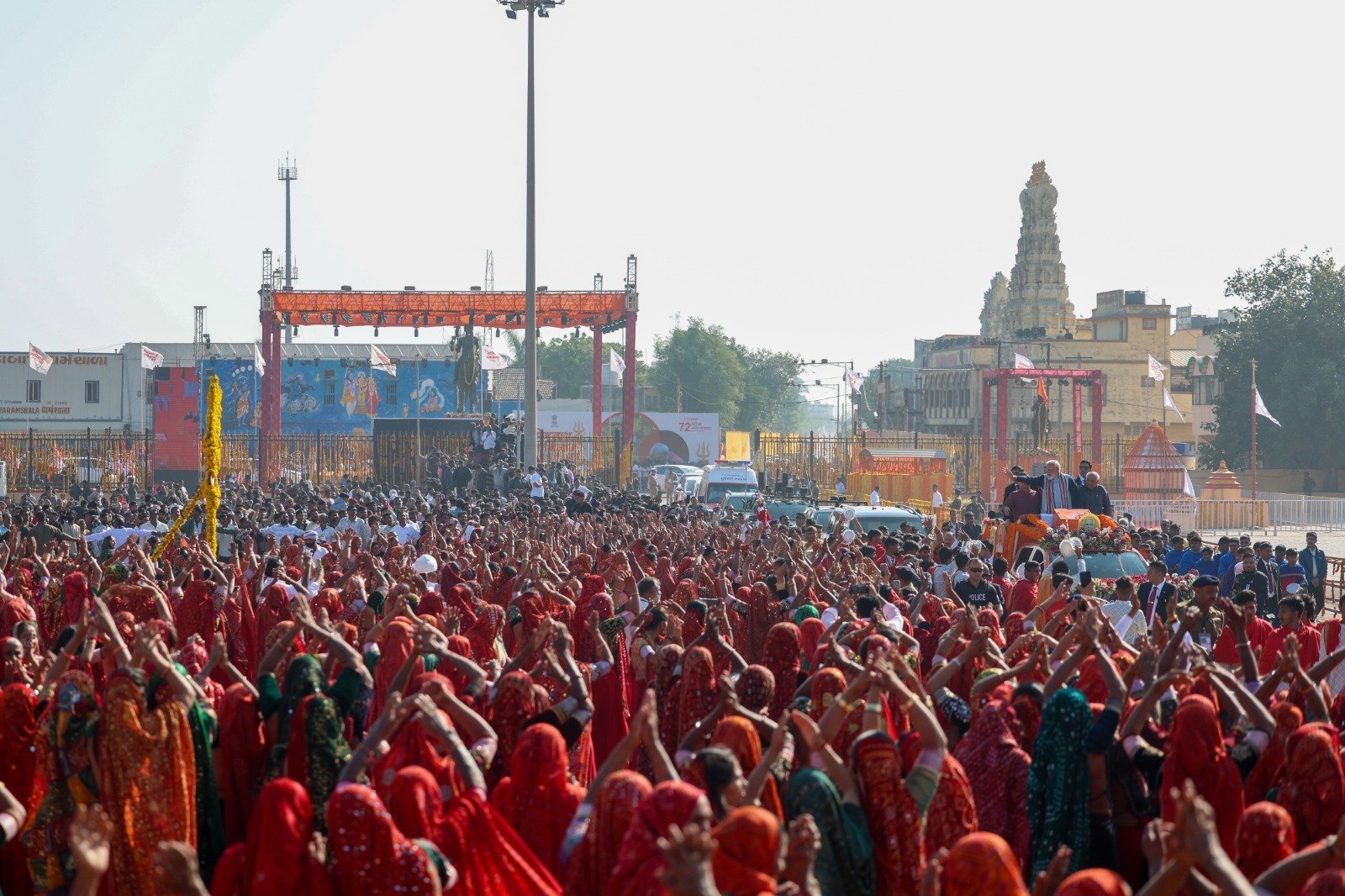
The congregation of devotees at Somnath
Somnath and India’s Long Arc of Reconstruction
A Millennium On, Somnath Endures
Somnath: On India’s western shoreline, where the Arabian Sea meets the town of Prabhas Patan in Gujarat, the Somnath temple occupies a singular place in the country’s historical imagination. For over a thousand years, the site has served not only as a place of worship but also as a marker of political authority, maritime trade, and cultural continuity along the Indian Ocean rim. Its layered past has returned to public focus following the Ministry of Culture’s recent highlighting of a 12th-century inscription documenting the temple’s medieval revival under the Solanki rulers.
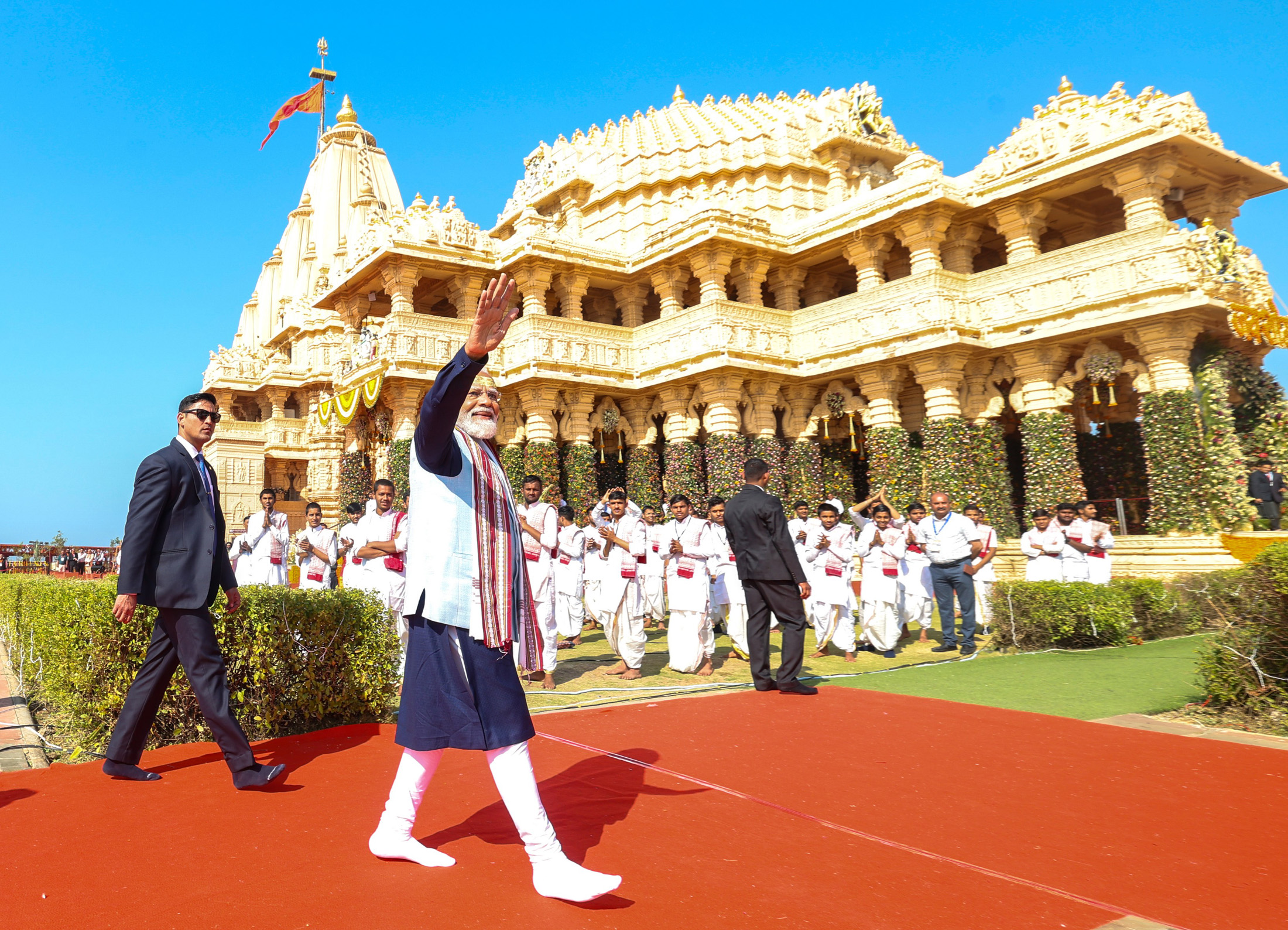
That renewed attention has coincided with Prime Minister Narendra Modi leading the Somnath Swabhiman Parv, a commemorative programme marking one thousand years since the 1026 CE attack on the temple by Mahmud of Ghazni. The parallel emergence of archaeological reference and contemporary political ceremony highlights how Somnath continues to serve as a site where history, state authority, and civilizational memory intersect in present-day India.
To understand Somnath’s enduring significance, historians locate the temple within the broader patterns of early medieval South Asia, where religious centres were deeply entangled with political power and economic life. Situated near key maritime routes, Somnath was part of a network linking inland kingdoms to ports facing West Asia and East Africa. Control over, or patronage of, such a shrine carried symbolic weight, reinforcing royal legitimacy while anchoring authority in sacred geography. Its prominence also meant that it became a visible focal point during periods of conflict, when attacks on religious institutions served both material and symbolic purposes.
From this perspective, Somnath’s repeated destruction and reconstruction are understood not as isolated episodes but as part of a wider historical pattern seen across Eurasia, where prominent religious sites—from churches and mosques to monasteries and temples—have often been damaged, repurposed, or rebuilt as political orders shifted. What distinguishes Somnath, scholars note, is the consistency with which reconstruction followed destruction, embedding renewal itself into the site’s historical identity.
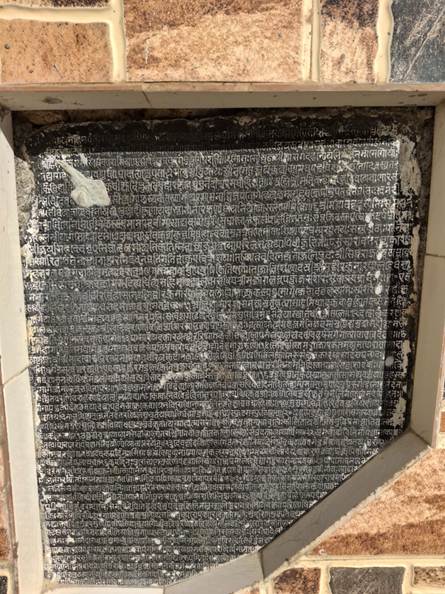
According to the Ministry of Culture, the inscription now being highlighted dates to 1169 CE, corresponding to Valabhi Samvat 850 and Vikram Samvat 1255, calendrical systems used in medieval western India. The inscription is located near the old Ram Temple in Bhadrakali Lane at Prabhas Patan and remains embedded in the wall of the ancient Bhadrakali Temple courtyard. Preserved at the residence of Sompura Brahmin Dipakbhai Dave and protected by the State Department of Archaeology, it has long been known to specialists, though it has now entered wider public discussion.
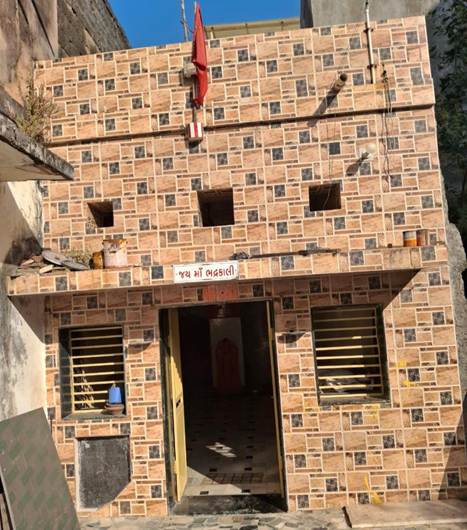
Museum authorities at Prabhas Patan describe the text as a eulogistic record of Param Pashupata Acharya Shriman Bhavabrihaspati, a Shaivite religious leader and the spiritual preceptor of Maharajadhiraj Kumarapala of Anhilwad Patan, a major centre of the Solanki dynasty. The inscription recounts the sacred narrative of the Somnath Mahadev Temple across India’s four cosmological ages, or yugas, combining theological tradition with historical reference.
It records that the temple was successively built or rebuilt in different materials: gold in the Satya Yuga by Chandra, the moon deity; silver in the Treta Yuga by Ravana; wood in the Dvapara Yuga by Lord Krishna; and stone in the Kali Yuga by King Bhimdev Solanki. It further documents that Kumarapala undertook a major reconstruction of the stone temple in the 12th century, reinforcing Somnath’s centrality during the Solanki period.
For historians of medieval India, the Solanki era represents a phase when temple-building was not merely devotional but also institutional, linking religion to administration, land grants, and learning. In this reading, Kumarapala’s restoration of Somnath fits within a broader state-led effort to stabilise authority after periods of upheaval, using monumental architecture to signal continuity and order.
The Bhadrakali inscription forms part of a wider archaeological record preserved at the Prabhas Patan Museum, which currently operates from the ancient Sun Temple nearby. The museum houses copper plates, commemorative stones, and authenticated architectural fragments, including remains of structures damaged during medieval invasions. Together, these materials allow historians to reconstruct Somnath’s past not as a single narrative of loss, but as an evolving dialogue between destruction, memory, and rebuilding.
These historical patterns were echoed during the Somnath Swabhiman Parv, held from 8 to 11 January 2026. Addressing the gathering, Prime Minister Modi framed Somnath as a civilisational symbol whose meaning lies in endurance rather than erasure. He traced the temple’s history from its destruction in the 11th century through successive reconstructions, emphasising continuity of belief and collective resolve.
The Prime Minister referred to restoration efforts during the reign of King Kumarapala as part of a longer tradition of renewal and linked them to the modern reconstruction undertaken in 1951 under Sardar Vallabhbhai Patel. In doing so, he positioned post-Independence India within a historical continuum, presenting the rebuilding of Somnath as both a cultural and national act. The presence of President Dr. Rajendra Prasad at the temple’s reopening was highlighted as a moment when the ancient shrine was formally re-integrated into the framework of a democratic republic.
Throughout his address, Modi returned to the idea that Somnath’s history illustrates a broader civilisational lesson: that attempts to destroy cultural centres have not succeeded in erasing them. He described the temple’s continued presence on the Arabian Sea coast as evidence that memory and faith, reinforced by reconstruction, outlast episodes of violence.
The Prime Minister also linked heritage to contemporary governance, referring to infrastructure development, improved connectivity, and cultural institutions around Prabhas Patan. Such initiatives, he said, aim to ensure that heritage sites remain active parts of social and economic life, rather than static monuments disconnected from the present.
The Swabhiman Parv combined commemoration with ceremony, including 72 hours of continuous chanting of ‘Om’, recitation of Vedic hymns, and participation by religious leaders and students from traditional Sanskrit institutions across India. Officials described the programme as an effort to honour those who contributed to the temple’s preservation while reaffirming its place in India’s cultural consciousness.
From a wider historical viewpoint, scholars note that Somnath’s contemporary prominence reflects a global trend in which nations increasingly turn to heritage sites to articulate identity, continuity, and values. Whether in Europe, West Asia, or South Asia, monuments shaped by conflict and reconstruction often become focal points for debates about memory and meaning. In this sense, Somnath’s story resonates beyond India, offering insight into how societies negotiate the relationship between past trauma and present identity.
As India continues to navigate how history is remembered and mobilised in public life, Somnath occupies a distinctive position. It is simultaneously a functioning place of worship, an archaeological archive, and a symbol within national discourse. The convergence of a 12th-century inscription and a millennium-marking commemoration illustrates how, in India, the past is not simply preserved—it is continually revisited, re-examined, and woven into the present.
– global bihari bureau