UAE's batting sensation Sohaib Khan
 By Altamash Khan*
Desert Cap, Bihari Heart: Sohaib Khan’s Journey
Gaya: November 2025, Asia Cup Rising Stars, Qatar. India A strides in with half its side fresh from mega-auctions. The United Arab Emirates (UAE) is written off before a ball is bowled. Then Sohaib Khan walks in at 34 for 3 against a bowler wearing an ₹18-crore price tag. Forty-one balls later, he is gone for 63—six sixes that disappeared into the desert night, four crisp boundaries, and one over where Washington Sundar looked very mortal. Commentators scramble for his backstory; the giant screen flashes “Sohaib Khan—UAE” while in a Gaya tea stall, an old neighbour spits out his chai and mutters, “Arre, that’s our lad… only not ours anymore.”
The dust of Kothi village in Gaya still clings to Sohaib Khan’s earliest memories—yellow-green tennis balls thudding against half-brick wickets, barefoot boys shouting “last man standing” under a merciless summer sun. That was cricket for him until he turned sixteen. Not a single leather ball had ever come his way in school, not one coach had ever corrected his grip, not one district trial notice had ever reached the hostel walls of Gyan Bharti in Bodhgaya. The ground there was green and wide, perfect for kabaddi and volleyball, but proper cricket felt like a rumour from another planet.
By Class 10th, the message was brutally clear: if you want to play real cricket, you have to leave Bihar. So he did—one suitcase, a Jamia Millia Islamia entrance result cleared purely on merit, and a quiet goodbye to the village that first taught him to middle a taped tennis ball with a plank of wood.
Delhi handed Sohaib what Bihar never could: his first leather ball, his first pair of spikes, his first coach who actually said, “watch the ball till it’s under your eyes.” Sixteen is scandalously late to begin; most future India players are already tormenting state seniors by then. Sohaib had to cram a lost decade into two frantic years—midnight mess jobs to pay fees, endless nets under floodlights—until raw village power finally wore the polish of technique.
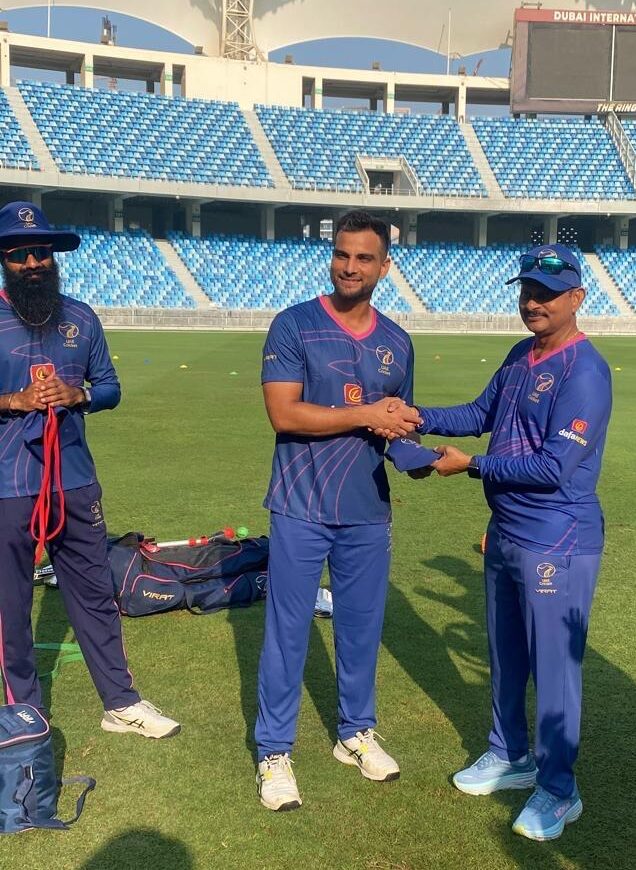
From Jamia to UAE professional leagues to the coveted UAE national contract, the climb was steep but straight. The boy who once wondered what a seam-up delivery even felt like was suddenly walking out in Doha to face Indian Premier League crorepatis.
Bihar’s tragedy is not that it produces ordinary cricketers; it is that it produces extraordinary ones and then forces them to become someone else’s miracle.
It is the same wound reopening, only deeper this time. Mahendra Singh Dhoni, born in Ranchi, belonged to Jharkhand and had to leave for Jharkhand because Bihar had no team at all after the 2000 bifurcation—though he briefly represented Bihar in the Ranji Trophy from 1999 to 2000 before switching to Jharkhand for the 2002–03 season and beyond. Syed Saba Karim, who became captain of the Under-19 Patna team at the age of thirteen and led them to victory in the Shyamlal Sinha Trophy before captaining Bihar in the Vijay Merchant Trophy at fifteen, started his domestic career in 1982-83 representing Bihar in the Ranji Trophy, became a surprise reserve wicketkeeper on the 1989 tour of the West Indies without playing a match, was forgotten for years before returning for the 1996 tour of South Africa, and scored a career-best 234 against Orissa in the 1990-91 Ranji Trophy season as a mainstay for Bihar until switching to Bengal in 1994-95 to catch the selectors’ eye and finally earn his international caps. Ishan Kishan followed the Jharkhand route for National Cricket Academy and Indian Premier League exposure. Mukesh Kumar and Akash Deep packed their kits for Kolkata when Bihar offered no platform. Shahbaz Nadeem wore Jharkhand colours despite being born and raised in Bihar. And now Sohaib has gone farther than any of them—different anthem, different passport, same effortless Bihari cover drive.
For eighteen long years (2000–2018), the Board of Control for Cricket in India refused Bihar affiliation; no Ranji Trophy, no age-group tournaments, no camps, no certified coaches—an entire generation orphaned. Even after affiliation returned in 2018, district associations stayed fractured, turf wickets remained mythical outside Patna, and school cricket barely existed. A talented hostel boy in Bodhgaya could grow up on the same campus as ancient Buddhist stupas, yet never touch a leather ball. That was Sohaib’s reality, and it remains the reality for thousands today.
Yet something is finally stirring. Since 2020, the state has poured money into brick and turf like never before. The Rajgir International Cricket Stadium—45,000 seats, Sydney-style aesthetics, red-soil pitches flown in from Maharashtra—was inaugurated in October 2025 in Nitish Kumar’s presence. Moin-ul-Haq Stadium in Patna is being rebuilt at ₹500 crore into a 42,500-seat modern arena with indoor nets and a full-fledged academy. District grounds are sprouting, block-level stadiums number in the hundreds, and a new sports university in Rajgir promises scientific coaching from the grassroots up. The budget for sports leapt from ₹30 crore to ₹568 crore in four years. For the first time, there is a real chance that the next Sohaib will not have to cross state or continental lines to be seen.
But the change has come too late for this generation. In Sohaib’s 63, there was no bitterness, only clarity. Every six that sailed over midwicket seemed to say: this is what you almost wasted. Every ball left outside the off-stump whispered: I built myself where you gave me nothing. When he finally holed out and walked back to applause from a crowd that barely knew his name, he allowed himself the smallest smile. Somewhere inside, the sixteen-year-old who first held a leather ball on a dusty Delhi maidan was still punching the air.
One day, perhaps soon, a boy from Kothi or Kishanganj or Araria will walk out at Rajgir or the new Moin-ul-Haq and smash a hundred wearing India blue, and the scorecard will simply read “Bihar” next to his name. Until then, the world will keep discovering Bihari brilliance in foreign colours—and the story, today and always, will belong first and forever to the boy who refused to let a broken system break him.
Watch: Sohaib Khan’s fearless batting against India ‘A’ in Doha
*Altamash Khan is the elder brother of the UAE international cricketer Sohaib Khan, and a co-founder of Kothi Kings Cricket Academy in Gaya, Bihar – an initiative that provides free coaching, equipment, and training to underprivileged children of his village.