Opposition Slams ECI’s Bihar Voter Revision as Anti-Democratic
Patna/New Delhi: A wave of protests swept through the Bihar Assembly in Patna and the Indian Parliament in New Delhi today, as opposition leaders from the INDIA bloc fiercely opposed the Special Intensive Revision (SIR) of electoral rolls in Bihar, labelling it a deliberate attempt to suppress voters ahead of the state’s upcoming assembly elections. The demonstrations, marked by adjournment of parliamentary proceedings and public displays of dissent, underscored deep political divisions and a growing trust deficit in the electoral process.
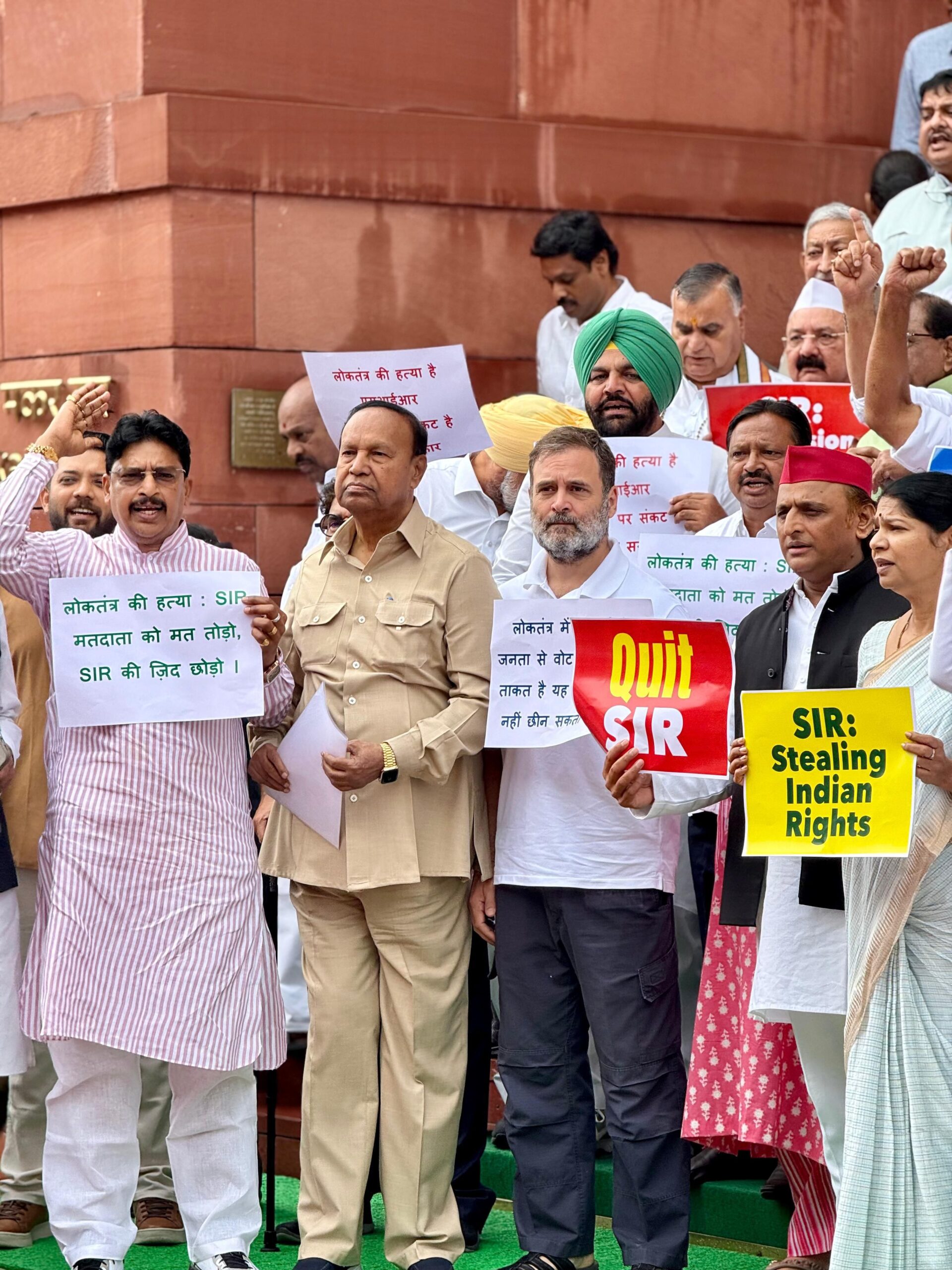
In the national capital, the Lok Sabha functioned for a mere two minutes before opposition MPs, including Congress leader Rahul Gandhi, Samajwadi Party chief Akhilesh Yadav, RJD’s Misa Bharti, and Dravida Munetra Kazagham’s Kanimozhi Karunanidhi, stormed the well of the House, wielding placards that decried the SIR as a “death of democracy” and “stealing Indian rights.” Their actions led to multiple adjournments, with the Lok Sabha suspended until 2 p.m. and later until July 23.
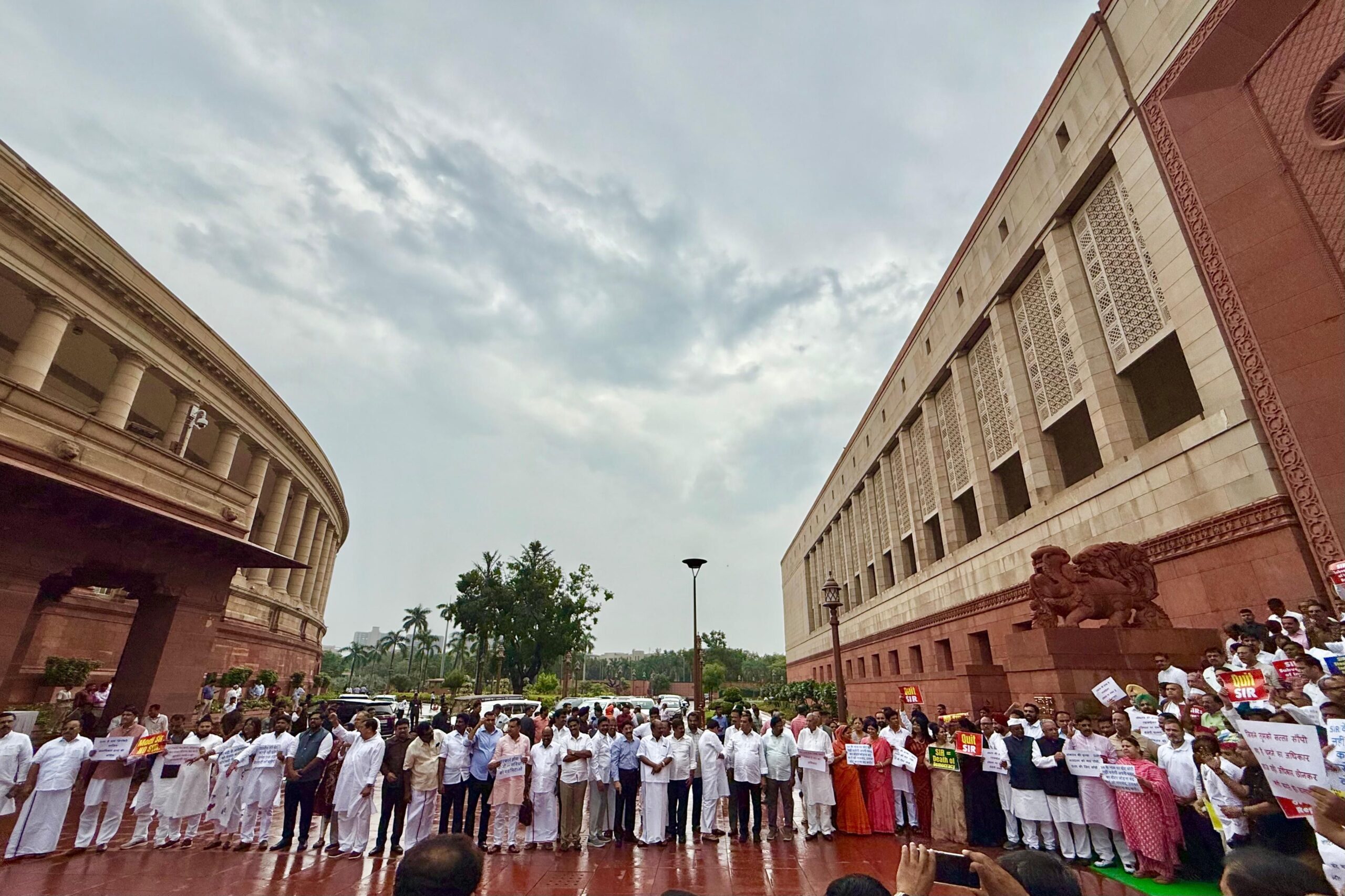
The Rajya Sabha faced similar disruptions, with Deputy Chairman Harivansh rejecting 12 adjournment notices under Rule 267 to discuss the SIR, alongside other issues like the Pahalgam terror attack and Operation Sindoor. Post-adjournment, opposition leaders gathered at Parliament’s Makar Dwar, raising slogans and demanding Prime Minister Narendra Modi’s presence to address their concerns. Congress MP Priyanka Gandhi Vadra described the SIR as an act of “murdering democracy,” while Gaurav Gogoi emphasised that the exclusion of widely held documents like Aadhaar, voter ID, and PAN cards disproportionately impacts marginalised, rural, and elderly voters.
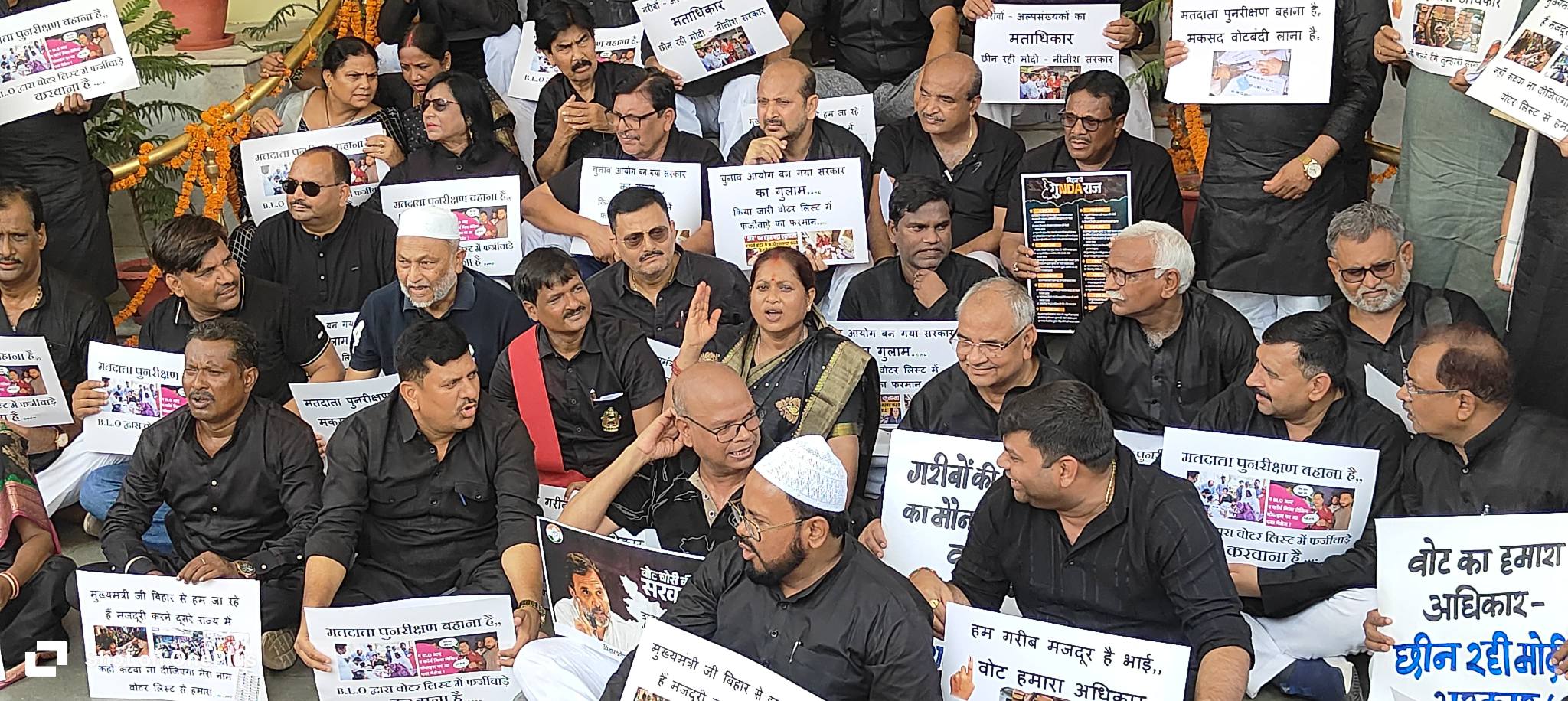
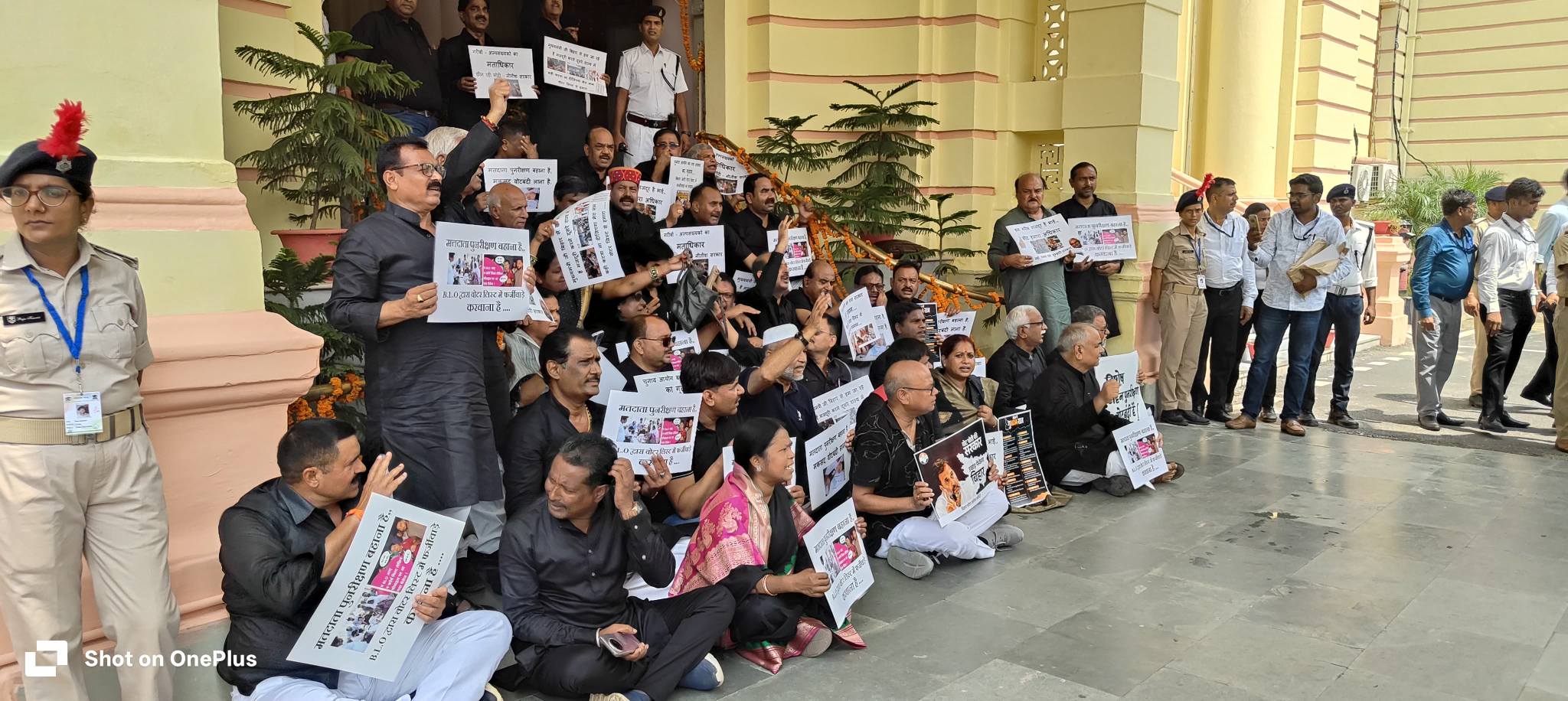
In Patna, the Bihar Assembly witnessed equally charged scenes. Leaders from the INDIA bloc, including former Chief Minister Rabri Devi and RJD’s Tejashwi Yadav, donned black clothing and staged protests outside the Bihar Vidhan Parishad, denouncing the SIR as a “conspiracy to snatch constitutional voting rights.” Chanting slogans like “chunav chor gaddi chhod” (election thieves should leave the throne), they accused the Election Commission of India (ECI) of acting with political bias under the influence of the ruling Bharatiya Janata Party (BJP). Tejashwi Yadav, who had rallied support from 35 opposition leaders two days prior, claimed the SIR could disenfranchise over two crore voters, particularly migrants, Dalits, Mahadalits, and the poor, drawing parallels to alleged manipulations in the 2024 Maharashtra elections.
The SIR, initiated by the ECI on June 25, 2025, following its announcement on June 24, requires voters to submit one of 11 specified documents for verification, excluding commonly held ones like Aadhaar, voter ID, or ration cards. According to an ECI press note dated July 22, 2025, from Nirvachan Sadan, New Delhi, the SIR has revealed significant findings: 18.66 lakh deceased electors, 26.01 lakh electors shifted to different constituencies, and 7.50 lakh electors enrolled at multiple places. The ECI reported that 90.67% of Bihar’s 7.89 crore electors (7.16 crore) have submitted Enumeration Forms (EFs), with 90.37% (7.13 crore) digitised. However, 6.62% (52.30 lakh) electors were not found at their addresses, including 2.36% deceased, 3.29% permanently shifted, 0.95% enrolled at multiple places, and 0.01% untraceable. Approximately 21.35 lakh EFs remain outstanding, representing 2.70% of electors. The ECI has mobilised nearly 1 lakh Booth Level Officers (BLOs), 4 lakh volunteers, and 1.5 lakh Booth Level Agents (BLAs) appointed by the 12 major political parties in Bihar to ensure all eligible electors are included in the draft electoral roll, set for publication on August 1, 2025. From August 1 to September 1, the public can file objections for additions, deletions, or rectifications.
A separate ECI press note dated July 21, 2025, highlighted Bihar’s achievement as the first state to limit all polling stations to under 1,200 electors, adding 12,817 new polling stations, increasing the total from 77,895 to 90,712 to reduce queuing times.
The ECI also shared lists of 29.62 lakh electors whose EFs were pending and 43.92 lakh not found at their addresses with political parties, urging their cooperation. However, these efforts have not quelled opposition concerns, which argue the documentation requirements are inaccessible to Bihar’s 7.5 million migrant workers and other marginalised groups.
The government and BJP mounted a robust defence. Union Minister Kiren Rijiju expressed willingness for dialogue but criticised the opposition for disrupting Parliament, estimating a cost of Rs. 2.5 lakh per minute to taxpayers. BJP leader Ravi Shankar Prasad questioned whether the opposition sought to protect illegal infiltrators on voter lists, while Bihar Minister Vijay Kumar Choudhary noted that many opposition workers had complied with the SIR’s enumeration process, accusing them of provoking minorities and backwards classes. The ECI maintained that the SIR addresses “abnormal voter list growth,” citing concerns about foreign voters from Bangladesh, Myanmar, and Nepal, though opposition leaders like CPI(ML) Liberation’s Dipankar Bhattacharya countered that no such issues were raised during the 2024 elections.
The Supreme Court, hearing a petition on the SIR, allowed the process to continue but suggested including Aadhaar, voter ID, and ration cards for verification, a point raised by advocate Abhishek Manu Singhvi. Opposition leaders like RJD’s Manoj Jha contrasted the current ECI’s actions with the 2003 SIR, which faced no disputes due to greater trust in the institution. The protests also intersected with other grievances, including demands for discussions on the Pahalgam terror attack and Operation Sindoor, amplifying the chaos in Parliament.
The SIR controversy, with its implications for voter access and electoral integrity, has deepened the political fault lines in Bihar and beyond. As the draft electoral roll’s publication nears, the opposition’s allegations of democratic erosion and the government’s insistence on procedural necessity set the stage for a contentious electoral battle.
– global bihari bureau