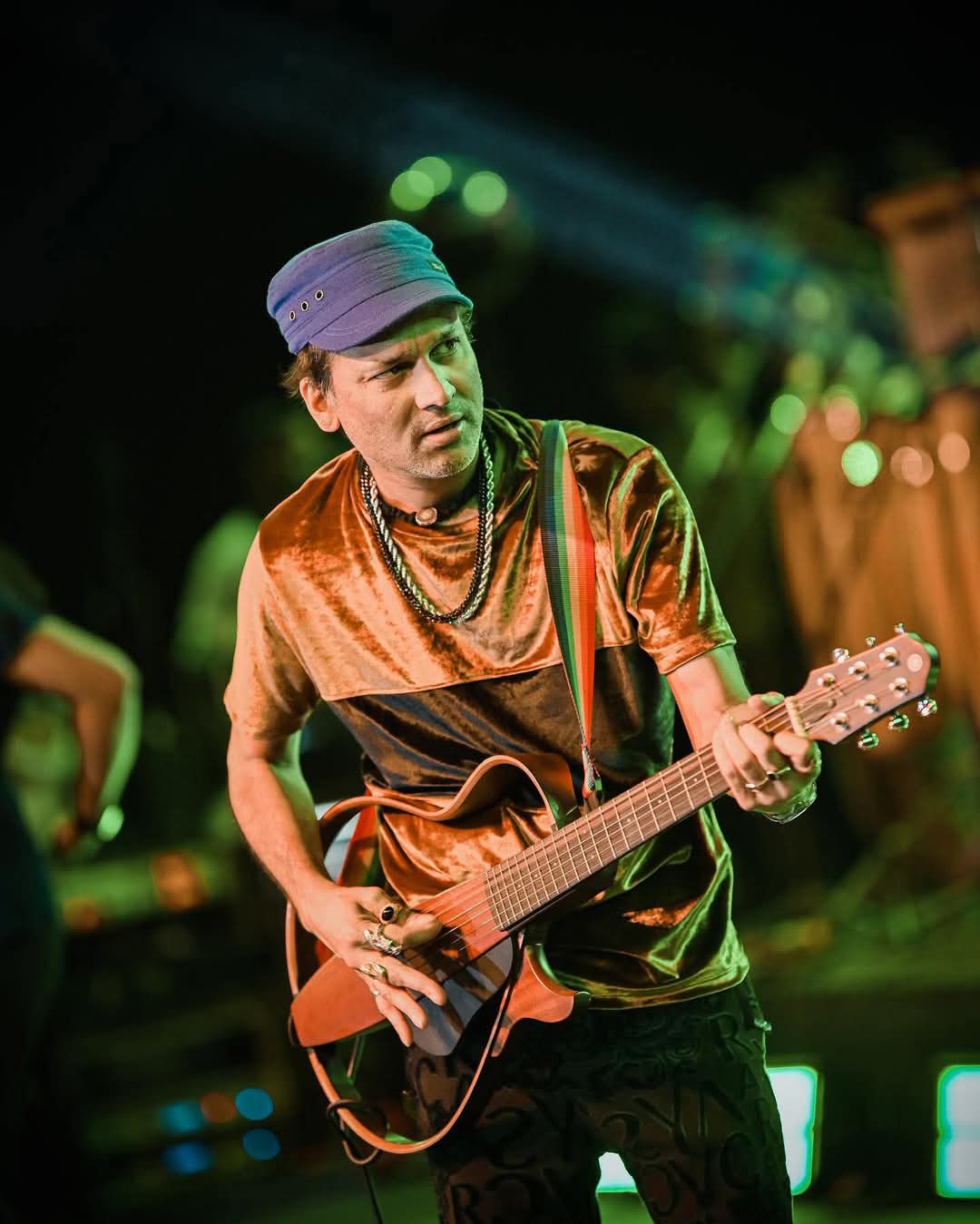
Zubeen Garg
 By Nava Thakuria*
Justice for Zubeen: Assam’s quest crosses borders
Guwahati: As the probe into the mysterious death of Assam’s celebrated singer-composer Zubeen Garg in Singapore continues, the Singapore Police Force (SPF) has appealed for patience amid what it calls a wave of online speculation and misinformation. In a statement issued on October 17, 2025 and forwarded by the Singapore High Commission in New Delhi, the SPF confirmed that the investigation is still underway and being conducted in accordance with Singapore’s Coroners Act 2010.
The SPF’s Public Affairs Department, in its formal communication, clarified that based on preliminary investigations, no foul play is suspected in Garg’s death, which occurred on September 19 during a sea-yacht outing in the island nation. The 53-year-old musician, a household name in Assam and across India’s northeast, reportedly collapsed while at sea and was later declared dead in a Singapore hospital.
According to the SPF, a copy of the autopsy report and preliminary findings was shared with the High Commission of India in Singapore on October 1, 2025, at its request. The Singapore authorities emphasised that while the investigation is ongoing, the process could take up to three months to complete. “We are aware of speculation and false information circulating online regarding the circumstances of Zubeen’s death,” the SPF statement said, urging “patience and understanding” from the public and parties involved until the inquiry is concluded.
However, the statement’s advisory against “public speculation” has sparked debate in Assam and among non-resident Indian (NRI) communities in Singapore. Observers questioned whether the SPF’s appeal was directed solely at Singaporean residents or also extended to Indian citizens and Zubeen’s massive fan base in Assam. Many in Assam saw the tone of the advisory as overreaching, arguing that the Singaporean authorities had no jurisdiction over how Indian citizens express grief or seek justice within their own country.
On the ground in Assam, emotions continue to run high more than a month after the singer’s demise. The #JusticeForZubeenGarg campaign has gained extraordinary momentum on digital platforms, with over two million social media users joining calls for a transparent probe and stringent action against alleged perpetrators. Candlelight vigils, signature drives, and public performances have been held across towns and villages, reflecting Zubeen’s unparalleled cultural influence in the region.
Responding to public outcry, the Assam government constituted a Special Investigation Team (SIT) within the state police and also appointed a judicial commission to monitor the case’s progress. The SIT has already arrested seven individuals in connection with alleged irregularities surrounding the singer’s death. Chief Minister Himanta Biswa Sarma, who had earlier announced that the charge sheet would be filed within three months, recently met Alice Cheng, the Acting Singapore High Commissioner in New Delhi, to seek cooperation from Singaporean authorities. According to official sources, Cheng assured the Chief Minister of full support and information-sharing as the SPF’s investigation continues.
Even though an autopsy was conducted at Singapore General Hospital before Garg’s mortal remains were handed over, a second post-mortem examination was performed at Gauhati Medical College and Hospital (GMCH) upon the body’s arrival in Guwahati. The decision came amid widespread public suspicion of foul play and persistent doubts about the circumstances leading to the artist’s sudden death.
National political figures have also weighed in. Congress leader and Leader of Opposition in the Lok Sabha, Rahul Gandhi, visited Guwahati to pay homage to Zubeen. Accompanied by Assam Congress president Gaurav Gogoi, State Assembly opposition leader Debabrata Saikia, and other senior party figures, Gandhi met Zubeen’s widow Garima Saikia, his ailing father M.M. Borthakur, and other family members at their Kahilipara residence. Gandhi’s visit, though personal, drew significant attention, as he refrained from making political remarks during his brief stopover.
Later, addressing a public memorial, Gaurav Gogoi accused the state government of “misguiding the investigation to protect the accused,” while Debabrata Saikia wrote to Singapore Prime Minister Lawrence Wong, urging a transparent and independent coroner’s inquiry into the singer’s death. Opposition parties maintain that the state’s SIT is moving too slowly and that “powerful interests” are attempting to dilute the investigation’s outcome.
Meanwhile, the debate has taken a philosophical turn following unexpected comments by Paresh Barua, the elusive leader of the United Liberation Front of Asom (Independent), or ULFA (I). Speaking from an undisclosed location in a televised interview, Barua questioned the moral responsibility of Zubeen’s fans and fellow citizens. He remarked that while the public now demands justice, few had intervened earlier to persuade the singer to lead a healthier, more disciplined life. “Many are now pretending to be hardcore Zubeen fans for selfish reasons,” Barua said, adding that since the death occurred in Singapore — a nation known for its transparency — the ongoing police probe should be trusted to reveal the truth. His remarks, while controversial, found some resonance among those urging patience until the completion of the official investigation.
Zubeen Garg’s death has thus evolved into both a legal and emotional flashpoint — a case that straddles international jurisdiction, state politics, and cultural identity. While the Singapore Police Force insists it is following due process and the Assam government pledges cooperation, the public’s impatience underscores the profound connection the singer shared with his audience. For millions, Zubeen was more than an artist — he embodied the voice, energy, and restlessness of a generation. The quest for justice in his death, therefore, remains as much about truth as it is about preserving the legacy of a man whose songs defined the soundscape of modern Assam.
*Senior journalist