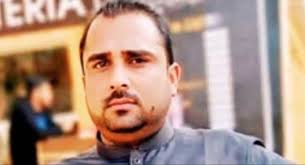
Tufail Rind
Tufail Rind Shot Dead in Mirpur: Press Safety Crisis
Mirpur Mathelo, Pakistan: In a brazen daylight attack that has sent shockwaves through the region’s media community, veteran journalist Tufail Ahmed Rind was gunned down on October 8 as he rode his motorcycle to drop his young children and niece to school along Jarwar Road near Masu Wah in Ghotki district’s Mirpur Mathelo area. The 40-year-old reporter, known for his fearless coverage of local issues in Sindhi-language outlets like Mehran Newspaper and Royal News, collapsed on the spot from multiple gunshot wounds inflicted by two assailants on a motorcycle who fled the scene amid panicked cries from witnesses. His children miraculously escaped unharmed, but the tragedy deepened when his eight-year-old niece, Rina, overcome by grief upon hearing the news hours later, collapsed and was rushed to Mirpur Mathelo Hospital before being referred to Sukkur, only to succumb en route—a heartbreaking double blow to the family in this volatile corner of Sindh province.
Rind, who also served as general secretary of the Mirpur Mathelo Press Club, left behind his wife and four children, marking yet another grim chapter in Pakistan’s escalating crisis for journalists, where rural Sindh has emerged as a notorious hotspot for such violence. Police reports indicate the assailants opened indiscriminate fire at close range, with bullet casings recovered from the site, and initial investigations point to a targeted hit possibly linked to Rind’s reporting on sensitive local matters, including tribal clashes that have already claimed three lives in the area this week. Ghotki Senior Superintendent of Police Rao Muhammad Asif confirmed the incident as a deliberate assassination, vowing a thorough probe, while Sindh Chief Minister Syed Murad Ali Shah took immediate notice, directing Inspector General Ghulam Nabi Memon to submit an urgent report and emphasising that assaults on the press undermine democratic freedoms. Rind had narrowly survived a previous assassination attempt, underscoring the relentless threats faced by those chronicling the province’s underbelly of enforced disappearances, land disputes, and ethnic tensions.
This killing comes mere days after another devastating loss in the same restive region: TV anchor Imtiaz Mir, 40, who hosted the programme “Aaj Ki Baat” on Metro 1 News, breathed his last on September 29 in a Karachi hospital after lingering for a week from critical gunshot injuries sustained in an ambush on the night of September 21-22 near Malir Kala Board. Driving home with his brother Muhammad Salih—who was also wounded—Mir was sprayed with bullets by a man and woman on a motorcycle, an attack police suspect stemmed from a Jacobabad land dispute, though a dubious claim of responsibility by an obscure group has surfaced without credibility. Sindh Senior Minister Sharjeel Inam Memon decried the hit as an “assault on journalism and humanity,” pledging exhaustive efforts to haul the perpetrators before the courts, while Energy Minister Syed Nasir Hussain Shah echoed the call for unyielding protection of media workers amid a 40 per cent surge in attacks this year, according to Reporters Without Borders.
The pattern of peril extends further back into 2025, with at least three more media professionals falling victim since January 1, painting a stark picture of South Asia’s deadliest landscape for reporters. In Balochistan’s remote Awaran district, Abdul Latif Baloch, 55, a correspondent for Daily Intekhab and Aaj News, renowned for exposing human rights abuses and enforced disappearances, was executed in his Mashkay home on May 24 by suspected state-backed militias in front of his wife and children—a chilling execution that followed the February slaying of his elder son Saif by unidentified gunmen. The Baloch Yakjehti Committee decried it as part of a “kill and dump” policy plaguing the province, where over 40 journalists have perished in two decades amid separatist strife and military crackdowns; the International Federation of Journalists condemned the act, noting Pakistan’s drop to 158th on the World Press Freedom Index. Earlier, on April 11 in Khairpur, Sindhi journalist Allah Dino Shar was ambushed and killed by assailants, his death uninvestigated and emblematic of the impunity that shields attackers in this troubled nation. And in a separate incident, Syed Mohammed Shah, a veteran stringer covering conflict zones, met a violent end in an unspecified clash, adding to the tally that has drawn global scrutiny.
From its base in Geneva, the Press Emblem Campaign (PEC), an international coalition dedicated to safeguarding media professionals and upholding press rights under global conventions, issued a vehement condemnation on October 10, voicing profound dismay at Rind’s slaying and renewing calls for swift accountability. “Tufail Rind becomes the 141st journalist felled worldwide this year alone,” declared PEC president Blaise Lempen in a statement from the organisation’s headquarters, imploring Pakistani authorities to apprehend the perpetrators without delay and impose stringent legal penalties. He specifically appealed to Sindh Chief Minister Syed Murad Ali Shah to intervene personally in securing the assailants, while underscoring PEC’s unwavering solidarity with Pakistani reporters in their quest for redress for slain colleagues. Lempen highlighted the moral imperative for compensation to Rind’s grieving kin, framing the incident as a direct assault on the foundational role of journalism in fostering transparent societies. Punjab Information Minister Azma Bokhari joined the chorus, labelling the broad-daylight execution “tragic and condemnable,” as protests erupted outside Ghotki’s police stations with scribes demanding an end to the bloodshed that has claimed over 55 media lives in Pakistan since early 2025, per Committee to Protect Journalists data.
As investigations unfold amid tribal feuds and political recriminations, Rind’s death not only robs Sindh of a voice that amplified the marginalised but amplifies the urgent plea for systemic reforms to shield those who illuminate the shadows of power. With global watchdogs like the United Nations and Reporters Without Borders echoing PEC’s alarm, the onus falls on Islamabad to transform rhetoric into resolve, lest the ink of truth continue to bleed into silence.
– global bihari bureau