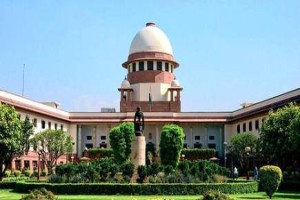
Supreme Court of India
PM Modi speaks to CJI Gavai, calls attack reprehensible
Bar Council suspends lawyer after CJI courtroom attack
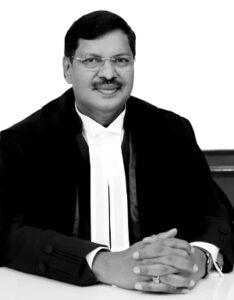
New Delhi: In a stunning breach of decorum and security at the Supreme Court of India today, an advocate attempted to hurl a shoe at Chief Justice of India (CJI) Bhushan Ramkrishna Gavai during proceedings in Court No. 1 at 11:35 a.m. The incident, which unfolded before a shocked courtroom, has sparked widespread outrage and prompted swift responses from the government, legal authorities, and political leaders.
The accused, 71-year-old advocate Rakesh Kishore, stood up abruptly during a hearing reportedly concerning the restoration of a Lord Vishnu idol from Khajuraho’s Javari Temple. Shouting slogans like “Sanatan ka apman nahi sahenge” (We will not tolerate insults to Sanatan Dharma), Kishore aimed his shoe at the bench led by Chief Justice Gavai. Security personnel intervened instantly, restraining him before any harm could occur. The act was reportedly triggered by Kishore’s anger over the Chief Justice’s earlier remarks in a September 2025 hearing, where he dismissed a related plea as “publicity interest litigation” and suggested the petitioner pray to the deity—comments misinterpreted by some as disrespectful to Hindu sentiments. CJI Gavai had later clarified his respect for all religions.
Unfazed, Chief Justice Gavai maintained remarkable composure, stating, “Don’t get distracted by all this. These things do not affect me,” and continued the proceedings. His calm response has drawn widespread praise, with Prime Minister Narendra Modi personally commending him for reflecting “the values of justice and strengthening the spirit of our Constitution.” In an official statement via the Press Information Bureau, the Prime Minister condemned the “reprehensible attack,” declaring it “angered every Indian” and affirmed “there is no place for such acts in our society.”
The Bar Council of India (BCI) acted swiftly, suspending Kishore’s license to practice law with immediate effect and initiating disciplinary proceedings. The BCI described his behaviour as “inconsistent with the dignity of the legal profession” and expressed regret over the assault on the judiciary’s highest office. Delhi Police detained Kishore for questioning but released him after several hours, as the Supreme Court registry declined to press formal charges.
Political leaders across party lines united in condemnation. Congress leader Rahul Gandhi called the act “an assault on the Constitution,” while Sonia Gandhi echoed similar sentiments. The Supreme Court Advocates-on-Record Association passed a resolution denouncing Kishore’s “deplorable and disrespectful conduct.” Senior lawyers and jurists hailed CJI Gavai’s poise as a testament to judicial resilience, while highlighting the need for stricter courtroom security measures.
While this marks the first courtroom disruption of its kind in recent decades, it is not the first physical attack on Supreme Court judges in India’s history. On March 13, 1968, an assailant named Man Mohan Das leapt onto the bench in Court No. 1 during a hearing and stabbed Justice A.N. Grover on the head with a knife, while Chief Justice M. Hidayatullah ducked to avoid injury; Das was quickly subdued, and Grover recovered after treatment. Another incident occurred on March 20, 1975, when two members of the Anand Marg sect threw hand grenades at the car of then-CJI A.N. Ray outside the Supreme Court premises in an assassination attempt linked to dissatisfaction with his rulings during the Emergency era; the grenades failed to detonate fully, causing no injuries, and the perpetrators were later convicted of attempt to murder and related charges. In the early 1970s, Justice Prem Shankar Sahay of the Patna High Court narrowly escaped gunfire in a courtroom.
Today’s incident, though symbolic and physically harmless, has sent shockwaves through the judicial fraternity, raising urgent questions about entrant screening at the Supreme Court and the growing tension between faith-based sentiments and constitutional discourse. Legal observers note that CJI Gavai’s dignified response has reinforced public trust in the judiciary at a critical moment. The Supreme Court is now reviewing security protocols and decorum guidelines for advocates and visitors to prevent future disruptions.
As investigations continue, the Supreme Court is expected to review security arrangements and reinforce decorum protocols for advocates and visitors. As investigations continue, the nation stands in solidarity with Chief Justice Gavai, whose quiet dignity in the face of provocation has been widely lauded as a powerful symbol of judicial integrity. The incident serves as a stark reminder of the challenges facing India’s judiciary in balancing reverence for tradition with the rule of law.
– global bihari bureau