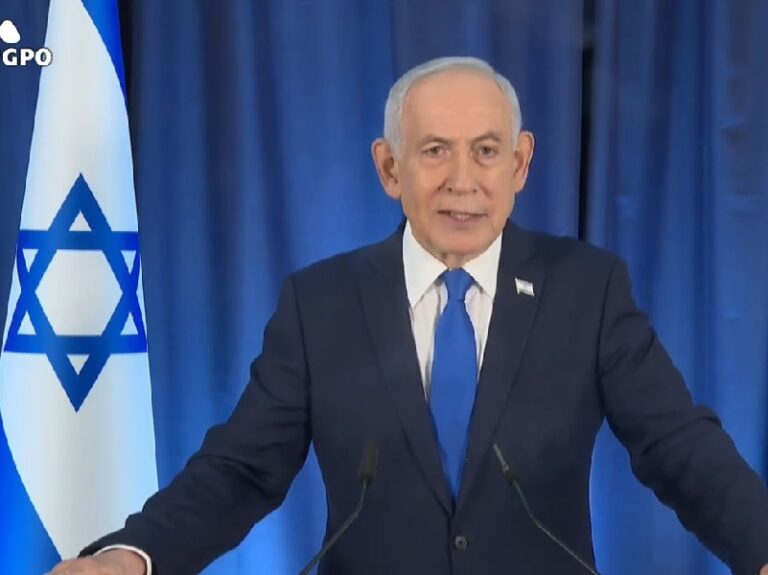
Prema Wangjom Thongdok, who was detained by Chinese authorities at Shanghai Airport. Photo source: ANI video
Modi Government Faces Heat on China’s Arunachal Claim
Beijing Rejects Protest on Passport Detention
Opposition Slams Government Over Arunachal Woman’s China Detention
New Delhi/Beijing: The handling of the detention of an Indian citizen from Arunachal Pradesh at a Chinese airport by the Indian government has drawn sharp criticism from India’s opposition parties, who accused the Bharatiya Janata Party-led administration of inadequate resolve in confronting Beijing’s territorial assertions.
The Congress party described the episode as an “insult to India” and urged Prime Minister Narendra Modi to issue a firm rebuke. In a statement on X, the Congress party asserted that the country’s “honour, dignity and nationality must never be challenged on foreign soil”. It labelled China’s position as “extremely offensive” and evidence that Beijing “is not desisting from its nefarious activities.” In a series of posts on X, the Congress tweeted: “Mr. Prime Minister, The Nation is Watching – Act Now.” It further stated: “China is talking nonsense, and you’re listening. Modi ji… when will your blood boil?”
The Arunachal Pradesh Congress Committee echoed this sentiment, calling the incident “shocking” and “unacceptable”. It demanded that New Delhi take a stronger diplomatic stance to prevent recurrences. These rebukes gained traction amid broader political discourse, as opposition figures highlighted the government’s perceived leniency toward Chinese provocations, especially following the recent resumption of direct flights between the two nations, and called for measures such as suspending air links until safeguards for Indian travellers are secured.
The controversy centres on the ordeal faced by Prema Wangjom Thongdok, a financial services consultant residing in the United Kingdom and hailing from Arunachal Pradesh, who was en route from London to Japan on November 21, 2025. What was intended as a brief layover at Shanghai Pudong International Airport extended into an 18-hour detention after Thongdok cleared automated immigration gates, only to be intercepted by officials who scrutinised her valid Indian passport and deemed it “invalid” due to the listing of Arunachal Pradesh as her birthplace. Thongdok recounted being isolated from fellow passengers, subjected to prolonged questioning, and informed via translation tools that the region—designated by China as “Zangnan” or southern Tibet—falls under Chinese sovereignty, rendering her document unacceptable. She further alleged that airline staff from China Eastern Airlines contributed to the distress by recommending she apply for a Chinese passport and restricting her to toilet breaks without provisions for food or communication, leading to substantial financial repercussions from disrupted travel plans and rebookings. Following urgent outreach to Indian consular representatives, officials from the Shanghai mission arrived within an hour, negotiated her release, supplied essentials, and arranged her departure on a later flight, allowing her to reach Japan unharmed but emotionally impacted.
India’s Ministry of External Affairs stated in response to media queries that it had delivered a strong demarche to Chinese authorities in Beijing and New Delhi on November 21, decrying the detention as arbitrary and inconsistent with global aviation standards. In a November 25 statement, Official Spokesperson Randhir Jaiswal stated, “We have seen statements made by the Chinese Ministry of Foreign Affairs regarding the arbitrary detention of an Indian citizen from Arunachal Pradesh, who was holding a valid passport and was transiting through Shanghai International Airport on her onward travel to Japan.” He reaffirmed that “Arunachal Pradesh is an integral and inalienable part of India, and this is a self-evident fact. No amount of denial by the Chinese side is going to change this indisputable reality,” while pointing to breaches of the Chicago and Montreal Conventions, as well as China’s domestic rules on 24-hour visa-free transit for all nationalities. Jaiswal noted the absence of any substantive justification from Beijing and confirmed that the consulate had extended full support to Thongdok throughout the process.
China’s Foreign Ministry, in its regular press conference on November 25, dismissed claims of impropriety, with Spokesperson Mao Ning asserting that “Zangnan is China’s territory. The Chinese side has never recognised the so-called ‘Arunachal Pradesh’ illegally set up by India.” Addressing the specific case, Mao maintained that “during the entire time, China’s border inspection authorities carried out checks procedures in accordance with laws and regulations, the law enforcement was impartial and non-abusive, the lawful rights and interests of the person concerned were fully protected, no compulsory measures were taken on her, and there was no so-called ‘detaining’ or ‘harassing.’ The airline provided her with resting facilities and meals.” When questioned on India’s protest, she reiterated non-recognition of the state and characterised border inspections as ‘the usual practice of border enforcement authorities of countries across the world’, deferring further particulars to competent agencies.
Arunachal Pradesh Chief Minister Pema Khandu, though aligned with the ruling party, joined the chorus of condemnation, posting on social media, “I am deeply shocked by the unacceptable treatment of Ms Prema Wangjom Thongdok, a proud Indian citizen from Arunachal Pradesh, by Chinese immigration authorities at Shanghai Pudong Airport.” He described the episode as “appalling,” involving “humiliation and racial mockery,” and likened it to China’s historical “stapled visa” practices that have impeded Arunachalis’ international mobility, pressing the central government for preventive protocols. Thongdok, in subsequent interviews and posts, expressed gratitude for the support while underscoring the incident’s toll, stating, “I don’t speak C of Chinese, don’t have land/voting rights in China… I have always been a proud Indian citizen and will continue to be so. Never heard of the concept that Arunachal Pradesh ever being part of China.” She has appealed directly to Modi for investigations into the officials’ conduct and protections for northeastern travellers, rejecting online scepticism about her nationality and affirming, “We are one nation, we stand for one another.”
I am deeply shocked by the unacceptable treatment of Ms. Prema Wangjom Thongdok, a proud Indian citizen from Arunachal Pradesh, by Chinese immigration authorities at Shanghai Pudong Airport. Subjecting her despite a valid Indian passport to humiliation and racial mockery is… https://t.co/4Q5KBHxMrp
— Pema Khandu པདྨ་མཁའ་འགྲོ་། (@PemaKhanduBJP) November 25, 2025
This confrontation unfolds against the backdrop of enduring Sino-Indian territorial discord, where Beijing’s refusal to acknowledge India’s control over Arunachal Pradesh has fueled repeated diplomatic spats. A notable escalation occurred in August 2023 with the issuance of China’s “standard map,” which encompassed the full expanse of Arunachal Pradesh and sections of Ladakh within its borders, prompting India to lodge a “strong protest” and dismiss it as an invalid unilateral alteration that undermined boundary dialogues. External Affairs Minister S. Jaishankar, at the time, critiqued the move as symptomatic of China’s “old habit” of expansionist cartography. The trend continued into January 2024 with a similar map release, met by another Indian objection emphasising its lack of legal bearing. By April 2024, China assigned Mandarin designations to 11 sites in Arunachal Pradesh, which New Delhi branded “preposterous” and devoid of any capacity to reshape sovereign facts. In May 2025, Beijing extended this by standardising names for 27 more locations, igniting protests in Arunachal districts like Anjaw, where demonstrators hoisted Indian flags and drew parallels to the 1962 war to declare unwavering loyalty. Indian officials countered that such efforts were “vain,” with Arunachal Pradesh remaining unequivocally integral to the country. As of November 26, 2025, the mapping disputes have seen no fresh advancements, yet the Shanghai detention has spotlighted their spillover into everyday transit, testing fragile bilateral progress in aviation and commerce while both sides hold firm without evident negotiation headway.
In recent months, India and China have pursued a carefully calibrated thaw in relations after the 2020 Galwan clash and the prolonged Ladakh standoff. Key confidence-building steps included the resumption of direct passenger flights in October 2025—the first Delhi-Shanghai service in five years—the restart of the Kailash Mansarovar Yatra in June, and, most significantly, India’s decision in July 2025 to end its five-year freeze on tourist visas for Chinese nationals, with full global rollout completed by mid-November. These measures, accompanied by External Affairs Minister S. Jaishankar’s July visit to Beijing and Chinese Foreign Minister Wang Yi’s August trip to New Delhi, were widely interpreted as deliberate signals of intent to normalise people-to-people and commercial ties while keeping the border issue in a separate, managed compartment.
The November 21 detention of an Arunachal Pradesh-born Indian citizen for 18 hours at Shanghai Pudong Airport—precisely on one of the newly reopened routes—has exposed the fragility of this compartmentalisation. By invoking its territorial claim over Arunachal Pradesh against a transit passenger holding a valid Indian passport, China has, for the first time, extended its long-standing diplomatic and cartographic assertions into the domain of routine civilian travel. The incident directly undermines the spirit of the visa liberalisation and flight resumption that both sides had presented as evidence of forward movement, and it risks eroding the modest political capital invested in the thaw. For New Delhi, it reinforces domestic criticism that concessions on people-centric issues are being met with continued pressure on core sovereignty questions; for Beijing, it highlights the difficulty of insulating practical cooperation from the unresolved border dispute when even a layover can become a sovereignty flashpoint. Far from being an isolated bureaucratic overreach, the episode illustrates that, absent a broader political understanding on territorial claims, incremental normalisation remains vulnerable to sudden reversal.
– global bihari bureau