 By Dr Samar Verma*
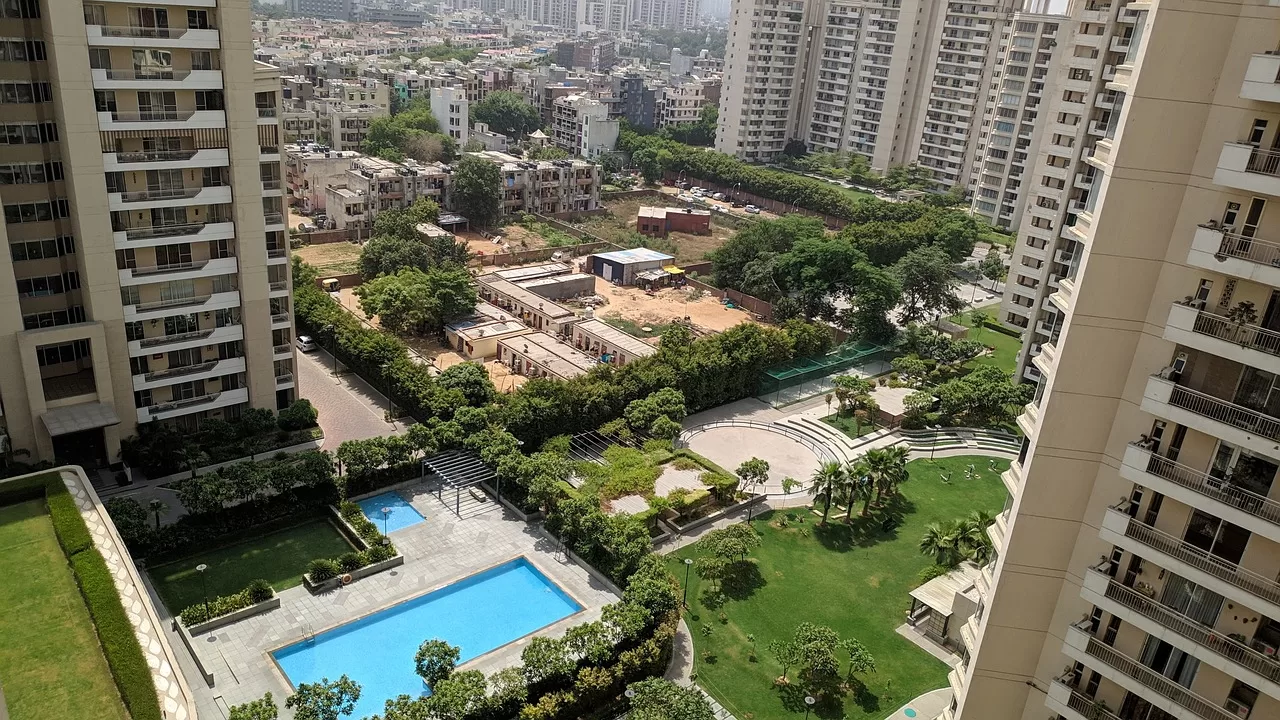
Gurugram: Walk through a gated condominium in Gurugram and you encounter a near-frictionless city: manicured lawns, ornamental trees tended like museum pieces, quiet security kiosks, 24×7 power and water, prompt housekeeping, reserved parking, and clubs that could pass for boutique resorts. Inside the walls, problems are solved in minutes.
Step outside, however, and the contrast is jarring- heaps of mixed waste, drains choked with plastic, streetlights on the blink, and the familiar odour of abdication.
It is this split-screen reality that frames the current conversation about cleanliness in Gurugram, and it demands a candid reckoning: it is both a matter of pride and of shame that residents must step in to deliver services for which they already pay taxes.
Consider the pride first. Volunteers- expats and locals- recently organised a citizen-led cleanliness drive around the Guru Dronacharya Metro Station. They didn’t issue press notes; they brought gloves and garbage bags. The heaps vanished, the street looked recognisable again, and a simple message travelled far: our public spaces are a shared living room. That such a coalition emerged- Serbians, French residents, and long-time locals working side by side- should hearten us. But it is also an indictment of the civic routine: why did it take unpaid labour to clear what should be cleared every day?
Now the shame. The city’s elected councillors themselves have admitted they are effectively unable to run door-to-door collection, improvising with unorganised carts and ad-hoc manpower. The municipal answer, for the moment, has been to let councillors, Resident Welfare Associations (RWAs) and contractors deploy vehicles and staff in their own patches. That is not a system; it’s a shrug. When those accountable for service delivery “throw up their hands,” it signals not a shortage of ideas but a shortage of will- and an erosion of the very premise of local government.
Worse, we seem to act only when embarrassment looms. A recent incident captured the mood: after a Delhi resident posted photos of Gurugram’s roadside garbage- punctuated by the pointed line, “I’m looking for volunteers… to dump it right in front of the ministers’ bungalows”—the spot was cleaned within hours. The speed was welcome; the trigger was damning. When a threat to deposit filth at a VIP doorstep is what spurs action, the problem is not resources but indifference to public complaints, until the stench reaches the powerful.
There is, too, the lone-ranger phenomenon: a Serbian national has taken up a one-street-a-day challenge, cleaning gullies with a rake and gumboots, and shaming the rest of us by example. Admirable as this is, it should discomfort us that individual heroism must substitute for institutional routine. A modern city cannot be kept clean by virtue of viral reels; it requires contracts, equipment, schedules, supervision, and—above all—consequences for non-performance.
Zoom out and the structural drift becomes clearer. In Gurugram’s condominiums, residents already self-provision almost every essential: water storage and treatment, round-the-clock electricity back-up, security, landscaping, housekeeping, and, increasingly, their own waste management as bulk-waste generators under the rules. Many don’t rely on government schools or hospitals; they buy private education and healthcare.
Given the air we breathe, it is not fanciful to imagine “clean-air subscriptions” becoming just another line item in one’s maintenance bill. Piece by piece, we are privatising not merely services but expectations.
When the middle class (and above) detaches from public provision entirely, the political cost of failure collapses. Could municipal authorities, noticing that those with the loudest voice and the heaviest tax contribution are already managing on their own, may, over time, quietly relinquish responsibilities outside gated islands?
One can dress this up as “co-production” or “participatory governance.” But there’s a line between private providers delivering specific services within a regulatory frame, and the privatisation of governance itself- the outsourcing of basic, universal functions of the state to whoever happens to have the means or motivation. The former can be good policy; the latter is corrosive to democracy. In a democracy, the bargain is simple: we pay taxes and elect local representatives; in return, the government guarantees minimum standards of public goods- garbage clearance, functioning drains, lit streets, safe parks. Accountability, not charity, is the operative word.
Yet accountability without penalty is a costume. If missed pickups, broken routes and non-segregation carry no meaningful consequences for agencies and contractors, then the rational strategy- bureaucratically speaking- is to wait. Wait until a clip goes viral. Wait until a group threatens a protest. Wait until the filth is proposed to be relocated to a ministerial neighbourhood. Only then move. The judiciary, in theory, offers recourse. But justice delayed is justice denied—and, in this context, justice delayed is a moral hazard: it perpetuates a perverse incentive for response only to outrage, not to obligation.
The slippery slope should worry us. Today, citizens are praised for weekend clean-ups; tomorrow, who’s to say a municipal resolution won’t hint that RWAs must “ensure” bins are emptied, or be “held responsible” for unclean lanes? If that sounds far-fetched, remember that, in practice, the line between “community participation” and “downward shifting of blame” is thin and frequently crossed.
If we want to preserve the pride and banish the shame, four shifts are essential:
First, make performance visible—and binding. Publish ward-wise dashboards with daily metrics: door-to-door collection coverage, segregation at source, route adherence, fleet uptime, and time-to-clear open dumping sites. Tie contractor payments to these service-level standards, and publish penalties for misses. Citizens shouldn’t have to guess whether the system is working.
Second, fix accountability chains, not symptoms. The councillor’s plea- no vehicles today, no drivers tomorrow- is the tip of a contracting and supervision iceberg. Contracts must specify redundancy (spare trolleys and drivers), documented route maps, GPS logs, and penalties that actually bite. Rotating responsibility across RWAs may patch a week, but it cannot anchor a city.
Third, create an independent sanitation oversight cell. Think of it as a small, professional unit- answerable to the House but insulated from its day-to-day politics- that audits routes, verifies complaints, and certifies payments. Its reports should be public by default. Tie a modest, ring-fenced sanitation cess to this architecture so funds cannot be raided for unrelated purposes.
Fourth, invest in the people who do the work. No system will sustain without properly equipped and fairly paid sanitation workers. Safety gear, mechanised tools for drain desilting, predictable shifts, and grievance mechanisms aren’t charity; they are prerequisites for reliability and dignity.
Citizens, too, have a direct role in keeping Gurugram clean. Responsible behaviour—segregating waste at source (wet, dry, and hazardous), storing it hygienically, and using only designated collection points rather than streets or corners—helps the system work faster and at lower cost for everyone. Alongside a responsive municipal backbone, the city can deploy light-touch incentives and measured deterrents that encourage the right habits: small user-fee rebates or “green points” for households and RWAs that consistently segregate and maintain litter-free perimeters; deposit-refund schemes for bulky items and e-waste; focused information and counselling for first-time violators; and proportionate spot-penalties for littering and corner dumping, with escalation only for repeat non-compliance. The aim is not to punish but to nudge—aligning everyday choices with a cleaner commons so collection crews can do their jobs efficiently and neighbourhoods remain clean between rounds.
Finally, restore the norm: citizen action should supplement the state, not substitute for it. Celebrate the expats and locals who showed up with gloves; recognise the individual who cleans one gully a day; applaud the woman whose post forced a same-day clean-up. But do not let their energy become a pretext for municipal abdication. A city where residents buy everything privately and perform what remains publicly is not a smart city; it is a gated archipelago with no mainland.
Gurugram can do better. The evidence shows the state can move swiftly when pushed. It must now do so because it is supposed to, every day, without the prod of public shaming or the theatre of a threatened garbage caravan to a minister’s bungalow. Pride belongs to citizens who care. Shame belongs to systems that work only when watched. Let’s design the latter out of existence—so that clean streets are the rule, not the reward for a viral post.
*The writer is an economist & public policy professional. He is a resident of Gurgaon.