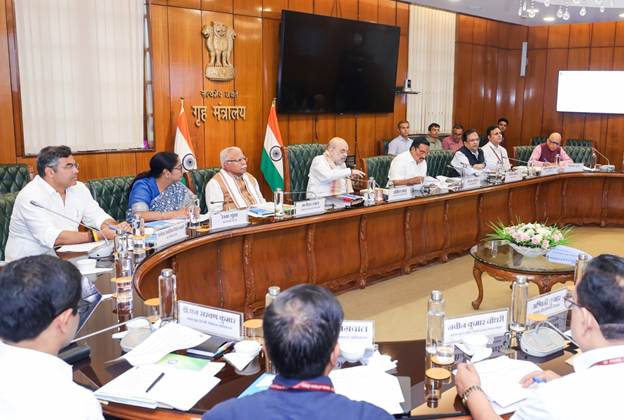
New Delhi: With the Yamuna River choking under a toxic tide of industrial, agricultural, and domestic waste, Union Home Minister and Minister of Cooperation Amit Shah has placed third-party quality testing of the outflow from all Sewage Treatment Plants (STPs) at the forefront of efforts to rejuvenate Delhi’s lifeline. In a high-level review meeting in New Delhi today, attended by Union Housing and Urban Affairs Minister Manohar Lal, Union Jal Shakti Minister C.R. Patil, Delhi Chief Minister Smt. Rekha Gupta, Union Home Secretary, Secretaries, and senior officials of the concerned ministries and Delhi Government, Shah underscored that regular and transparent third-party testing is essential to ensure treated water meets environmental standards, marking a pivotal step toward restoring the river’s health.
Shah directed that the STP capacity be increased to 1500 million gallons per day (MGD) by 2028 to tackle the Yamuna’s overwhelming pollution load. He emphasised that Haryana, Delhi, and Uttar Pradesh must collaborate to ensure the success of Yamuna rejuvenation efforts, as chemicals from industrial and other waste flow into the river not only from Delhi but also from neighbouring states. The call for third-party quality testing of STP outflows was positioned as a cornerstone to foster transparency and accountability, ensuring that treated water does not further degrade the river’s quality.
The Home Minister urged the Delhi Pollution Control Committee (DPCC) to operate in action mode to control water pollution, pressing for continuous and effective steps to curb the rising pollution from industrial units. He highlighted the need to improve the Biochemical Oxygen Demand (BOD) in Delhi’s two main drains, Najafgarh and Shahdara, which have long been conduits of toxic waste. To this end, he directed authorities to conduct a drone survey of these drains to assess their condition and accelerate cleanup efforts, signalling a technology-driven approach to tackling pollution hotspots.
Shah stressed the importance of promoting ecological flow (e-flow) in the Yamuna to restore its natural vitality, urging discussions with the Uttar Pradesh government to find solutions for improving the river’s flow at its entry point into Delhi. He directed that treated water from the Okhla STP be released downstream of the Yamuna, a move that would significantly enhance the river’s water quality and support its rejuvenation. He also called for an increased budget for the National Mission for Clean Ganga (NMCG) to bolster resources for river restoration projects across states, emphasising the need for a regional strategy to address the Yamuna’s crisis.
Addressing Delhi’s broader water management challenges, Shah called for a detailed survey to assess the water supply needs of every household in the city. This, he said, would enable a comprehensive plan to ensure equitable water distribution, addressing the capital’s chronic water scarcity. He flagged uncontrolled water extraction through borewells as a major problem, urging the Delhi Jal Board to formulate an action plan to regularise borewells in a phased manner. This would help manage Delhi’s water resources sustainably, reducing the strain on the Yamuna and supporting its long-term revival.
The Home Minister also highlighted the potential of Delhi’s reservoirs to collect rainwater, which could alleviate water scarcity and promote tourism. He called on the Delhi government to make arrangements for developing these reservoirs, turning them into assets for both the environment and the economy. Additionally, he addressed the issue of waste from unauthorised dairies and cow shelters, urging the Delhi government to collaborate with the National Dairy Development Board (NDDB) to manage this waste effectively and prevent it from polluting the Yamuna further.
The Yamuna’s plight has long been a political flashpoint, with its polluted waters reflecting failures in governance and coordination. Shah’s directives signal a renewed political will to address this crisis, with third-party STP testing as a critical tool to ensure accountability. The call for collaboration among states, coupled with technology-driven surveys and increased infrastructure capacity, underscores a multi-pronged approach to restore the river. However, the success of these measures hinges on swift implementation and sustained commitment, as the Yamuna remains central to Delhi’s identity, sustenance, and future.
– global bihari bureau