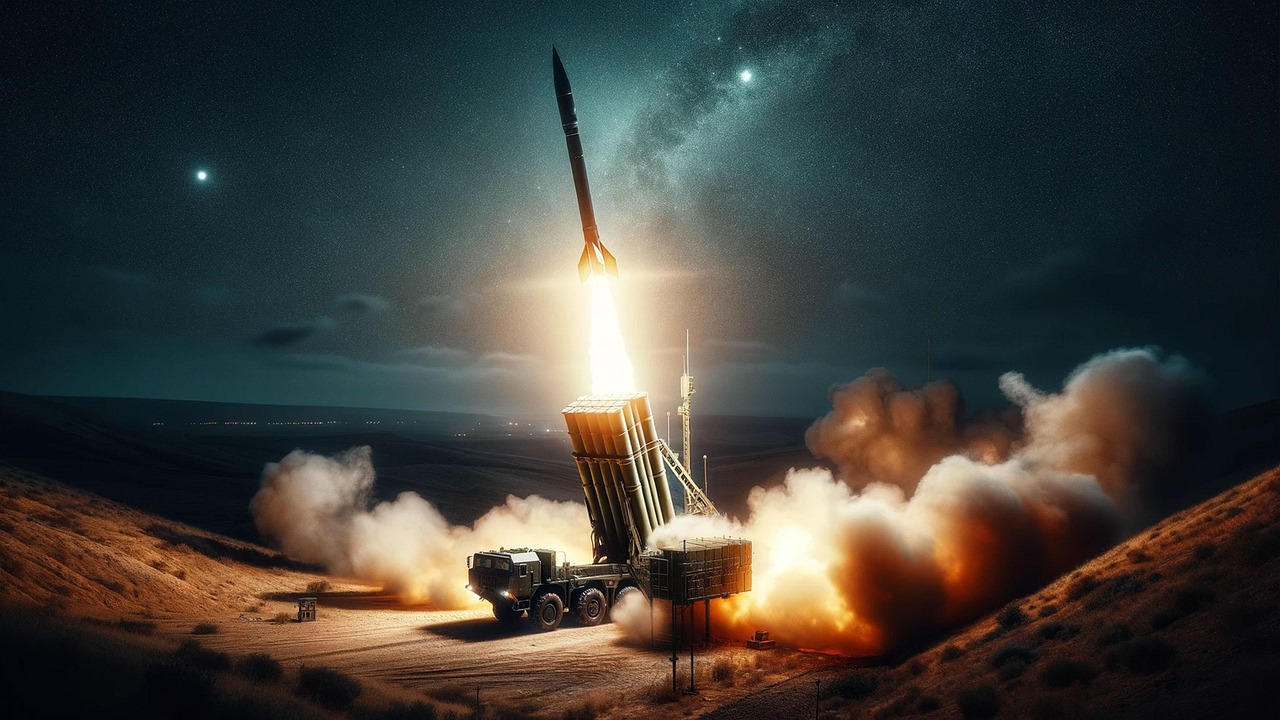
Moscow: Russia today announced a critical shift in its defence strategy, terminating a self-imposed moratorium on deploying ground-based intermediate- and shorter-range missiles, capable of striking targets 500 to 5,500 kilometres away.
This voluntary commitment, adopted after the 2019 collapse of the Intermediate-Range Nuclear Forces (INF) Treaty, aimed to prevent a destabilising arms race, but Russia now accuses the United States and its allies of provoking this change by deploying similar missiles in Europe and the Asia-Pacific. The INF Treaty, a landmark 1987 agreement between the U.S. and the Soviet Union, banned such missiles to ease Cold War tensions, and its failure set the stage for today’s escalating crisis. Russia’s decision threatens to unravel decades of arms control progress, raising fears of a new arms race between nuclear powers. Drawing on the Russian Foreign Ministry’s statement and comments from Spokeswoman Maria Zakharova, this report details Russia’s move, the U.S.’s role in prompting it, and its far-reaching implications for global stability.
The INF Treaty eliminated ground-based missiles with ranges of 500 to 5,500 kilometres, capable of carrying nuclear or conventional warheads and striking with minimal warning, posing a severe threat to global stability. Signed in 1987, it was a cornerstone of post-Soviet arms control, reducing the risk of sudden attacks in Europe and fostering détente. In 2019, the U.S. withdrew from the treaty, citing alleged Russian violations—a charge Moscow firmly rejected. After the treaty’s collapse, Russia sought to prevent escalation. The Foreign Ministry’s statement notes that between 2019 and 2020, Russia’s leaders made top-level statements committing to unilateral self-restraint, pledging not to deploy ground-based INF-class missiles as long as the U.S. and its allies refrained from doing so in regions critical to Russia’s security, such as Europe and the Asia-Pacific. Russia directly called on NATO countries to adopt a reciprocal moratorium on deploying weapons previously banned under the INF Treaty and urged U.S. allies in the Asia-Pacific, including Japan and Australia, to support efforts to prevent an arms race in that region, aiming to preserve global stability and avoid a return to Cold War-era tensions.
The ministry claims these initiatives were met with silence or rejection. Instead, the U.S. and its allies openly declared plans to deploy ground-based INF missiles across various regions and made significant progress toward implementing them. An “increasing body of objective data” indicates that the U.S. has nearly completed testing a wide range of baseline versions of these weapons, with serial production of some systems already underway. The Pentagon is actively forming specialised units and commands in regions like Europe and the Asia-Pacific to enable forward deployment and operational use, while developing infrastructure to support these efforts. Evidence also points to U.S. missile systems being transferred to allied territories for military training activities, which Russia perceives as provocative and explicitly anti-Russian. Since 2023, the U.S. has sent systems capable of ground-launched INF strikes to NATO countries, such as Denmark, for exercises like those using the mobile Mk70 launcher, described as having a “clearly anti-Russia slant,” signalling a direct challenge to Moscow’s security interests.
In the Asia-Pacific, the U.S. escalated its presence by delivering a Typhon mid-range capability missile system to the Philippines in April 2024, where it remains stationed, raising concerns about a permanent U.S. military footprint near Russia’s sphere of influence. During the Talisman Sabre 2025 multilateral exercises in Australia in July, the U.S. used the Typhon system and conducted the first overseas deployment of the Dark Eagle intermediate-range hypersonic system, with officials emphasising its ability to “project power” and its rapid redeployment capability, statements that Russia interprets as a direct threat. In June 2024, the U.S. launched the Precision Strike Missile (PrSM) from an advanced autonomous HIMARS-based platform in the Republic of Palau. During the same Australian exercises, an Australian crew used a U.S.-supplied HIMARS system to launch a PrSM, tested by the Pentagon in 2021 at a range exceeding 500 km, qualifying it as a ground-based INF-class missile. The ministry notes that every M142 HIMARS and its tracked counterpart, the M270 MLRS, can now be regarded as INF launchers. These systems are widely deployed among U.S. allies, including Ukraine, which is using them in its ongoing conflict with Russia, intensifying Moscow’s sense of encirclement. Future PrSM modifications are expected to exceed 1,000 km in range, amplifying the potential threat to Russia’s borders.
The ministry also highlights long-term U.S. plans that deepen Moscow’s alarm. Washington and Berlin have announced plans to deploy Typhon and Dark Eagle systems in Germany starting in 2026, with the explicit goal of “long-term basing,” signalling a permanent military presence in Europe. A specialised U.S. operational group has been stationed in Germany since 2021 to manage these systems, underscoring a sustained commitment. Several U.S. allies are planning to acquire ground-based INF systems from Washington, develop their own missiles within the 500-5,500 km range, or expand existing arsenals, creating “extra forces and facilities” for joint operations within U.S.-led alliances and coalitions. The ministry argues these actions constitute a destabilising missile buildup in regions adjacent to Russia, such as Europe and the Asia-Pacific, posing a “direct and strategic threat” to its national security and undermining the stability once ensured by the INF Treaty.
Russia asserts that these steps by the U.S. and its allies have “serious negative implications for regional and global stability and dangerously escalate tensions between nuclear powers.” Despite issuing repeated warnings that it would need to respond to such provocations to maintain strategic balance, Russia says its calls for mutual restraint were ignored. With U.S.-made ground-based INF systems now being deployed in Europe and the Asia-Pacific, the ministry declares that “the conditions for maintaining a unilateral moratorium on the deployment of similar systems have ceased to exist.” Russia is thus no longer bound by its self-imposed restrictions, which were a post-INF Treaty effort to preserve the spirit of arms control. Russia’s leadership will decide on specific response measures based on an interagency analysis of U.S. and Western ground-launched INF deployments and broader developments in international security and strategic stability. This signals a potential escalation in Russia’s military posture to counter perceived threats.
Maria Zakharova, Russia’s Foreign Ministry Spokeswoman, provides a broader perspective on why Russia feels compelled to act, framing the missile crisis within a pattern of Western hostility that extends beyond military actions. In her August 4, 2025, comments on a Helsinki conference marking the 50th anniversary of the Helsinki Final Act, Zakharova criticised the event as a “political show with an anti-Russian slant,” accusing the Finnish organisers of promoting a Western-centric “rules-based order” while severely limiting Russia’s ability to present its position. She stated, “The Finnish leadership used the OSCE anniversary to advance its national agenda steeped in undisguised Russophobia,” highlighting Russia’s frustration with being marginalised in international forums. Zakharova emphasised that Russia has “invariably honoured the fundamental principles of Helsinki” but firmly opposes their manipulation to serve Western political goals, portraying the missile deployments as part of a broader U.S.-led campaign to isolate and weaken Russia diplomatically and militarily.
Zakharova’s remarks on U.S. tariffs against countries like Brazil further illustrate Russia’s view of the U.S. as a global aggressor operating across multiple domains. In her August 4, 2025, response, she described these tariffs as “politically driven protectionism” and part of a “neocolonial agenda” designed to punish nations pursuing independent policies. She stated, “No tariff wars or sanctions can halt the natural course of history,” underscoring Russia’s commitment to deepening cooperation with partners like BRICS nations to counter U.S. pressure and foster a multipolar, equitable world order. This perspective ties the U.S.’s missile deployments to a larger strategy of maintaining global dominance, which Russia sees as provoking its response not only in the military sphere but also in diplomatic and economic arenas, as it seeks to rally support from like-minded nations to challenge Western influence.
Russia’s decision to end its moratorium is a stark warning that the stability achieved by the INF Treaty is at risk, potentially reviving the Cold War-era tensions it was designed to prevent. The ministry’s statement portrays the U.S. as the primary instigator, having dismantled the treaty in 2019, ignored Russia’s calls for mutual restraint, and deployed advanced weapons near its borders in a coordinated effort with allies. Zakharova’s comments reinforce this narrative, depicting Russia as under siege from a multifaceted Western campaign that spans military provocations, diplomatic exclusion, and economic coercion. As Russia prepares to counter these threats with unspecified military-technical measures, the international community faces the prospect of a renewed arms race, where the rapid deployment of advanced missiles could heighten the risk of miscalculation and conflict between nuclear powers. This development threatens to erode the post-Soviet arms control framework, leaving the world in a more precarious state, with global stability hanging in the balance.
– global bihari bureau