Nalanda Awakens: Words Return After 800 Years
Where Xuanzang Wept, Poetry Will Rise Again
Rajgir: The winter air is thin and bright, carrying the faint bronze smell of ancient bells that no longer exist. Sixteen centuries ago, a Chinese pilgrim named Xuanzang knelt in the dust of this very valley, tears streaming down his face, because the gatekeeper had just asked him a question in flawless Sanskrit and he realised he had finally reached the place where the world’s sharpest minds sharpened one another. For eight hundred years, Nalanda Mahavihara was the planet’s greatest republic of ideas: ten thousand monks, three thousand teachers, nine million manuscripts, students from Korea to Kashmir, lectures from dawn till the lamps were lit, and debates so fierce that even the Buddha statues seemed to lean forward to listen. Then, in 1193, the fires came. For three months, the libraries burned, and the smoke, Tibetan chronicles say, darkened the sky as far as Odisha. Yet the flames could not consume what had already escaped inside the minds of fleeing scholars who carried the dharma across the Himalayas and the seas.
In December 2025, the valley is calling those scattered embers home, asking them to rise again as living words.
From the dusk of 21 December to the noon of 25 December 2025, the new Rajgir International Convention Centre in Rajgir —built within whispering distance of the red-brick monasteries where Śīlabhadra once taught emptiness—will become the newest quadrangle of Nalanda. The inaugural Nalanda Literature Festival is not an event beside ruins; it is the ruins deciding to sing.
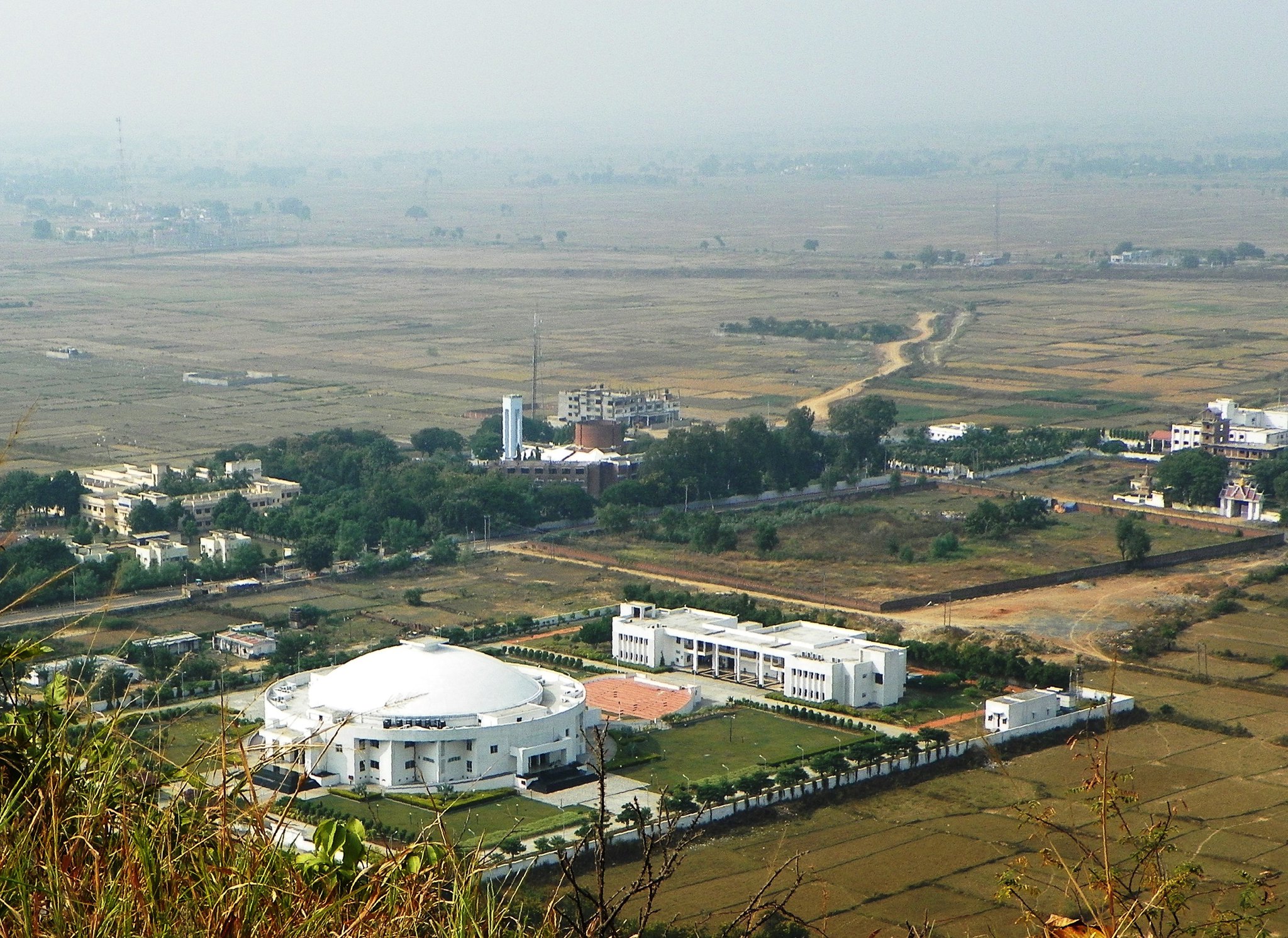
From the evening of 21 December to the afternoon of 25 December, the new Rajgir International Convention Centre—built within sight of the excavated monasteries where Xuanzang once studied under Śīlabhadra—will become the newest courtyard of Nalanda. The inaugural Nalanda Literature Festival (NLF) 2025 is not being held near history; it is history choosing to speak again, in the same way it always spoke: through living voices.
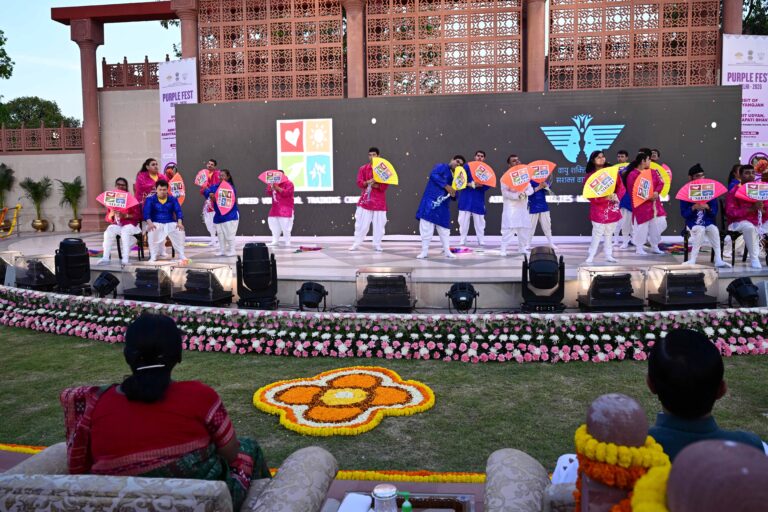
The festival opens at twilight on the 21st with an inaugural ceremony beneath the same hills where the Buddha himself once cooled a raging elephant with a gentle word. A Bihar troupe will dance where once Sumatran novices danced for King Harshavardhana when he rode in from Kannauj to pay homage. Lamps are lit the way they were lit when Xuanzang watched the nightly procession of light turn the valley into a fallen constellation. Dinner is served the way it was served to Javanese and Sumatran novices in the ancient refectory, beneath the same stars that looked down on ten thousand begging bowls.
Every morning thereafter begins exactly as Nalanda once did when dawn was a slow bronze blade across the hills. At seven, while mist still drapes the cyclopean walls, hundreds unroll yoga mats on the pavilion lawns as teachers from Bihar School of Yoga, Munger, guide them into the same slow breathing that once steadied young logicians before they faced Dignāga’s merciless questions on perception. By ten, the two great halls are alive.
22 December
Dawn is a slow bronze blade across the hills. On the Yoga Pavilion, bodies unroll like ancient scrolls while teachers from Munger breathe prana into lungs that will soon carry questions older than empires. Hall 1 opens with “Shabdon ki Social Factory”. Dr Amit Pandey asks whether the algorithms of today can become the new Ratnasagara—the nine-storeyed library that once towered here. At the same hour in Hall 2, Vinod Anupam, Vidya Chaudhury, K N Shrivastava and Harivansh Narayan Singh celebrate the stubborn beauty of Bajjika, Angika and Magahi—tongues that were already old when the Pala kings poured gold into Nalanda’s stupas. At ten, the halls open like twin lotuses. By noon, in one petal, Dr Shashi Tharoor is trading metaphors with the vice chancellor of Nalanda University, Professor Sachin Chaturvedi, while the ruins listen quietly, remembering when Chinese and Tibetan scholars did the same in Prakrit and Sanskrit. Both Tharoor and Chaturvedi trade sentences that glint like swordplay—exactly the kind of verbal duel that once earned a young monk the title Pandita. In the other petal, Vinod Anupam asks why a single line of Bajjika can still stop a wedding procession in its tracks, the way a single line of Nāgārjuna once stopped an arrogant logician in his. By noon, Amitabh Kant recounts how India moved mountains during the G20, and the muhurat clap for the film Ardhnayak echoes the ancient clap of wooden slats that signalled the end of lectures. Evening belongs to Adoor Gopalakrishnan’s monsoon-soft voice and to Dr Sonal Mansingh reviewing “A Zigzag Mind” with Dr Vikram Sampath beneath a sky that remembers Xuanzang copying verses by the light of those same stars.
23 December
Morning mist clings to the stupas like forgotten prayers. Ami Ganatra and Dr Vikram Sampath begin the quiet revolution of seeing history with Indic eyes—no longer through borrowed lenses, the way the ancient monks refused to see the Buddha through borrowed metaphysics. Across the corridor, Vandana Rag, Santa Khurai and Divya Mathur read lines that cut like winter air, reminding everyone that women studied here when most of the world thought knowledge had a gender. Pushyamitra speaks of Gandhi’s Champaran satyagraha on the very soil where monks once practised aparigraha—non-possession—so fiercely they owned nothing but the truth. Night falls, and Dr Sonal Mansingh herself becomes the flame: cream silk, gold borders, ankle bells ringing against stones that once rang with the bells of Korean boys running to logic class. “Appo Deepo Bhava”—Be your own lamp—she dances, and the valley remembers why it was once called the birthplace of light.
24 December
The Northeast arrives like a sudden green wind from the mountains the ancient pilgrims crossed on foot. Professor MJ Warsi gathers the Language Tribe beneath coral trees that are only memories now. That would have fascinated the ancient grammarians who debated Pāṇini here. Professor Arupjyoti Saikia and Dr Madhumita Barbora unveil inscriptions from lands that sent pilgrims to Nalanda when the Silk Road still shimmered. Professor Ganesh Devy, Kynpham Sing Nongkynrih and Rita Chowdhury trace linguistic rivers older than the university itself. Meanwhile, in Hall 1, Vinay Kumar asks how Gandhi’s charkha still spins in Bihar’s folk songs the way the prayer wheel once spun in these monasteries. At 3 p.m., the question is flung like a burning arrow: “Does religion overpower our way of life?” The debate crackles like dry lightning as Dr Aslam Parvaiz, Professor D Venkat Rao and Ami Ganatra quote Gita, Quran, Rigveda and Tripiṭaka in the same breath—exactly the kind of fearless interfaith conversation that made Nalanda famous and, eventually, feared.
Night becomes music. A concert under winter stars sends melodies floating across the grid of ruined monasteries where, in 1234, ninety-year-old Rahul Shribhadra still taught four trembling students by the light of a single oil lamp, refusing to let the dharma die.
25 December
While much of India unwraps Christmas presents, buses leave at dawn for the pilgrimage every ancient student once made: first to the black-stone Buddha at Bodhgaya, who smiled on Nalanda’s founders, then to the resurrected stupas where Xuanzang wept, then to the cool galleries of Bihar Museum in Patna that now guard fragments of the library that once burned. They return to Rajgir for the closing ceremony beneath a sky the colour of old parchment. Every volunteer, every speaker, every child who decided here to write her first poem in Magahi, will be felicitated in the same spirit in which Nalanda once conferred the title Pandita on those who had mastered the art of seeing clearly.
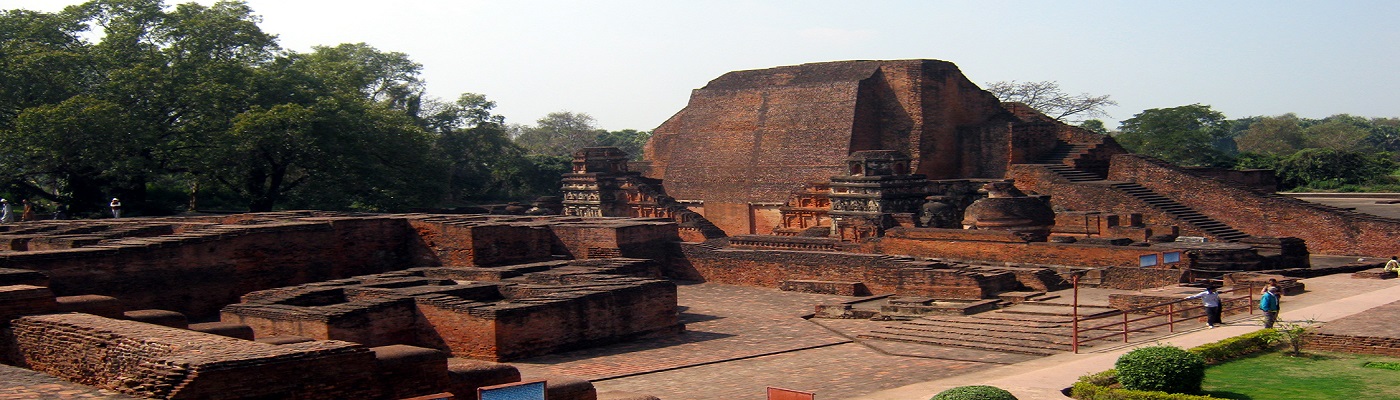
This festival is built on the understanding that Nalanda never truly fell. Its logic seeded Tibetan monasteries, its medicine reached Baghdad, its astronomy whispered into Europe, and its fearlessness still lives in every question we dare to ask. When a young rapper from Patna demonstrates an AI chatbot reciting Vidyapati in perfect medieval Maithili, he is doing what the ancient copyists did—preserving a voice across centuries. When Professor Sarita Boodhoo speaks of Bhojpuri thriving in Mauritius, she is continuing the journey that began when monks fled south with palm-leaf bundles in 1193. When a transgender writer claims centre stage, she is reclaiming the radical inclusivity that made Nalanda admit students regardless of caste, kingdom or birth.
The ancient bells that once summoned ten thousand monks to debate are ringing again. Not in bronze, but in the voices of Dr Shashi Tharoor and Professor Ganesh Devy, of teenage girls from Bihar Sharif and tribal poets from Nagaland, of algorithms learning to dream in Magahi and grandmothers remembering songs their grandmothers sang.
If you stand very still on the excavated pathways at twilight, you can hear them. They are saying, in a thousand living tongues that Xuanzang would recognise and marvel at: Come home. The conversation never ended. It only waited for us to grow brave enough to continue it. Registrations are open on the official NLF website and BookMyShow. The valley is ready. The lamps are lit. Nalanda is speaking again.
– global bihari bureau