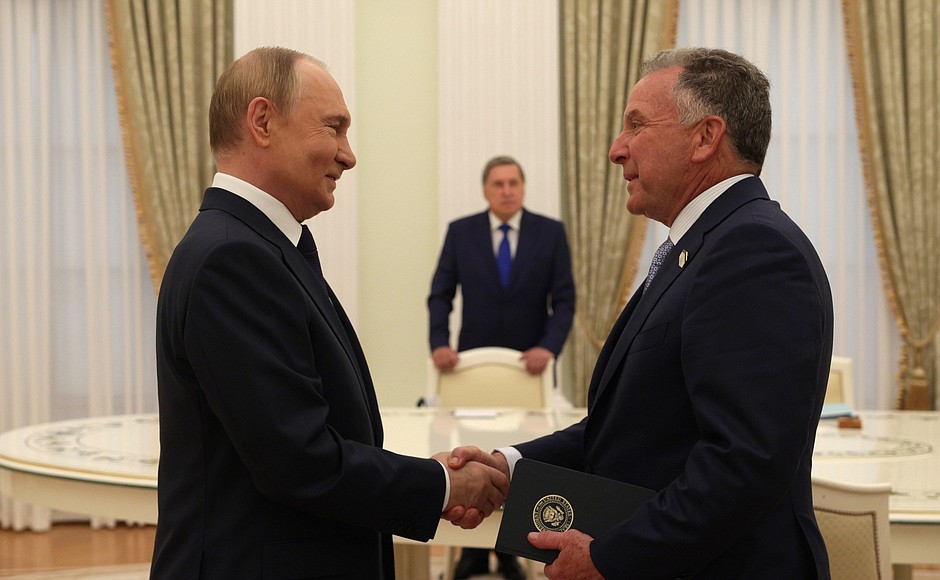
Russian President Vladimir Putiin with US President’s Special Envoy Steve Witkoff in Moscow on August 6, 2025. Photo source: Kremlin
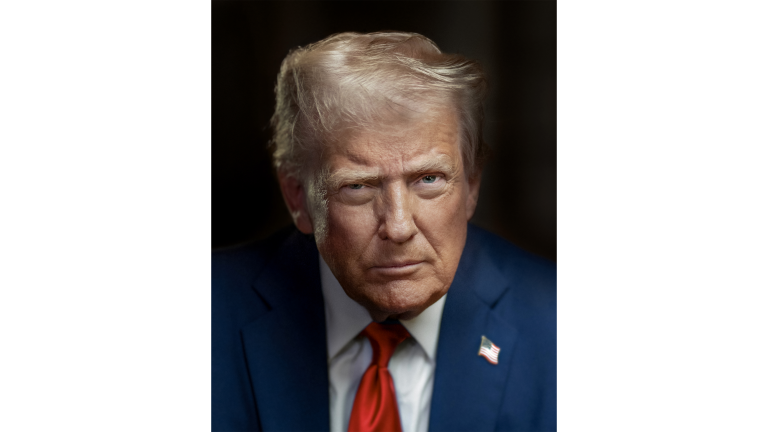
Trump Eyes Summit to End Ukraine War
Washington: The United States President Donald Trump’s push for a summit to end the Russia-Ukraine war advanced after U.S. Special Envoy Steve Witkoff’s “highly productive meeting” with Russian President Vladimir Putin, Secretary of State Marco Rubio told Fox Business Network’s Larry Kudlow on August 6, 2025, though bottlenecks remain.
Rubio underscored the administration’s goal, stating, “Let’s remind everybody that’s the goal here. The President wants to end the war.” He noted that Witkoff’s discussions, which Trump praised on Truth Social for making “great progress,” clarified Russia’s conditions for peace, though specifics were withheld to protect ongoing talks. A major bottleneck is the need for a temporary ceasefire to enable final negotiations, as Rubio explained: “At some point a ceasefire has to be a part of this process because it is hard to negotiate details of a final peace agreement while you’re shooting at each other.”
Territorial disputes, including Russia’s control over Crimea since 2014 and other occupied areas, are central but pose another bottleneck. “When you have a war and people have died – for example, on the Ukrainian side they’ve paid an enormous price in this war. Those concessions aren’t easy,” Rubio said, adding that convincing publics in both nations to accept compromises is a significant hurdle. Kudlow asked, “What does ending the war mean to Vladimir Putin?” Rubio replied, “Everybody wants the war to end. I think the conditions under which it’s supposed to end is – that’s always the hard part,” pointing to the difficulty of aligning Russian and Ukrainian positions.
Following the Moscow talks, President Trump briefed European leaders, with further discussions planned with allies and Ukraine to prepare for a potential summit with Putin and Ukrainian President Volodymyr Zelenskyy. Rubio cautioned that significant progress is needed, stating, “We’ve got to get close enough to that point so that a meeting like that will be productive and worth doing.” He speculated on the threshold, saying, “Can we get 85 percent of the way there, 75 percent of the way there? Because I don’t think you can have a leaders-level meeting if you’re not close enough,” warning that a premature summit risks failure, a critical bottleneck in the tight diplomatic landscape.
Rubio noted that Witkoff’s talks provided “concrete examples of the kinds of things that Russia would ask for in order to end the war,” a first for the administration. “Now, it may not be what Ukraine can accept, but at least it gives us an outline to work off of,” he said, emphasizing the challenge of bridging divergent positions. Kudlow asked if Witkoff returned with a ceasefire proposal, to which Rubio confirmed, “Yes,” but noted no specific timing—such as Thursday, Friday, or Monday—was set. Rubio highlighted the timeline’s uncertainty as another bottleneck: “It could take hours, it could take days – frankly, it could take weeks.”
Secondary sanctions against Russia, due for a decision by Friday, pose an additional bottleneck. “That’s a decision the President will need to make here over the next 24 to 36 hours,” Rubio said, noting that stalled talks could trigger sanctions. No call between Trump and Putin is scheduled, but Rubio added, “It could happen over the next couple of days,” if progress continues. He stressed the summit’s potential, stating, “If we can get what the Ukrainians will accept and what the Russians will accept close enough, then I think there’s the opportunity for the President to have a meeting that includes both Putin and Zelenskyy to try to close this thing out.”
The interview also addressed reports of Israel considering a military takeover of Gaza, where Rubio identified significant bottlenecks. He outlined three interrelated issues: the humanitarian crisis, 20 hostages held in “horrifying conditions,” and the need to disarm Hamas for lasting peace. “There’s a lot of attention being paid to the humanitarian, and we want to do everything we can to be helpful on the humanitarian problem, but not enough attention being paid to the fact that 20 people that had nothing to do with this are being held hostage in tunnels on the verge of death,” Rubio said. He stressed, “As long as Hamas exists as an armed group in Gaza, there will not be a peaceful future, because it’s going to happen again,” identifying Hamas’s persistence as a major obstacle.
Rubio noted that President Trump insists on the release of all hostages, “not five, not seven, all of them, including the deceased hostages.” The U.S. is working to address the humanitarian crisis without benefiting Hamas, while Israel retains autonomy over its security decisions. “Ultimately the President has said that it’s up to Israel to decide what they need to do for their own security,” Rubio stated. He cited regional consensus, noting, “Even the Arab League says” Hamas must be disarmed. Rubio underscored the bottleneck of balancing these issues: “You have to do all three,” referring to the challenge of addressing the humanitarian crisis, securing hostages, and disarming Hamas simultaneously.
The coming days will test U.S. diplomacy as officials tackle these bottlenecks, aiming to realize Trump’s summit vision for Ukraine and address Gaza’s complex challenges. Rubio’s remarks reflect cautious optimism in Russia-Ukraine talks, tempered by difficulties in aligning positions, securing concessions, and navigating tight timelines, alongside a firm stance on resolving Gaza’s hostage crisis and Hamas’s role, with no firm timelines for either conflict.
– global bihari bureau