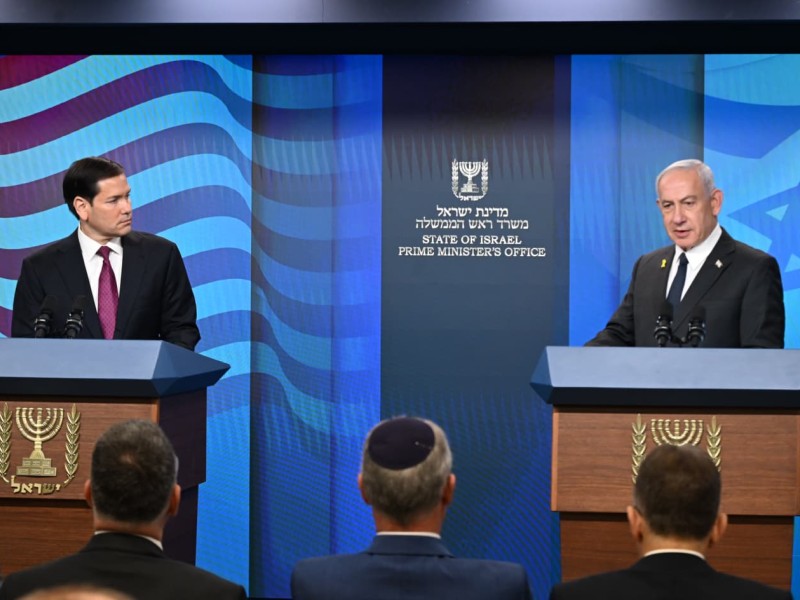
Marco Rubio and Benjamin Netanyahu briefing mediapersons in Jerusalem today © Photo by Haim Zah, GPO
Gaza Stalemate: Hostages, Strikes Persist, US-Israel Vow Total Hamas Defeat
US-Israel Push Hostage Deal as Gaza War Intensifies
Jerusalem: The United States Secretary of State Marco Rubio met Israeli leaders today, cementing the US-Israeli alliance’s resolve to secure the release of all 48 hostages in Gaza and eliminate Hamas as a military threat. No indications surfaced of an imminent ceasefire or the end. Israel’s operations in Gaza City continue, worsening a humanitarian crisis with 1.9 million Palestinians displaced, tens of thousands dead, and shortages of food, water, and medical aid, risking famine.
In a joint press availability with Prime Minister Benjamin Netanyahu, Rubio and Netanyahu reaffirmed their nations’ bond against Iran and its proxies, chanting “Death to America, death to Israel.” Netanyahu portrayed Israel as the front line of American civilisation in the Middle East, praising the US President Donald Trump’s strikes on Iran’s nuclear facilities as a military necessity and a global signal of US defence of allies. He emphasised that America has no better ally than Israel, and Israel none better than America, crediting Trump’s leadership for strengthening the alliance, calling him Israel’s greatest White House friend. Quoting Trump’s “Remember October 7th,” likened to “remember the Alamo,” Netanyahu recalled the Hamas attack’s massacre and abductions, pledging to return all hostages—living and dead—with US support, and to defeat Hamas to end its Gaza threat.
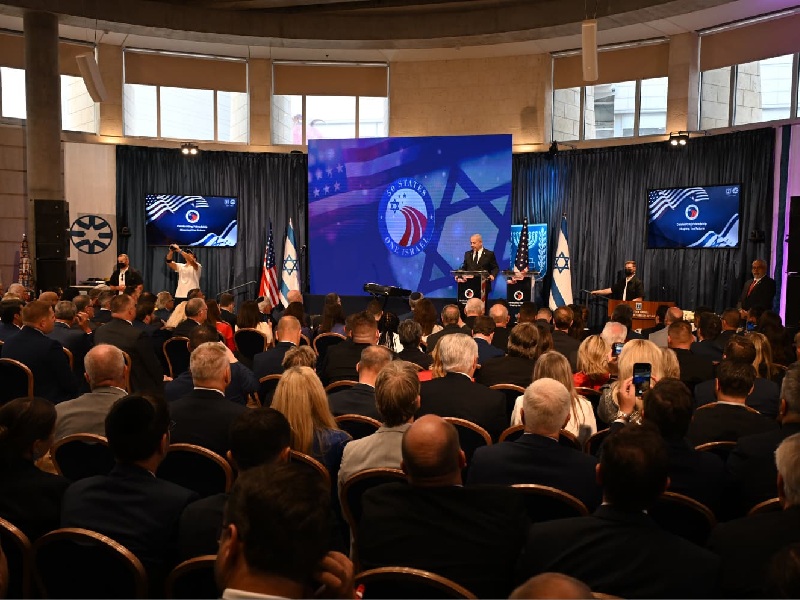
Netanyahu today also addressed the largest delegation of American legislators to ever visit Israel at the “Fifty States – One Israel” event at the Ministry of Foreign Affairs, here. “So, this is where we are right now, on the verge of entering Gaza, and defeating Hamas and liberating the hostages. This has not been easy. Not for our brave soldiers, not for our brave Israeli public, but they who stood it, no less effectively than the British people, stood up in the blitz. That’s exactly what we had. But we also enjoyed the support of the United States. We enjoyed the support, and we enjoyed your support. You’re the biggest delegation of legislators that have ever come to Israel, and I thank you for coming here to stand up with Israel,” he told the visiting US lawmakers.
Rubio, speaking for Trump, thanked Netanyahu for Israel’s friendship, extending beyond security to technology, economics, and culture, often eclipsed by conflict. He announced plans to inaugurate the Pilgrim’s Road site in the City of David tonight, significant to many Americans. Rubio restated Trump’s demands: immediate return of all hostages, Hamas’s end as an armed threat to Israel and the world, and a better future for Gazans, impossible without these steps. He highlighted cooperation against Iran’s nuclear and missile programs, threatening US regional presence, Israel, Gulf states, and Europe, with missiles capable of reaching European nations. Rubio affirmed maximum economic pressure on Iran, support for Europe’s snapback sanctions over Iran’s nuclear deal violations, and full US backing for that process.
Netanyahu thanked Rubio for supporting Israel’s self-defence, countering isolation, demonisation, rising antisemitism, medieval lies, and pressures from governments yielding to Islamist minorities and vilification. He framed their action as protecting their countries and civilisation against barbarism, as enduring as the Western Wall they visited yesterday, offering blessings for Rubio, America, Israel, and their alliance.
Rubio stressed unchanged goals: hostage return, Hamas elimination, and Gaza’s improved future, impossible otherwise. He condemned October 7, 2023’s barbarism and Hamas’s ongoing acts, insisting that action will yield results.
On whether Hamas’s military dismantlement is feasible, Rubio said Hamas could surrender, but, as a group bent on Israel’s destruction, this is unlikely. A negotiated end—Hamas disarming, freeing hostages, including Gazans used as shields—remains ideal and pursued, but military action may be needed against those committed to violence.
On whether Israel informed the US before the recent Doha, Qatar, strike on Hamas leaders and if the US urged restraint in Gaza or against repeating such actions, Netanyahu confirmed it was Israel’s independent decision by him and security chiefs, taking full responsibility, as planners of the worst Jewish massacre since the Holocaust deserve no haven. Rubio focused on next steps, urging Qatar for a constructive role in hostage release, Hamas’s end, and Gaza’s future, noting these persist despite the strike.
The assassination of US conservative Charlie Kirk prompted questions on Trump’s concerns over radical left-wing groups undermining democracy and US-Israel cooperation against political killings. Netanyahu called the murder barbaric, praising Kirk as Israel’s friend who shared a memorandum on defending Western civilisation. Comparing Kirk’s age (31) to his brother’s (30) at Entebbe, he urged preserving Kirk’s legacy. He decried incitement from those trampling democracy while invoking it, citing violence—two attempts on Trump, daily threats to him, his family, Israeli ministers, and figures—as a democratic challenge where ballots, not bullets, resolve conflicts.
Rubio termed Kirk’s execution horrifying, a White House family loss, ironic as he was killed mid-discourse he championed, engaging opponents on campuses, podcasts, and shows like Gavin Newsom’s and The Young Turks’. It aimed to silence debate, risking silence or violence, both destructive. He supported visa revocations for foreigners celebrating the killing, holding visitors to high standards against destructiveness.
On Gulf allies’ anger over the Doha strike, labelled barbarism, and whether it sparks a US diplomatic crisis with assurances against recurrence, Rubio affirmed strong Gulf ties, ongoing engagement, and the need to address 48 hostages, Hamas’s use of Gazan shields, and peace’s prerequisites collaboratively. On whether the strike killed Hamas leaders and if Gaza’s daily tower destructions and deaths pressure Hamas via civilians, Netanyahu rejected condemnation’s hypocrisy, citing UN Resolution 1373 against terrorist havens, likening Israel’s actions to US operations against al-Qaida in Afghanistan and bin Laden in Pakistan. He said Gaza towers are Hamas strongholds; Israel urges evacuations from the last major holdouts, while Hamas shoots fleeing women and children to retain shields. He called for factual priorities: Israel clears civilians, Hamas keeps them in. On the strike, reports are pending, but it signalled “you can run but can’t hide,” deterring terrorists.
On claims the Doha raid failed and exposed IDF units, Netanyahu rejected the premise, stating it showed terrorists’ global vulnerability, a consistent policy. On whether further strikes on Hamas in sovereign regional countries are ruled out, Netanyahu cited the Munich massacre, where Golda Meir tracked terrorists in Europe without major outcry, as democracies target threats to citizens. On the message to allies like the UK on UN Palestinian statehood votes, Rubio called them symbolic, driven by domestic politics, emboldening Hamas, impeding negotiations, and provoking Israeli counter-reactions like West Bank annexation talks, making peace harder.
On Gaza City’s offensive, potentially “Operation Gideon’s Chariot,” Rubio said talks centred on Trump’s goals: full hostage release, Hamas threat end, US aid for peaceful Gaza rebuild, noting October 7’s barbarism against innocents triggered this. Netanyahu withheld tactical details but restated five cabinet principles: Hamas disarmament, all hostages freed, Gaza demilitarised (no arms smuggling or production), Israeli security oversight against resurgent terror, and a non-terror-affiliated civilian government. He favoured Hamas’ surrender to avoid battle’s tolls—lost friends, maimings—but pledged completion.
On responses to potential Palestinian state declarations, including Judea and Samaria sovereignty, Netanyahu said unilateral moves against Israel prompt Israeli replies, without specifics.
Netanyahu acknowledged attendees: US Ambassador Mike Huckabee, Israeli Ambassador Jacob Leiter, Foreign Minister Gideon Sa’ar, National Security Council head Tzachi Hanegbi, and staff.
Rubio also met President Isaac Herzog, discussing security, Hamas defeat, hostage release, and offering condolences for today’s Jerusalem terrorist attack casualties. They affirmed US-Israel strategic ties and regional integration.
Herzog welcomed Rubio’s dual roles as Secretary and National Security Advisor since Kissinger, noting the visit’s spiritual and challenge-focused aspects. He marked the Abraham Accords’ fifth anniversary—signed under Trump with Netanyahu, Morocco, Bahrain, UAE—as a historic Middle East change, enduring storms, urging upgrades and more partners, thanking signatories and US support. Rubio credited the accords’ resilience, US bilateral partnerships with signatories, and Trump’s second-term potential to expand them.
In a Fox News interview with Gillian Turner, Rubio said the Gaza City offensive underscores war’s end conditions: all 48 hostages free, Hamas disarmed. Diplomacy is ideal, but military action may follow; Israelis prefer otherwise, bearing the burden. He shared Trump’s frustration with piecemeal releases, favouring all at once, though partials are possible, as no hostages should exist post-October 7. On Doha’s strike, Rubio noted Trump’s displeasure and derailment risk, but Netanyahu’s defence; the US focuses on hostages, Hamas, Gaza’s future, hoping Qatar aids despite upset, met by US officials, including a Trump dinner with Qatar’s prime minister. Rubio dismissed snub concerns, affirming US-Israel bonds while maintaining Qatar ties via bases and cooperation. On West Bank annexation, he tied talk to counterproductive European/Canadian state recognitions, emboldening Hamas, warned against earlier.
Rubio linked Russian drone incursions into Poland/Romania to Ukraine war escalation, Trump’s inherited push to end it, as strikes weaken sides. Sanctions loom sans timeline, but Europe must curb Russian oil buys. On Brazil’s Jair Bolsonaro sentencing—a witch hunt—Rubio cited judicial overreach targeting US citizens, with responses soon. For Venezuela, Nicolás Maduro’s reward ties to a New York indictment for state-backed trafficking; over 50 nations reject his presidency. Rubio defended boat strikes as cartel interdiction, US-bound drugs, traffic dropping since; rejected meddling, as trafficking threatens the US. On Kirk, Rubio saw rising violence—Trump attempts, Minnesota officials—threatening discourse, with visa revocations for celebrators.
These talks signal no swift resolution: rigid demands for Hamas’s capitulation amid escalating Gaza actions—targeting strongholds while urging civilian exits—suggest prolonged fighting. Diplomatic paths narrow with Doha’s fallout and UN statehood moves, deepening Gaza’s crisis, where urban warfare and aid blockades imperil civilians.
– global bihari bureau