An RSS rally
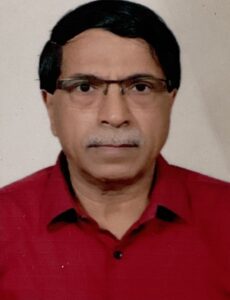 By G. Krishna Mohan Rao*
Hosabale’s Call Reopens India’s Identity Divide
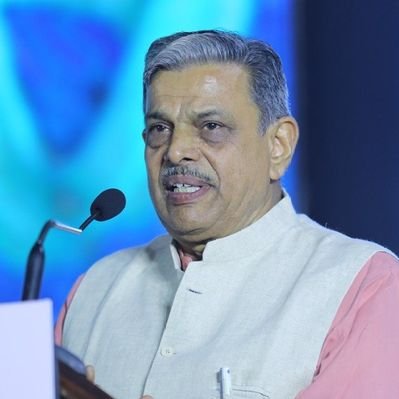
The recent proposal by Dattatreya Hosabale, General Secretary of the Rashtriya Swayamsevak Sangh (RSS), to remove the terms “Socialist” and “Secular” from the Preamble of the Indian Constitution has ignited a significant political controversy. Delivered on June 26, 2025, during a commemoration of the 50th anniversary of the Emergency, Hosabale’s remarks argue that these terms, inserted during that tumultuous period, deviate from the Constitution’s original spirit. With the RSS marking its centenary and the Bharatiya Janata Party (BJP) wielding power, speculation swirls that this proposal signals a broader ideological agenda, especially as Hosabale is largely poised to succeed Mohan Bhagwat as RSS chief.
The opposition, led by Rahul Gandhi and Jairam Ramesh, has accused the RSS of plotting to dismantle constitutional values, while the BJP counters by accusing Congress of historical constitutional transgressions. This controversy, far from academic, lays bare the fault lines of India’s democratic ethos, raising profound questions about secularism, socialism, and the vision for the nation’s future.
The Emergency, a constitutional yet contentious chapter in India’s history, saw the suspension of civil liberties and the detention of political adversaries, including RSS functionaries. It was during this period that “Socialist” and “Secular” were enshrined in the Preamble, emphasising the Constitution’s commitment to equality across religions and responsibility toward the underprivileged. Hosabale’s assertion that these additions betray the Constitution’s original intent has stirred a political maelstrom.
The RSS, in its centenary year, appears intent on reasserting its ideological moorings, particularly with the BJP at the helm. Hosabale’s comments, if intended to spark debate, have achieved that and more, stirring a hornet’s nest of accusations and counterclaims. The suggestion to remove “secular” resonates with those who endorse the Sangh’s policies, who see it as a step toward a Hindu Rashtra, if not in form, then in spirit. This aligns with longstanding RSS ideals like Akhand Bharat and a Hindu-centric national identity, ideas that have gained traction amid the BJP’s emphasis on Hindutva politics.
The opposition has seized on Hosabale’s remarks to accuse the RSS of undermining the Constitution’s core principles. Rahul Gandhi, Leader of the Opposition, declared, “The mask of RSS has come off again. The Constitution hurts them because it talks about equality, secularism and Justice. They want to make the Bahujans and the poor slaves again by snatching their rights.” Congress spokesperson Jairam Ramesh pointed to a November 2024 Supreme Court judgment that rejected demands to remove “socialist” and “secular” from the Preamble, arguing that Prime Minister Narendra Modi’s 2024 campaign slogan, “400 Paar,” aimed to secure a mandate to amend the Constitution but was rebuffed by voters. This has fueled speculation that Hosabale’s proposal reflects a hidden RSS agenda, particularly as he is likely to assume leadership of the organisation. Critics note the RSS’s historical rejection of the Constitution, exemplified by its protests, including burning copies of the document when it was adopted, signalling a deep-rooted ideological clash with the Republic’s foundational text.
The BJP, in response, has deflected criticism by accusing Congress of perpetrating constitutional violations since independence, particularly during the Emergency, and demanded an apology for those atrocities rather than what it calls diversionary tactics. This defence seeks to reframe the narrative, positioning Congress as the historical transgressor while sidestepping the RSS’s controversial stance.
Yet, the RSS’s critics argue that its opposition to the Constitution is not a recent phenomenon but a consistent thread, evidenced by its early protests and ongoing advocacy for a Hindu Rashtra. The dream of Akhand Bharat, while evocative of a unified historical India, seems increasingly anachronistic in today’s diverse global landscape, lending credence to the opposition’s fears that the RSS and its affiliates are steering toward a more homogeneous national identity.
The significance of “secular” and “socialist” in the Preamble lies in their encapsulation of the Constitution’s ethos. Fundamental Rights, which are justiciable, guarantee equality and freedom, while Directive Principles, though non-justiciable, urge the state to address socio-economic disparities. Academically, the debate over these terms invites nuanced arguments. Secularism ensures equal status for all religions, fostering coexistence in a pluralistic society, while socialism underscores the state’s duty to uplift the deprived. However, the economic liberalisation under the then Prime Minister P.V. Narasimha Rao redefined socialism’s practical implications, and the BJP’s rise has amplified Hindutva, often perceived as divisive. Hosabale’s proposal may also serve as a strategic counter to the caste census, which the RSS opposes for its potential to fracture Hindu unity, a concern that dovetails with its broader ideological push.
Historical context enriches this debate. In the early 1990s, L.K. Advani, then a leading BJP figure, faced a British journalist’s question about whether his party sought to make India a Hindu nation. Advani’s response was swift, drawing a parallel between India’s Hindu majority and England’s Christian character, noting that people of other faiths coexist in both nations. His second point, rooted in the Balraj Madhok doctrine and echoed by figures like Dr. Subramanian Swamy, posited that India’s democracy thrives because of its Hindu majority, implying that a different demographic composition, particularly Islamic, might preclude true democracy. This perspective reflects the RSS’s view of India’s democratic identity as intertwined with its Hindu ethos, a stance that informs Hosabale’s current proposal.
The Emergency’s legacy complicates this narrative. Imposed constitutionally, it led to severe consequences, including the detention of RSS members, though Indira Gandhi later ordered their release. The post-Emergency Janata Government’s collapse, partly due to demands that former Bharatiya Jana Sangh members renounce RSS ties, underscores the organisation’s enduring influence and the tensions it provokes. Hosabale’s remarks have resurfaced these contradictions, demanding fresh scrutiny in today’s polarised climate.
Vice President Jagdeep Dhankhar’s recent comments at a book release for “Ambedkar Messages” lend weight to Hosabale’s position. Reflecting on the Emergency, Dhankhar criticised the addition of “socialist” and “secular” as a betrayal of the Constitution’s framers, stating, “In the name of those—we the people—who were enslaved, do we go for a flourish of words? It is to be deprecated beyond words.” He argued that these additions, made during the “darkest period for the Constitution,” give wings to existential challenges, altering the soul of the document. Dhankhar invoked the 1973 Kesavananda Bharati vs. State of Kerala case, where a 13-judge Supreme Court bench, led by Justice H.R. Khanna, emphasised the Preamble’s role as a guiding light, deriving its authority from “the people of India.” His support for Hosabale’s view underscores the gravity of this debate, framing it as a clash over the Constitution’s foundational principles.
The implications of this controversy extend far beyond rhetoric. In a diverse world, the RSS’s vision of Akhand Bharat and a Hindu Rastra appears increasingly elusive, yet the organisation’s persistent advocacy fuels opposition fears of a shift toward a less inclusive national identity. The Emergency debate, rekindled by Hosabale’s remarks, highlights the enduring tension between India’s pluralistic constitutional ideals and the RSS’s ideological aspirations. As the nation grapples with these competing visions, the Constitution’s commitment to equality, secularism, and justice remains a battleground, shaping the contours of India’s democratic future.
*Senior journalist