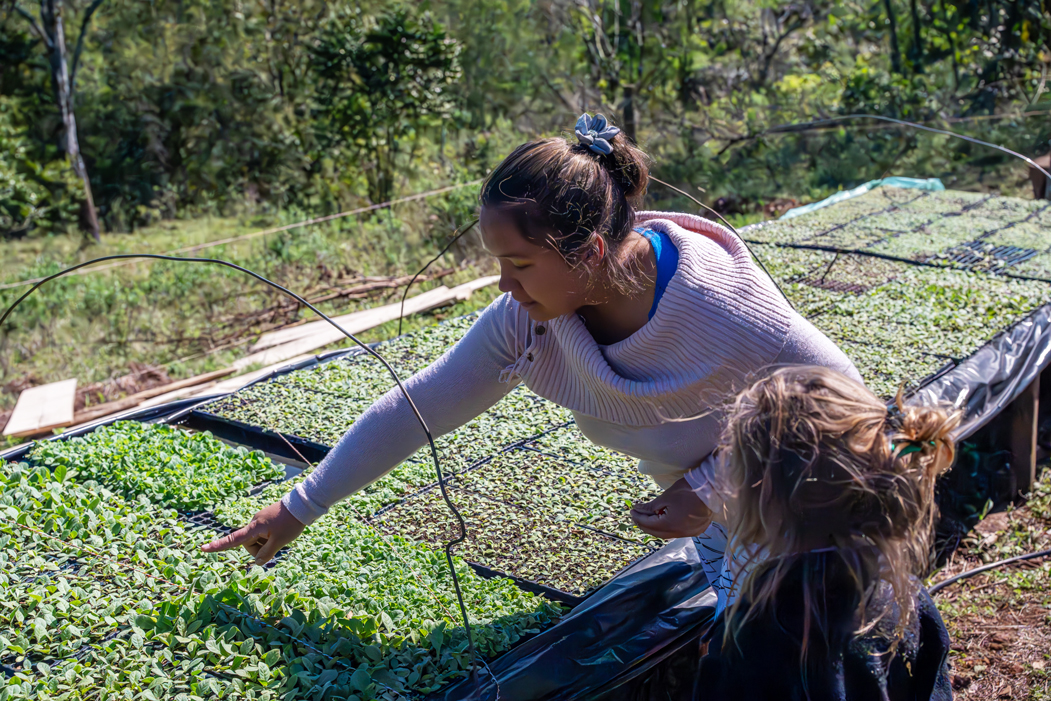
With funding from the GCF and support from FAO and local organisation Asociación Civil Minka, Andrea Pereyra and other community members are cultivating native tree species. The GCF-backed support meant that every seedling planted also represents a verified reduction in emissions. ©FAO/Maryia Kukharava
Amid deforestation, women are taking the climate into their own hands
When Iracema Da Luz Ferreyra strolls through the dappled shade of Colonia Alegría’s emerging plots, she perceives far beyond mere trees. She envisions a thriving legacy for her chacra—a modest family farm inherited across generations. “In ten years, I picture my chacra [farm] abundant with far more plants, far more trees. I may not witness it all, but I trust my children and grandchildren will declare, ‘This was planted by my mom or my grandmother.’”
Nestled deep in Argentina’s northeastern Misiones province, the village of Colonia Alegría thrives within one of the nation’s most biodiverse forest domains. Argentina’s native forests, spanning 46.5 million hectares, deliver vital water, food, and medicine to rural communities. Yet decades of intensive agriculture, especially tobacco and yerba mate production, have strained the delicate equilibrium between life and land to its breaking point.
United in purpose, the women focus on nurturing native tree species, prized for their roles as sources of food, medicine, and crucial habitat for wildlife and pollinators. Collaborating with the community organisation Asociación Civil Minka, they initiate planting native tree saplings, bolstered by the Government of Argentina and the Food and Agriculture Organization of the United Nations (FAO) through the Green Climate Fund (GCF)-financed Argentina REDD+ project. This effort forms part of a substantial investment exceeding USD 80 million granted to Argentina by the GCF in 2020, honouring the country’s achievements in curbing deforestation, forest degradation, and greenhouse gas emissions during that period.
Andrea Pereyra, a fellow member of the Women Entrepreneurs of Colonia Alegría like Iracema, was raised in the region but departed seeking employment prospects. After four years away, she returned to Colonia Alegría at age 22.
She matured witnessing trees felled for tobacco and yerba mate fields, yet now in her twenties, she grasps the forest’s profound significance.
“The forest is life. We draw water, air, and everything essential from it,” she affirms. “We refuse to continue felling forests merely to survive. We aim to plant for nature and develop alternative means to sustain our families.”
Alongside her husband, she now tends a reserve, establishing native trees on degraded terrain. She additionally raises chickens and pigs without deforestation for enclosures. The REDD+ funding empowers her community to adopt these sustainable practices while securing livelihoods, demonstrating that forest conservation and economic vitality can flourish in tandem.
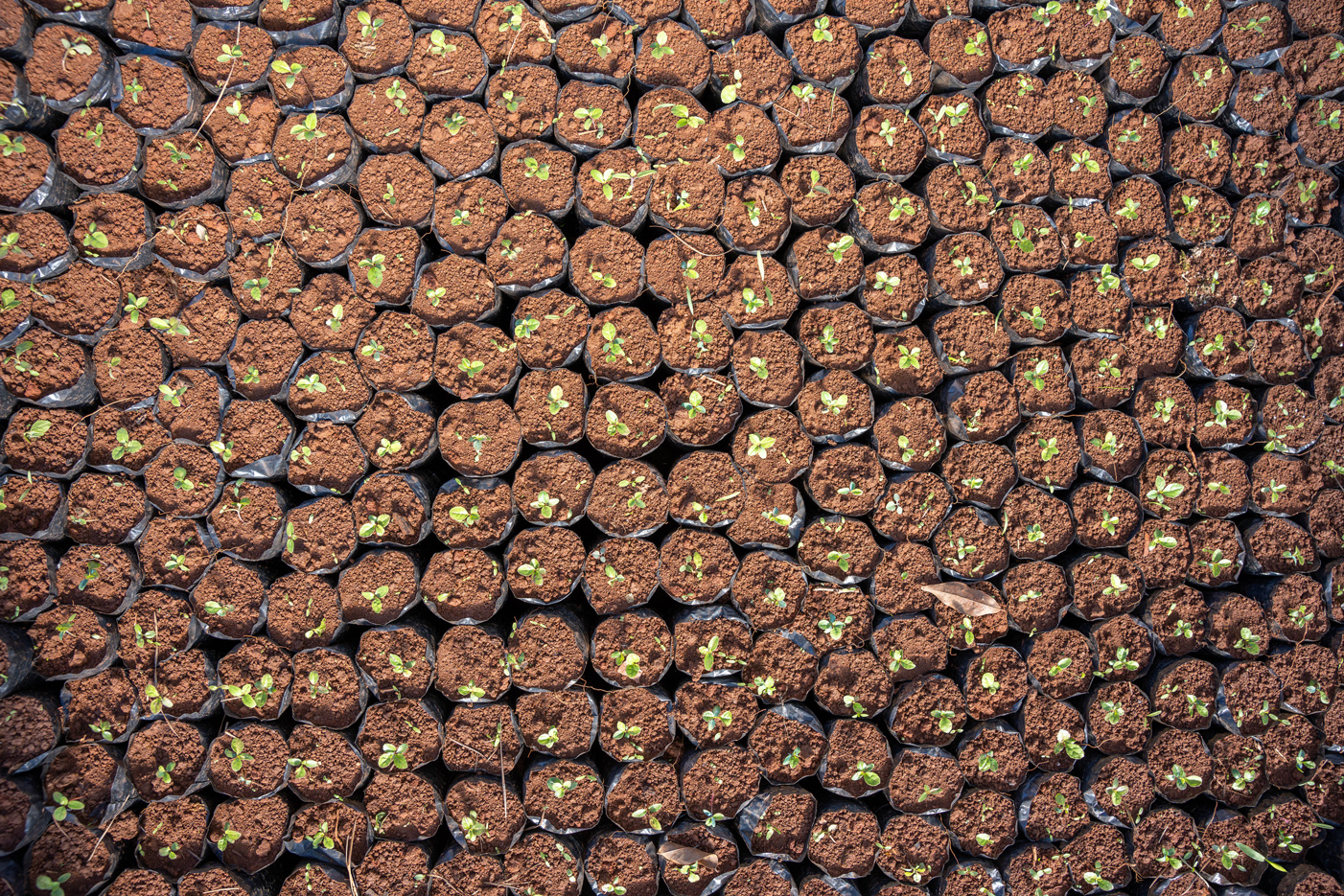
Tree seedlings form the cornerstone of the women’s strategy. Backed by FAO and Asociación Civil Minka, they acquire skills to propagate native species—some targeted for timber, others selected for food, medicine, or pollinator sanctuaries. A forthcoming community centre will accommodate a nursery and provide venues for training, processing, and collective marketing.
The women engage in ongoing training on biodiversity, seed collection, and sustainable agriculture. “We aspire to become the seed companies of the region,” declares Iracema. “Produce our own seeds and generate income in harmony with the environment.”
The community further intends to establish an artisanal kitchen for mastering food processing and packaging, transforming the centre into a vibrant local market hub. “If we attempt it alone, it’s overwhelmingly difficult,” notes Iracema. “But as a group, we support one another, sell collectively, and construct something enduring.”
Apiculture has firmly established itself, too. The women oversee beehives to yield honey, bolster household incomes, and enhance pollination in reforested zones. These initiatives align with the Native Forest Producers Programme, which promotes forest-based enterprises while acknowledging women’s pivotal roles in forest governance and community vitality. Directed by FAO and the National Directorate of Forests, and funded by the GCF, this programme guarantees that the women are not merely restoring forests but also converting sustainable management into a durable, verifiable climate strategy.
Andrea contributes, “We want our kids and grandkids to recognise these plants. To recall that we halted cutting and began planting. That the forest persists because of us.”
“This isn’t about imposing ideas,” explains Ana María Roldán, president of Asociación Civil Minka. “It’s about collaborating to discover what suits our community best.” As an indispensable partner, Roldán has facilitated blending technical training with indigenous knowledge, ensuring solutions emerge from within the community and that forest management evolves into a collective duty.
The support has likewise carved out opportunities for rural women to voice themselves, observes Iracema: “Sometimes we are very shy and don’t speak. But with the workshops and Asociación Civil Minka’s help, we are becoming stronger.”
Through the REDD+ Results-Based Payments from the GCF, Colonia Alegría now integrates into a nationwide network of communities diminishing deforestation and rehabilitating native forests. More than 31,000 people will benefit, and over 4.5 million hectares of forest will fall under sustainable management. Every tree they plant advances quantifiable reductions in carbon emissions, illustrating that local initiatives can yield tangible impacts on global climate objectives. Today, Colonia Alegría stands among numerous communities propelling sustainable futures with trees at the core.
“This is just the beginning,” states Serena Fortuna, FAO Senior Forestry Officer. “Similar activities are expanding across Argentina and embedding broader forest management strategies.”
In Misiones, the trees remain young, but their roots delve profoundly into the soil and into a rising generation of women who are ensuring forests persist and communities prosper.
Source: The FAO News And Media Office, Rome
– global bihari bureau