Rising Risks Threaten the Flow of Goods Across the World
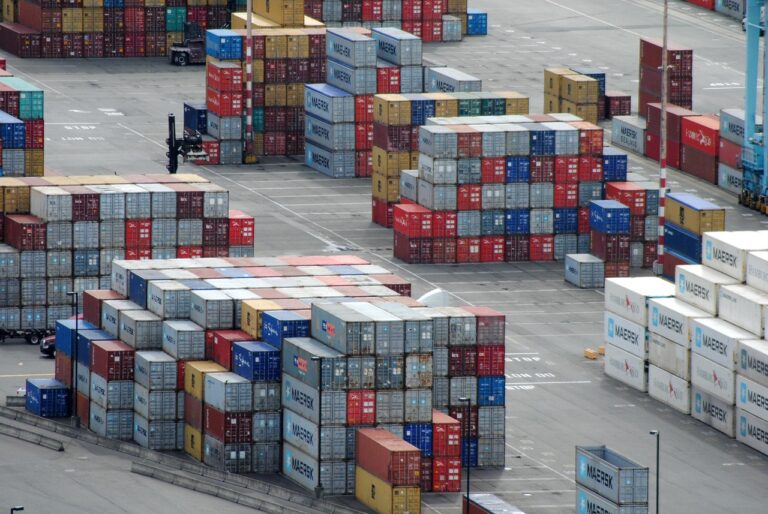
Geneva: Global supply chains are showing growing signs of stress, with rising geopolitical tensions, climate shocks, and economic volatility exposing vulnerabilities that threaten the smooth flow of goods worldwide. UNCTAD analysis warns that unless urgent measures are implemented, these disruptions could raise costs, increase emissions, and deepen inequalities — particularly in the least developed, landlocked, and small island developing states, where freight costs can be up to three times higher than the global average.
To address these challenges, the second edition of the Global Supply Chain Forum (GSCF) will take place in November 2026 in the Kingdom of Saudi Arabia, announced UN Trade and Development (UNCTAD) Secretary-General Rebeca Grynspan at the 16th United Nations Conference on Trade and Development (UNCTAD16) in Geneva. Hosted in partnership with the Saudi Ports Authority (MAWANI), the biennial forum will bring together governments, business leaders, and experts worldwide to identify actionable strategies for building sustainable, inclusive, and resilient trade networks.
The 2026 Forum will confront the most pressing challenges facing international supply chains at a time of rising geopolitical instability, shifting tariffs, and mounting economic uncertainty. Seaborne trade, which carries over 80 per cent of the world’s merchandise, grew by 2.2 per cent in 2024 but is projected to slow sharply to 0.5 per cent in 2025 before stabilising at around 2 per cent annually through 2030. Long-distance detours caused record ton-miles in 2024, increasing emissions and transport costs, while average port waiting times have lengthened, particularly in developing countries.
“The triple transition to zero-carbon shipping, digital trade systems, and resilient reconfigured trade routes must be a just transition,” said Grynspan. “This forthcoming Forum will exemplify how sustained collective commitment and meaningful international cooperation can transform fragile supply chains into systems that are efficient, inclusive, and sustainable — a goal at the heart of our shared development agenda.”
The 2026 Forum will build on lessons from the inaugural edition held in Bridgetown, Barbados, and from deliberations at a ministerial roundtable on supply chain issues during UNCTAD16. It will promote concerted efforts to mitigate, respond and adapt to disruptions, while accelerating collaboration on policy and regulatory issues, sustainable and resilient infrastructure investment, and coordinated crisis-response mechanisms to ensure the flow of essential goods even in emergencies.
Priorities for the forum include strengthening critical infrastructure such as ports, corridors, and inland transport nodes; accelerating digital trade systems to improve efficiency and address cybersecurity risks; supporting small businesses and vulnerable economies with simplified trade regimes, affordable finance, and targeted technical assistance; modernising fleets and promoting sustainable maritime practices to reduce costs, improve efficiency, and decarbonise shipping; and protecting and upskilling the maritime and transport workforce to ensure operational safety, inclusiveness, and decent work.
Saudi Arabia, as the host nation, reaffirmed its commitment to advancing multilateral cooperation and supporting sustainable trade. “We are excited in the Kingdom of Saudi Arabia to host the UN Global Supply Chain Forum 2026. This gathering reflects our commitment to building resilient, human-centred, environmentally responsible and economically vibrant supply chains,” said Saleh bin Nasser Al-Jasser, Minister of Transport and Logistics Services. “As a global hub connecting three continents, Saudi Arabia is dedicated to fostering innovation and global cooperation that protect people, preserve our planet, and power sustainable prosperity for generations to come.”
The forum also aligns with Saudi Arabia’s Vision 2030, the country’s long-term strategy for economic diversification and sustainable development. The Kingdom’s continued partnership with UNCTAD will be vital for enhancing supply chain sustainability and resilience, including through capacity-building initiatives in transport, logistics, and trade facilitation.
Founded in 1964, UNCTAD is the UN’s principal body on trade and development, supporting 195 member states through expert analysis, technical assistance, and intergovernmental dialogue. It helps developing countries make trade, finance, investment, and the digital economy work for inclusive and sustainable growth.
– global bihari bureau