Railways Approves ₹19,293 Cr MUTP Phase III Rakes in Mumbai
Mumbai: The Ministry of Railways today approved a comprehensive package of 38 railway infrastructure projects in Maharashtra, including new lines, gauge conversions and track doubling, spanning a total of 5,098 kilometres with an estimated cost of ₹89,780 crore. The announcements mark a significant expansion of rail connectivity across the state and are part of a long-term strategy to modernise Maharashtra’s rail infrastructure.
The sanctioned projects encompass 11 new line initiatives, 2 gauge conversion projects and 25 doubling or multitrack schemes, covering both fully and partially Maharashtra-based corridors. The approvals are designed to enhance network capacity, improve connectivity to industrial and economic hubs, and facilitate the movement of both passenger and freight traffic in a state that ranks among the country’s busiest for rail operations.
The Ministry has also sanctioned 98 surveys for new line, gauge conversion and doubling works, covering a total of 8,603 kilometres between financial years 2022‑23 and 2025‑26. These surveys are intended to identify critical gaps, optimise track alignment and assess technical and financial feasibility before formal project sanctioning.
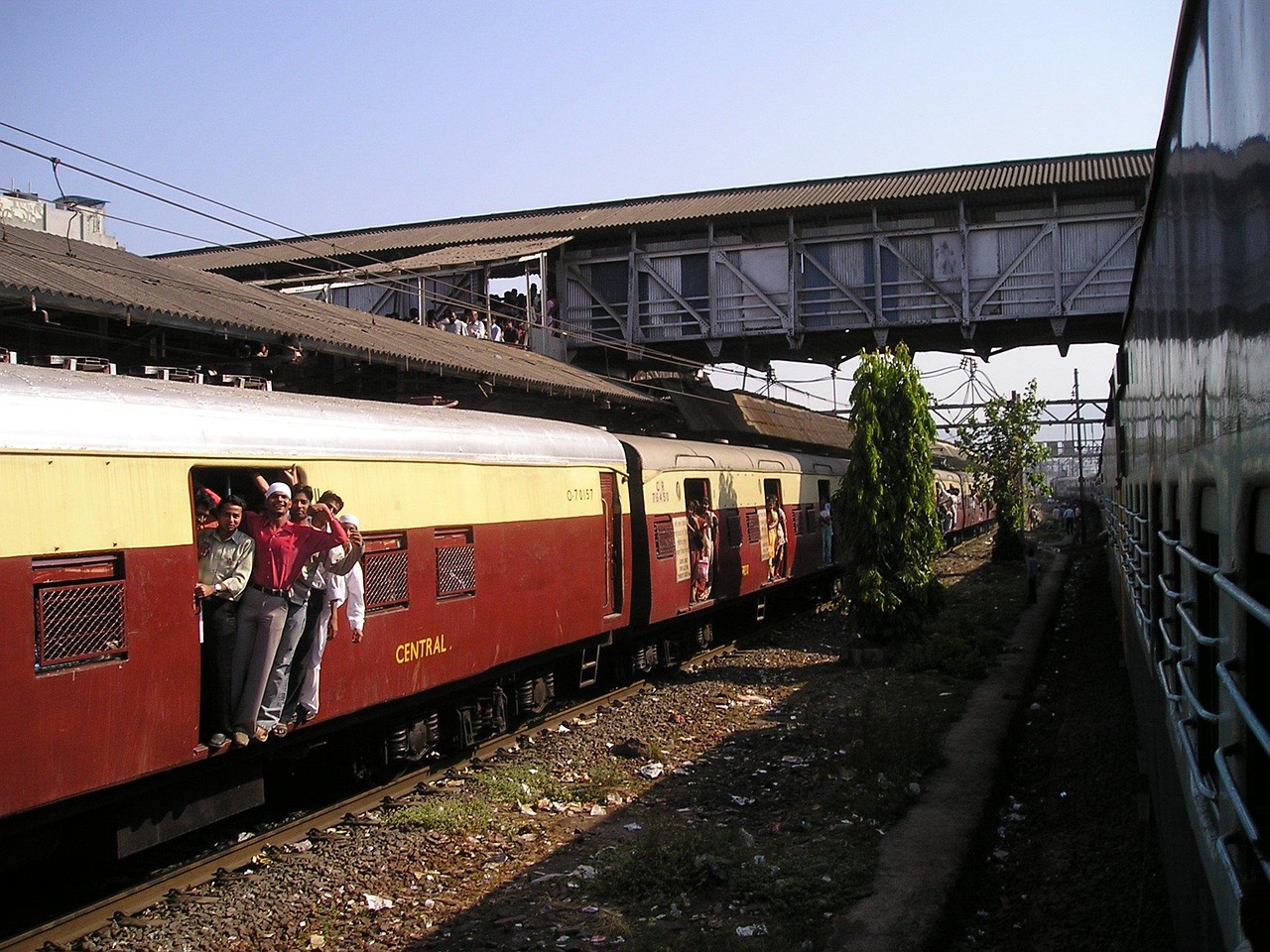
A significant component of the announcement relates to the Mumbai Urban Transport Project (MUTP) phases III and IIIA, under which 238 new rakes of 12 coaches each will be procured at a sanctioned cost of ₹19,293 crore. These rakes, designed to meet modern safety and operational standards, are aimed at enhancing suburban passenger carrying capacity and reducing congestion on one of the country’s most heavily trafficked rail corridors. Procurement and deployment of these rakes are already underway, complementing platform extensions, stabling lines and other suburban infrastructure enhancements in the Mumbai region.
Government disclosures show that the budgetary outlay for railway projects in Maharashtra has grown sharply over the last decade. Projects fully or partly in the state averaged ₹1,171 crore per year during 2009‑14, rising to about ₹23,778 crore in 2025‑26, reflecting a combination of strategic investment planning, revenue growth and central allocation priorities. Track commissioning statistics indicate that between 2009‑14, approximately 292 km of new track were commissioned at an average annual rate of 58.4 km, whereas between 2014‑25, 2,292 km of new track were commissioned at an average of 208.36 km per year, signalling a notable acceleration in network expansion and operational capacity improvement.
The approved projects also address operational capacity in suburban Mumbai, where the railway network currently handles about 120 originating Mail/Express trains and roughly 3,200 suburban trains daily. Infrastructure upgrades include additional platforms, extended tracks, new stabling facilities, and capacity augmentation at key stations to better manage passenger flow and improve punctuality.
At a glance, the sanctioned projects in Maharashtra include a mix of new lines, doubling, gauge conversion and suburban rolling stock procurement, illustrating the scale and ambition of the rail expansion programme. The package covers 11 new line projects, 2 gauge conversion initiatives and 25 doubling or multitrack schemes, collectively spanning 5,098 kilometres at a total estimated cost of ₹89,780 crore. Between 2022‑23 and 2025‑26, 98 surveys covering 8,603 kilometres were sanctioned to identify new corridors and optimise connectivity. The Mumbai Urban Transport Project (MUTP) phases III and IIIA will see the addition of 238 rakes of 12 coaches each, at a sanctioned cost of ₹19,293 crore, enhancing suburban capacity alongside about 3,200 daily local trains and 120 Mail/Express services. These measures collectively aim to expand network capacity, improve regional and urban connectivity, modernise infrastructure and support both passenger and freight mobility across Maharashtra.
The sanctioned projects are spread across diverse regions, including industrial corridors, port access routes, and rural hinterlands, with a view to balancing urban and regional connectivity. Gauge conversion and doubling works will facilitate higher-speed train operations, reduce congestion on busy corridors, and integrate Maharashtra’s network more effectively with national freight and passenger corridors.
The Ministry has stated that the cumulative effect of these projects will improve both freight and passenger throughput, enhance safety, and support economic development across Maharashtra. By combining new line construction, modernisation of existing tracks, and acquisition of suburban rolling stock, the railways aim to respond to increasing population density, urbanisation pressures, and rising demand for efficient mass transit.
These developments form part of the broader Government of India vision to expand and modernise the national railway network, with Maharashtra positioned as a key hub for both intercity and suburban rail operations. The projects also align with ongoing efforts to integrate multimodal transport systems and enhance last-mile connectivity, thereby supporting economic growth, industrial logistics, and urban mobility across the state.
– global bihari bureau