QUAD Coast Guards Launch Bold Mission to Secure Indo-Pacific Against Coercive Threats
New Delhi: In a historic stride toward fortifying maritime security and countering “coercive tactics” in the Indo-Pacific, the Coast Guards of India, Japan, the United States, and Australia today launched the first-ever ‘QUAD at Sea Ship Observer Mission’ under the Wilmington Declaration. Two officers, including women, from each nation are embarked on the US Coast Guard Cutter (USCGC) Stratton, sailing to Guam, marking an unprecedented leap in QUAD collaboration.
Unveiled at the QUAD Leaders’ Summit in September 2024, the mission enhances joint readiness, operational coordination, and domain awareness, reinforcing a Free, Open, Inclusive, and Rules-Based Indo-Pacific. India’s participation aligns with its SAGAR (Security and Growth for All in the Region) vision and Indo-Pacific Oceans Initiative (IPOI), emphasising capacity-building, humanitarian outreach, and maritime rule of law.
The “coercive tactics” referenced in the context of the QUAD mission are primarily attributed to China, particularly its actions in the South China Sea, where it asserts expansive territorial claims through the Nine-Dash Line, militarises artificial islands, and engages in aggressive encounters with neighbouring states. The QUAD’s focus on a “Free, Open, Inclusive, and Rules-Based Indo-Pacific” is a direct response to these tactics, aiming to uphold international maritime law, such as the United Nations Convention on the Law of the Sea (UNCLOS), against unilateral actions.
As China’s aggressive maritime manoeuvres escalate, the mission establishes a ‘QUAD Coast Guard Handshake,’ fostering trust and resilience to tackle evolving regional challenges, signalling a unified stand against threats to global sea lanes.
The cross-embarkation mission unites the Indian Coast Guard (ICG), Japan Coast Guard (JCG), US Coast Guard (USCG), and Australian Border Force (ABF) aboard the USCGC Stratton, a 418-foot national security cutter equipped with advanced radar and communication systems for high-endurance missions. This pioneering initiative facilitates real-time exchange of expertise in critical areas like search-and-rescue, maritime law enforcement, and combating illicit activities such as illegal, unreported, and unregulated (IUU) fishing, piracy, and trafficking, which destabilise the region’s economic and ecological balance. The mission strengthens the QUAD’s ability to respond cohesively to crises, from typhoon relief to maritime security threats, while enhancing domain awareness across vital sea lanes like the South China Sea and Malacca Strait, which carry over 60% of global maritime trade, according to the United Nations Conference on Trade and Development. The ‘QUAD Coast Guard Handshake’ symbolises a durable partnership, laying the groundwork for future joint operations in a region where strategic rivalries are intensifying.
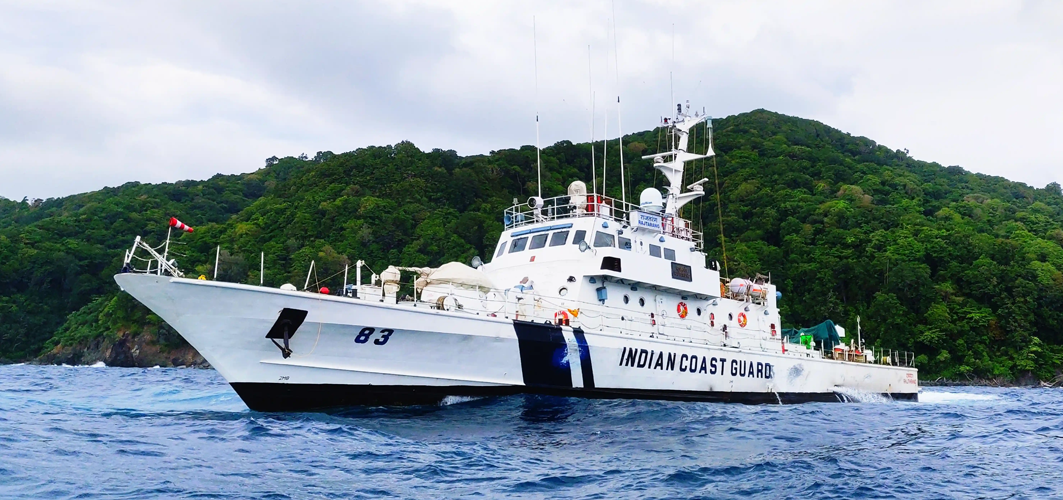
India’s role in the mission amplifies its maritime leadership under SAGAR (Security and Growth for All in the Region), a vision articulated by Prime Minister Narendra Modi to promote collective security and prosperity across the Indo-Pacific. The ICG, with its fleet of 150 vessels, including Samudra-class offshore patrol ships, and integration with the Indo-Pacific Partnership for Maritime Domain Awareness (IPMDA), showcases India’s growing capacity to monitor and secure maritime spaces. Through the IPOI, India champions sustainable development, marine conservation, and adherence to international norms like the United Nations Convention on the Law of the Sea (UNCLOS), positioning itself as a linchpin in regional stability. The mission complements India’s engagements in forums like the Indian Ocean Rim Association (IORA) and ASEAN-led mechanisms, reinforcing its role as a bridge between the Indo-Pacific’s western and eastern flanks.
The Wilmington Declaration, adopted at the September 2024 QUAD Summit, provides the strategic blueprint for this mission, envisioning a cooperative maritime framework to address shared challenges, from environmental degradation to coercive state actions. China’s maritime assertiveness, particularly in the South China Sea, has heightened the mission’s urgency.
The inclusion of women officers adds a progressive dimension to this strategic endeavour, highlighting their growing role in maritime security and signalling the QUAD’s commitment to inclusive cooperation. Their diverse perspectives enrich the mission, fostering innovative approaches to problem-solving and reinforcing the human element in multilateral partnerships. The journey to Guam, a strategic hub hosting U.S. military assets, provides a real-world setting for these officers to tackle scenarios like countering IUU fishing, which costs the region up to $6 billion annually, per the Food and Agriculture Organization, and coordinating humanitarian responses. This hands-on experience strengthens operational bonds, paving the way for a more integrated security architecture.
The mission’s geopolitical weight is undeniable. China’s actions, from militarising the Spratly Islands to harassing vessels, threaten freedom of navigation, a principle the QUAD staunchly defends. The mission’s focus on interoperability, supported by IPMDA’s real-time data-sharing, equips QUAD nations to monitor illicit activities and deter destabilising behaviour.
India’s strategic autonomy allows it to leverage the QUAD for soft-security cooperation, prioritising governance and humanitarian assistance over formal alliances. The mission could spur further initiatives, such as training programs for smaller Indo-Pacific nations, as planned under the Wilmington Declaration, enhancing regional capacity to counter coercive tactics.
Coast guards, unlike naval forces focused on high-end warfare, excel in constabulary roles, making them ideal for addressing grey-zone challenges where actors exploit legal ambiguities. The QUAD at Sea mission sets a new benchmark for multilateral cooperation, blending operational innovation with strategic vision. By integrating women officers and emphasising inclusivity, it showcases a modern security approach, ensuring the Indo-Pacific remains a bastion of openness and resilience against threats to its rules-based order.
– global bihari bureau