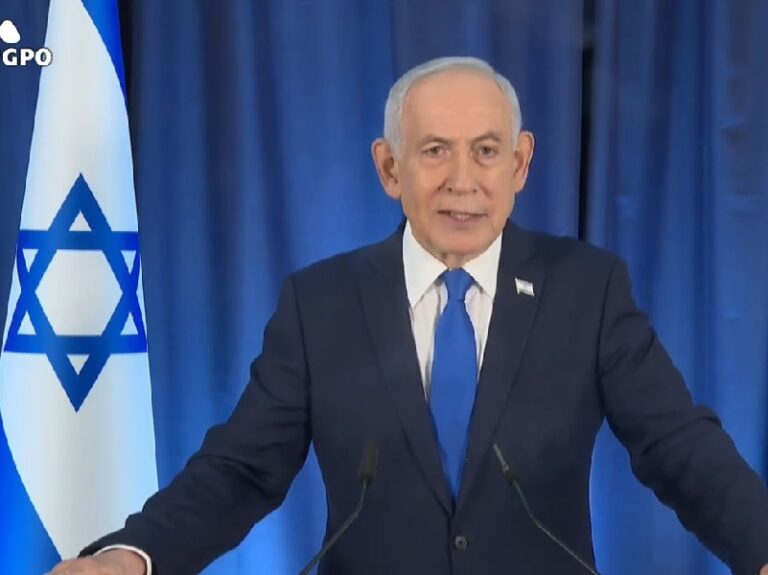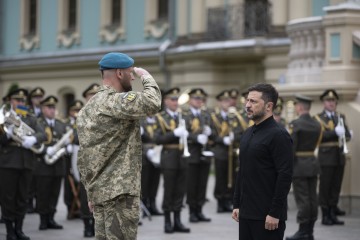
Ukraine's President Volodymyr Zelenskyy (Right)
Ukraine’s Drone Blitz Targets Russian Airbases, Escalates Tensions, Peace Talks Loom
Kyiv/Moscow/Washington: Ukrainian President Volodymyr Zelenskyy announced a historic drone operation on June 1, 2025, targeting Russian military airbases, destroying over 40 strategic aircraft in what he described as a “brilliant” and “unique” strike. The operation, orchestrated by the Security Service of Ukraine under Vasyl Maliuk, involved 117 drones and targeted equipment used in Russian attacks on Ukraine, including the Belaya air base in Irkutsk, over 4,000 kilometres from Ukraine. Zelenskyy claimed the strikes hit 34 per cent of Russia’s strategic cruise missile carriers, costing an estimated 7 billion dollars, and were planned over 18 months near a Federal Security Service headquarters in one Russian region. “This is an absolutely unique operation,” he said, noting that Ukrainian personnel were safely withdrawn before the strikes.
The operation spanned multiple Russian regions across three time zones, showcasing Ukraine’s advanced drone capabilities. Zelenskyy emphasised its strategic importance in pressuring Russia to end its aggression, stating, “We are doing everything to make Russia feel the need to end this war.” He linked the operation to ongoing Russian escalations, noting that Russia launched nearly 500 drones and seven missiles against Ukraine the previous night, one of the largest such barrages since February 2022. Zelenskyy urged citizens to heed air raid alerts and reiterated Ukraine’s push for a United States-backed unconditional ceasefire, rejected by Russia since March 11, ahead of peace talks scheduled in Istanbul on June 2, 2025. He criticised Russia for not sharing a promised memorandum on peace terms, a concern echoed by Turkish and United States partners.
Russian President Vladimir Putin responded to the escalating Ukrainian actions, including drone attacks, by addressing related incidents in the Kursk and Bryansk regions on June 1. Throughout the night, Putin received reports from the Federal Security Service and the Ministry of Emergency Situations about train derailments in these regions, which local authorities attributed to Ukrainian “explosions.” He spoke with Bryansk Governor Alexander Bogomaz and Russian Railways head Oleg Belozerov about the incidents, while Health Minister Mikhail Murashko briefed him on aid for victims in Bryansk. Though not explicitly linked to the airbase strikes, these responses indicate Russia’s heightened alert to Ukrainian operations, including drone attacks that caused residential fires in Kursk. Posts on the social media platform X reported that Russian air defences downed 33 Ukrainian drones on June 1, with 27 over Kursk, four over Belgorod, and two over Lipetsk, though the Russian Ministry of Defence did not confirm these specific figures or losses at airbases, rendering the claim unverified.
Russian state media and the Ministry of Defence have not directly addressed the airbase attacks, but pro-Kremlin sources described them as a “humiliating security breach,” likening the operation to “Russia’s Pearl Harbour.” The Russian Ministry of Defence reported intercepting dozens of Ukrainian drones in recent weeks, with a focus on border regions like Kursk and Bryansk, but provided no comment on the scale of losses claimed by Ukraine. Meanwhile, Russian forces launched a missile strike on a Ukrainian military training facility in Dnipro on June 1, killing at least 12 servicemen and injuring over 60, prompting Zelenskyy to schedule a meeting with military leaders to address troop protection. He stressed the need to safeguard every Ukrainian fighter, stating, “All necessary decisions will be made.”
The drone operation coincides with intensified diplomatic efforts, with Zelenskyy preparing for Istanbul talks led by Defence Minister Rustem Umerov. On June 1, United States Secretary of State Marco Rubio spoke with Russian Foreign Minister Sergey Lavrov at Russia’s request, reiterating President Donald Trump’s call for continued direct talks between Russia and Ukraine to achieve a lasting peace, according to a United States State Department readout. Zelenskyy highlighted ongoing support from allies like Sweden, Germany, the Netherlands, and the United Kingdom, which have pledged billions for Ukrainian defence, including Lockheed Martin F-16 fighter jet supplies and funds from frozen Russian assets. Zelenskyy also praised Ukrainian units, particularly those in the Kursk operation, for preventing Russian troop movements into Ukraine. He recognised the 33rd, 225th, and 425th Separate Assault Regiments and the 103rd Separate Territorial Defence Brigade for their resilience in Kursk, alongside units in Pokrovsk and Toretsk.
The operation underscores Ukraine’s growing drone warfare capabilities, including naval drones that recently downed Russian aircraft, marking a shift in the conflict’s dynamics. As both sides prepare for talks, the escalation highlights the challenges of achieving a ceasefire amid ongoing military pressure.
– global bihari bureau