 By Nava Thakuria*
PCI: One Year, No Voice
India’s Media Watchdog Mute
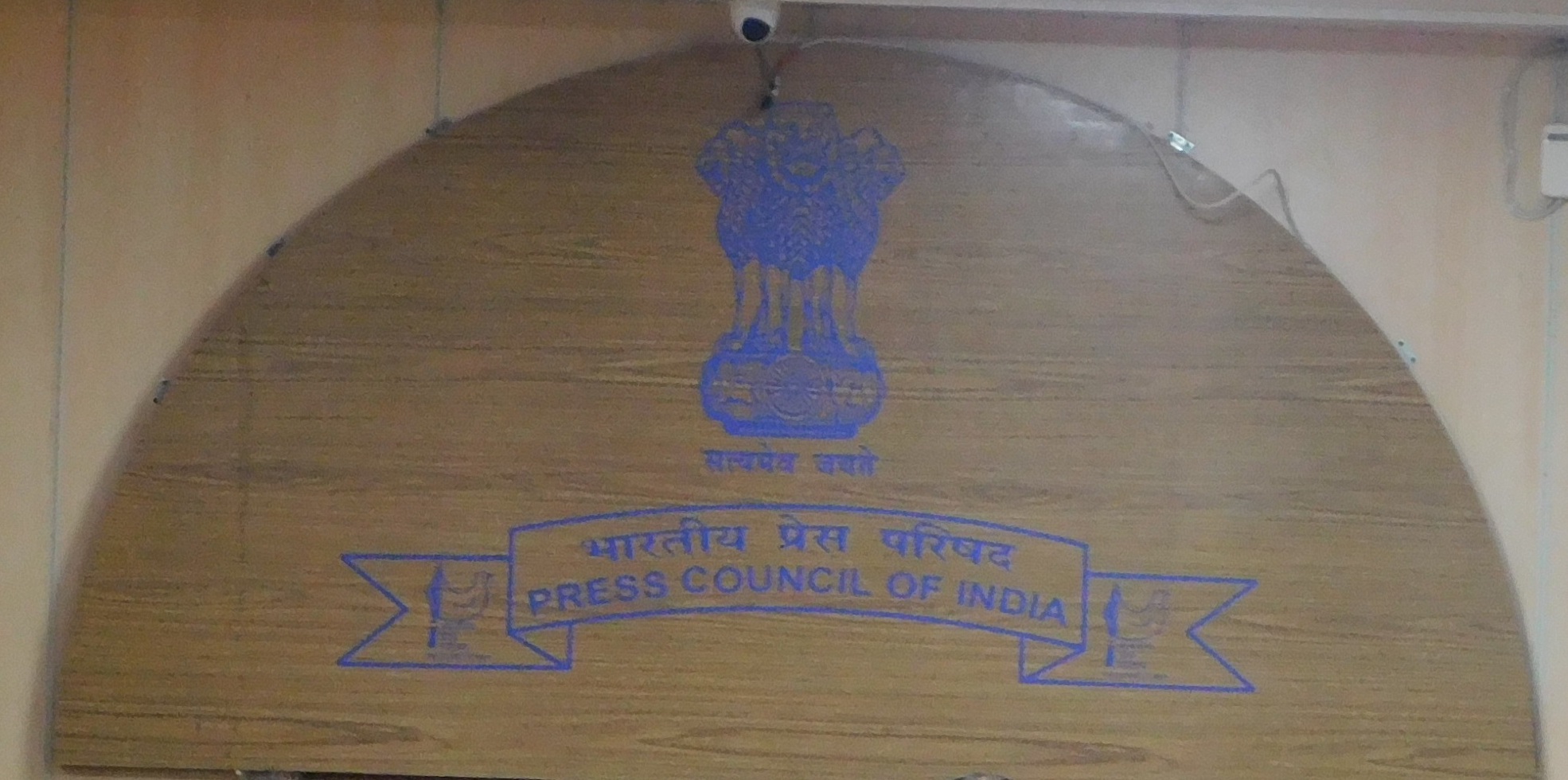
In a nation where the pulse of public opinion beats through countless headlines and broadcasts, the world’s largest democracy has waited for a fully functioning government institution to safeguard and nurture freedom of the press for one year now. The Press Council of India (PCI), a quasi-judicial body, continues to be without an effective committee. Its 14th council expired on 5 October 2024.
Initiatives to constitute the statutory 15th council of the PCI with an aim to carry forward its prescribed activities now face different hurdles. Currently, the PCI has its chairperson and secretary, along with only five members. These represent the Rajya Sabha (the upper house of the Indian Parliament), the University Grants Commission, the Bar Council of India and the Sahitya Akademi. Otherwise, it should have 28 members, where 13 individuals represent the professional journalists, out of whom 6 need to be editors of newspapers and 7 working journalists. Another 6 members represent the management of newspapers (including the owners), 2 each taken from the big, medium and small newspapers, whereas 1 member represents the news agencies. To date, all the space remains vacant.
Months back, Union Information & Broadcasting Minister Ashwini Vaishnaw admitted that the constitution process of the 15th Press Council was progressing. But the initiative to fill up the seats for media professionals remains under sub-judice. However, the minister stated that the constitution process of the 15th Press Council was progressing, and the Lok Sabha (the lower house of the Indian Parliament) speaker had already nominated three MPs (Members of Parliament) for the council.
It may be mentioned that the PCI is an autonomous body. It was initially set up in 1966 under the Press Council Act 1965. Later re-established in 1979 following the Press Council Act 1978, with a primary objective to ensure press freedom and also improve the standards of newspapers and news agencies in the populous country. Over the decades, PCI has delivered landmark rulings. In 2006, it censured Times of India (Delhi and Pune editions), Punjab Kesari (Delhi), and Mid-Day (Mumbai). For sensationalised reporting breaching ethical norms. In C.S. Kalra v. Arun Shourie, it deprecated the Indian Express’s reprinting of profane remarks by a deputy prime minister without context. Upholding public decorum.
Yet its most far-reaching probe came in 2010 into “paid news” during the 2009 Lok Sabha elections. Triggered by widespread reports of cash-for-coverage deals. The council formed a two-member Sub-Committee on 9 June 2009. Led by journalists Paranjoy Guha Thakurta and K. Sreenivas Reddy. The panel travelled across New Delhi, Mumbai, and Hyderabad. Gathering letters, media clippings, and witness accounts. It uncovered a shadow market where politicians bought favourable coverage through PR firms, ad agencies, or “private treaties.” The 71-page report, finalised after meetings on 31 March and 26 April 2010 in Indore and New Delhi, defined paid news as “any news or analysis appearing in any media (print & electronic) for a price in cash or kind as consideration.” It exposed identical puff pieces praising rival candidates in competing dailies. Often without sponsorship disclaimers. Cases in Maharashtra and Andhra Pradesh stood out. Ashok Chavan’s 2009 campaign allegedly triggered a flood of laudatory coverage linked to payments via ad agencies. Telugu papers ran mirror-image encomiums for YSR Congress figures. The inquiry condemned these as “substantial evidence of corrupt practices.” Undermining democracy, flouting election expenditure rules, and breaching fiscal laws like the Companies Act and Income Tax Act. It recommended amending the Representation of the People Act, 1951, to brand paid news a “corrupt practice” under Section 123. Empowering PCI with binding powers and extending jurisdiction to electronic media. Creating an Election Commission “paid news cell” with observer journalists. Enforcing PCI’s 1996 guidelines on inducements and false polls. Though the full report was initially suppressed as a “reference document” on 26 July 2010. Later released via RTI plea by activist Manu Moudgil and the Delhi High Court nudge in 2011. It remains a defining exposé on media-political collusion.
The billion-plus nation today nurtures nearly 100,000 publications (endorsed by the Registrar of Newspapers for India) in various frequencies and languages, including English. It also supports nearly 400 satellite news channels along with thousands of portals, WhatsApp channels and other digital outlets. The revenues collected (from both selling and advertisements) by Indian newspapers, periodicals, including magazines, continue to shrink after the Covid-19 pandemic, as other media outlets started dominating the financial market space. However, many print observers believe that the traditional media will slowly recover its abrupt loss. Resurgence in readership is expected as ‘digital fatigue drives consumers’ will soon turn back to traditional media for reliable information. They argue—citing forecasts like Statista’s projection of 451 million readers by 2030—that the print media outlets will increase the number of readers almost twice by 2030.
Lately, a number of media bodies have also opposed a change in the PCI rules while picking up members from various press clubs instead of the National Union of Working Journalists. They argue that the press clubs are mandated usually for recreational activities and their coverage areas normally stick to a particular region, city or town. Press clubs often give memberships to non-working journalists (like academicians, writers, film personalities and also diplomats) to enhance their influence. Moreover, the press club/press guild/ media club cannot have an all-India body with representatives from various parts of the vast country. On the other hand, the recognised journalists’ unions are normally represented by members from most parts of India. The Indian Journalists Union and the All India Working News Cameramen’s Association have already approached the court seeking justice for the media professionals.
Even though the PCI can only overview functioning of newspapers, periodicals and news agencies and it enjoys limited power for enforcing the guidelines by penalizing news outlets as well their editors and working journalists for violation of established guidelines, but still it can receive complaints against a particular newspaper/news agency or an editor/working journalist against their professional misconduct deteriorating the standard of journalistic behaviours for adjudications. Moreover, it enjoys the authority to make observations if the conduct of the current government is found inappropriate while ensuring freedom of the press. Another demand to bring all the news channels, radio and digital platforms under its jurisdiction and rename it as the Media Council of India (or any meaningful forename) deserves attention from the I&B (Information and Broadcasting) ministry. So it’s time for reactivating and enhancing the council with an aim to address the present crisis faced by the Indian media fraternity.
*Senior journalist (with additional inputs from the global bihari bureau)