Fear and Fragile Hope Mark Venezuela’s Post-Maduro Era
Caracas: Venezuela’s political landscape remains deeply unsettled as January 2026 advances, with the release of a limited number of political prisoners juxtaposed against widespread unease, continuing detentions, and intense international scrutiny. In the past 48 hours, authorities have freed at least 18 detainees from prisons such as El Helicoide and Rodeo I, including prominent opposition figures, activists and foreign nationals, a number that has drawn global attention. These releases have been framed by authorities as gestures of “seeking peace” and political conciliation amid extraordinary upheaval. However, human-rights organisations and legal advocates say more than 800 political prisoners remain in custody, and that the criteria and timing for further releases remain opaque, fuelling anxiety among families and civil society actors.
At the same time that Venezuela grapples with its internal turbulence, the United States has been actively working to rally international support and coordinate a regional response to the unfolding crisis since the removal of President Nicolás Maduro. In the past week, U.S. Secretary of State Marco Rubio has engaged in a series of diplomatic conversations aimed at securing multilateral legitimacy and encouraging a stable, lawful transition of power in Venezuela. On January 9, he spoke with the Spanish foreign minister to discuss joint counternarcotics efforts and the broader transition process. A day earlier, Rubio held talks with the head of the Organization of American States to reaffirm the OAS’s role in fostering stability throughout the hemisphere and to emphasise the importance of member-state engagement on Venezuelan challenges. His outreach also included expressions of gratitude to the president of Paraguay for that country’s cooperation on security issues, as well as exchanges on regional stability with the presidents of Ecuador and Argentina. In addition to these Latin American consultations, Rubio spoke with senior officials from Belgium and the G7 and discussed humanitarian concerns, peace initiatives and religious freedom with the Vatican’s top diplomat, reflecting a multifaceted effort to build consensus and support for diplomatic and security objectives linked to Venezuela’s transition.
The emotional scenes outside Venezuela’s detention centres tell much of the story on the ground. Relatives who have waited days — in some cases weeks — for word on loved ones emerge with exhilaration and relief when releases happen, yet for every embrace there are dozens of unanswered questions and ongoing vigils. Many detainees, unaware until recently of the broader political turmoil enveloping the country, have learned only indirectly that their government’s leadership has changed and that international forces are now deeply involved in determining Venezuela’s political destiny.
These developments unfold against a backdrop of rapid geopolitical shifts. The U.S. government has articulated that it is responding not only to humanitarian concerns but also to broader strategic and security imperatives. President Donald Trump announced the cancellation of a planned second wave of military strikes, citing cooperation from Venezuelan authorities on issues including political detainees and oil infrastructure. Trump has also signalled possible engagement with Opposition figures, including a planned meeting with Nobel Peace Prize laureate María Corina Machado, as part of wider negotiations that encompass energy, security and governance. Critics within Venezuela and the region warn that such arrangements risk eroding national sovereignty, while supporters argue they are necessary to prevent further instability.
Inside Venezuela, the political and legal terrain remains fractious. Acting President Delcy Rodríguez, who assumed interim leadership following Maduro’s capture by U.S. forces earlier this month, continues to assert authority domestically even as she negotiates with foreign actors and faces persistent resistance from segments of the population and opposition leaders. Her ascent occurred under extraordinary conditions, with senior military figures publicly pledging loyalty, even as critics caution that entrenched power structures from the previous administration remain embedded within state institutions and security agencies.
Once perceived as inviolable, the Venezuelan state has been torn open by the events of early January. The U.S. operation not only removed Maduro from Caracas but thrust the country into an uncharted phase of governance and external influence. The presence of foreign naval assets nearby and ongoing discussions over counternarcotics cooperation and energy exports underscore the extent to which international interests now intersect with Venezuela’s internal affairs.
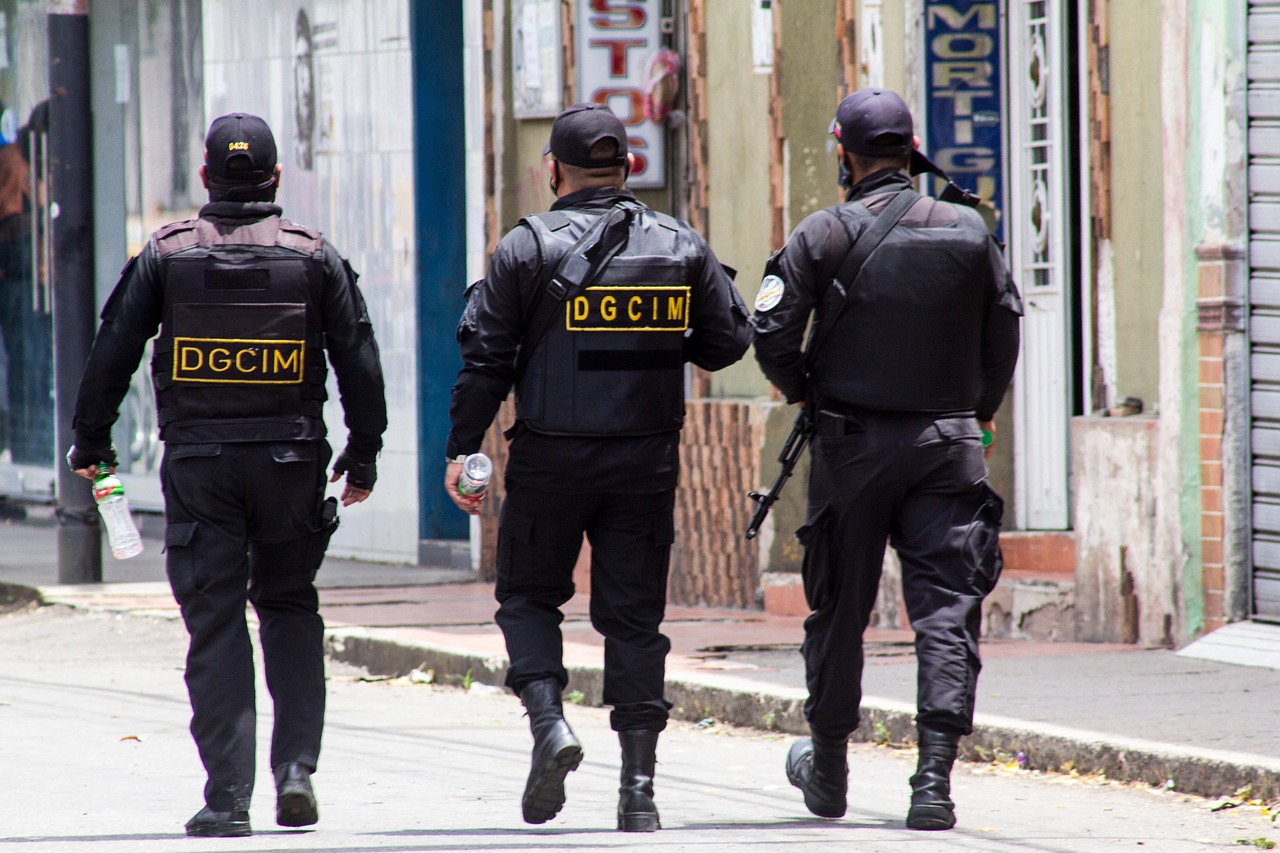
Domestically, the social fabric continues to strain under the combined weight of political uncertainty and economic hardship. Press freedoms remain sharply constrained, with journalists detained, phones and equipment searched, and reporting on sensitive political developments restricted. Several media workers were briefly detained in Caracas while covering legislative sessions and the transition of power; most were released, but at least one foreign correspondent was deported. Media organisations describe these actions as part of a widening pattern of intimidation that has intensified in recent weeks.
Alongside media repression, Venezuela’s streets reflect a cautious and watchful public mood. Armed civilian groups known as colectivos, long aligned with hardline elements, have been observed conducting informal checkpoints and exerting social pressure, reinforcing a sense of surveillance even in neighbourhoods previously considered politically neutral. Many Venezuelans now avoid public political discussion and self-censor online, responses rooted in years of repression but sharpened by the current climate of uncertainty and foreign intervention.
Civil society figures and opposition leaders have reacted to recent developments with a blend of guarded optimism and deep scepticism. María Corina Machado and her allies have welcomed the limited prisoner releases while stressing that genuine transformation requires far-reaching legal and institutional reform, including firm guarantees for human rights, freedom of expression and transparent elections. Human-rights groups echo this view, warning that selective releases and emergency measures cannot substitute for systemic change.
International reactions have remained complex and divided. While some governments and multilateral bodies have urged dialogue, restraint and respect for human rights as the foundation of any transition, others have sharply criticised the U.S. military action as a violation of Venezuelan sovereignty. High-profile voices — including Pope Leo XIV — have decried what they describe as “diplomacy based on force” and urged strict adherence to international humanitarian law, drawing attention to the risks of civilian suffering amid escalating geopolitical confrontation.
Every development, from limited prisoner releases to press restrictions and the visibility of armed groups, feeds into a charged public psychology. Venezuelans continue to work, commute and search for basic services, but daily life is infused with uncertainty over whether the country’s institutions will move toward accountability and openness, or be reshaped to preserve older patterns of control under new circumstances.
As of mid-January 2026, Venezuela’s situation defies simple narratives of liberation or normalisation. It remains a fragile, contested transition marked by symbolic gestures, unresolved legal processes and a population watching closely as events unfold. The coming weeks — particularly moves toward transparent legal frameworks, expanded civil liberties and credible governance reforms — are likely to determine whether the country can chart a path toward genuine democratic renewal or remain locked in a cycle of fear, ambiguity and constrained autonomy.
– global bihari bureau