Trade, Defence and Digital Links on Agenda of Modi–Anwar Talks
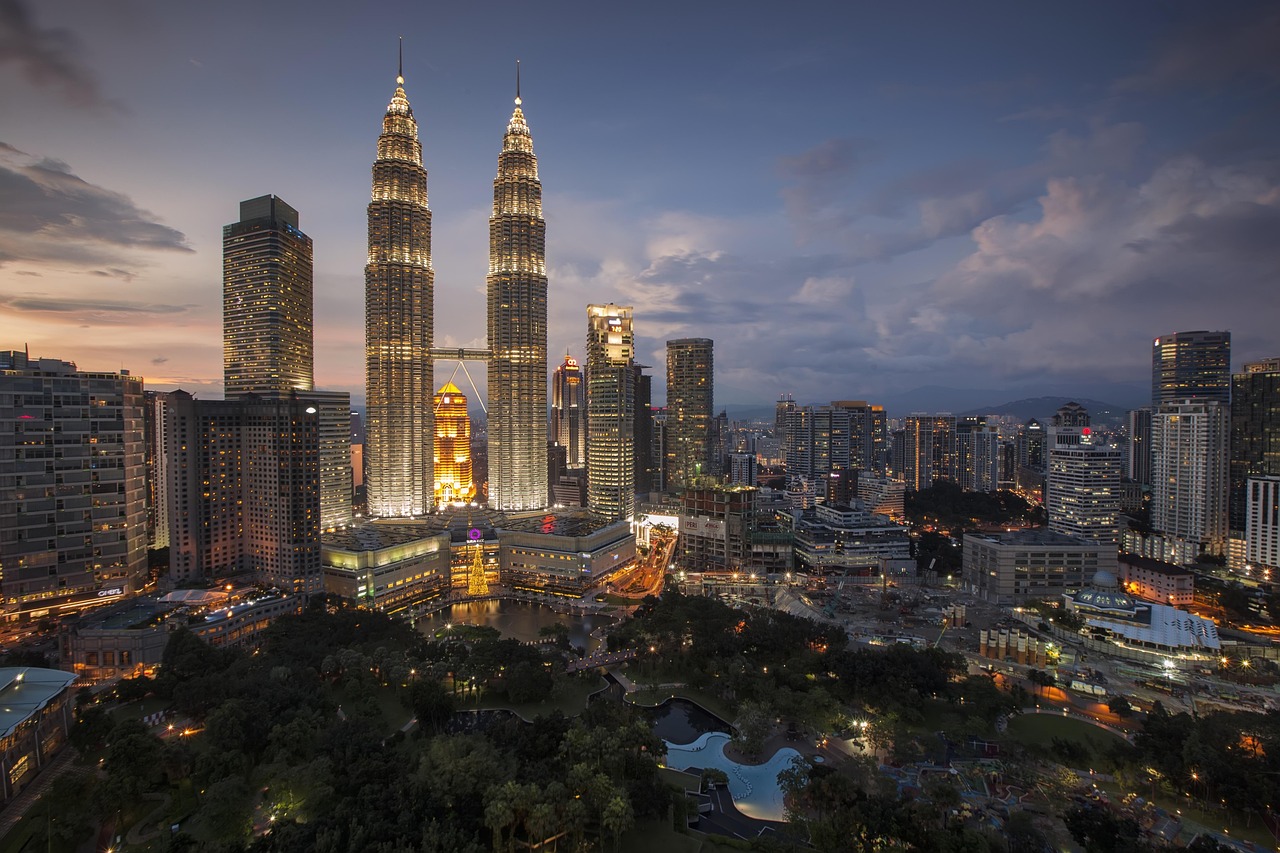
New Delhi: India and Malaysia are set to reinforce their Comprehensive Strategic Partnership as Prime Minister Narendra Modi prepares to travel to Kuala Lumpur on February 7–8, 2026, at the invitation of Malaysian Prime Minister Anwar Ibrahim, with cooperation under the Association of Southeast Asian Nations (ASEAN) framework and progress on regional trade and digital connectivity forming the central diplomatic focus of the visit.
Briefing the media in New Delhi today, Secretary (East) in the Ministry of External Affairs, P. Kumaran, said the visit will be Prime Minister Modi’s third to Malaysia and his first since bilateral relations were elevated to a Comprehensive Strategic Partnership during Prime Minister Anwar Ibrahim’s state visit to India from August 19 to 21, 2024. He recalled that Prime Minister Modi had earlier visited Malaysia in 2015, when the relationship was upgraded to an Enhanced Strategic Partnership and when he inaugurated the Torana Gate in Brickfields, Kuala Lumpur, as a symbol of India–Malaysia friendship. The Prime Minister also paid a brief stopover visit in 2018 to congratulate then Malaysian Prime Minister Mahathir Mohamad, and participated virtually in the 22nd ASEAN–India Summit held in Kuala Lumpur on October 26, 2025.
Officials said the timing of the forthcoming visit is linked to Prime Minister Modi’s assurance to his Malaysian counterpart after he was unable to travel for the ASEAN–India Summit due to prior engagements. The visit, coming within one and a half years of the Comprehensive Strategic Partnership announcement, was described as reflecting India’s strong commitment to relations with Malaysia, a key partner under India’s Act East Policy, Vision MAHASAGAR and the Indo-Pacific vision.
Malaysia’s position as a founding member of ASEAN and its chairmanship of the regional bloc in 2025 lends additional regional importance to the trip. Prime Minister Modi and Prime Minister Anwar Ibrahim will hold bilateral discussions to review progress under the Comprehensive Strategic Partnership, particularly in priority areas such as trade, investment, defence and security, semiconductors, digital technologies, renewable energy, education, healthcare and people-to-people exchanges. The visit is also intended to deepen India’s engagement with the wider ASEAN region.
Economic cooperation will be a major pillar of the visit. The 10th meeting of the India–Malaysia Chief Executive Officers Forum is scheduled to take place in Kuala Lumpur on the sidelines of the trip, and Prime Minister Modi will interact with leading Malaysian corporate leaders from key sectors. Malaysia is India’s third-largest trading partner within ASEAN, with bilateral trade valued at around 20 billion US dollars. While palm oil remains a major commodity in the trade basket, exchanges have diversified into agricultural products, chemicals, minerals, appliances and machinery.
Investment engagement has expanded steadily, with major Malaysian firms such as PETRONAS, Khazanah, IHH Healthcare, IJM Corporation and United Engineers Malaysia having a strong presence in India. At the same time, more than 200 Indian companies, including 61 joint ventures and three Public Sector Undertakings, operate in Malaysia across information technology and information technology-enabled services, manufacturing, construction and pharmaceuticals. Officials said both sides are working towards enhancing bilateral trade in a balanced and sustainable manner.
At the regional level, India and Malaysia are cooperating under ASEAN for the early conclusion of the review of the ASEAN–India Trade in Goods Agreement (AITIGA). The terms of reference for the review have been agreed, and discussions are underway on technical elements aimed at achieving better balance in trade between India and ASEAN. These include proposals to improve average tariff levels within ASEAN compared to existing commitments and to stipulate a minimum percentage of tariff lines that each country would open under a liberalised regime. Officials clarified that while the process is ongoing, no specific outcome on the AITIGA review is expected from this visit.
Parallel discussions are also taking place on a possible joint review of the India–Malaysia Comprehensive Economic Cooperation Agreement (CECA). Officials said this process is still at an early stage, with talks currently focused on the scope and framework of the review rather than on specific areas of liberalisation or commitments.
Digital cooperation will be another important focus area. During Prime Minister Anwar Ibrahim’s visit to New Delhi, the Malaysia–India Digital Council was established to guide bilateral collaboration in Artificial Intelligence, digital talent development, Digital Public Infrastructure and cybersecurity. The council has since met at the level of the Secretary of India’s Ministry of Electronics and Information Technology and his Malaysian counterpart. Under India’s Indian Technical and Economic Cooperation Programme, Malaysian officials are being trained in machine learning and Artificial Intelligence.
A key expected outcome of the visit will be the signing of an agreement between the National Payments Corporation of India and Malaysia’s PayNet to advance cross-border digital payments. Officials said this would be one of the tangible deliverables from the trip in the digital domain.
Defence cooperation is also expected to feature prominently in the talks. India and Malaysia are exploring possibilities for collaboration in the sale of Dornier aircraft and cooperation related to Malaysia’s Scorpene submarines, including opportunities for mid-life upgrades and retrofitting. Both countries operate SU-30 fighter aircraft, and India has offered proposals for their modification, upgradation and maintenance. Indian shipyards are also examining prospects for supplying naval platforms to Malaysia.
Semiconductors have emerged as a strategic area of bilateral interest. Malaysia has a well-established semiconductor ecosystem, with around 30 per cent of its exports linked to semiconductor and allied products and nearly three to four decades of experience in the sector. India and Malaysia are working towards a multi-layered collaboration through a Government-to-Government arrangement, industry-led partnerships and research and development initiatives. These are expected to cover fabrication facilities as well as assembly and testing centres. Joint task forces and working groups set up after the Comprehensive Strategic Partnership declaration are identifying specific projects to advance cooperation in this field.
A number of Memoranda of Understanding are under consideration for signing during the visit, subject to final legal clearances. These include agreements in disaster management, audio-visual co-production, standards for training, certification and watch-keeping for seafarers, renewal of cooperation in United Nations peacekeeping operations, anti-corruption measures, cooperation between audit institutions, collaboration between National Security Council Secretariats, healthcare, and technical and vocational education and training. There is also a proposal for an understanding, either through a Memorandum of Understanding or an exchange of notes, expressing intent to cooperate in the semiconductor industry.
People-to-people ties will be a central element of the programme. Prime Minister Modi will address the Indian community in Malaysia, which numbers about 2.9 million and represents the second-largest population of Persons of Indian Origin and the third-largest Indian diaspora in the world. Academic chairs for Indian studies have been set up in Malaysian universities following announcements made in 2024, strengthening academic and cultural exchanges. India and Malaysia have also liberalised visa regimes for each other’s citizens to promote tourism.
In 2025, more than 1.4 million Indians travelled to Malaysia for tourism, while around 300,000 Malaysian tourists visited India. Malaysia thus emerged as the largest source of inbound tourism to India from the ASEAN region.
On agricultural cooperation, officials noted that Malaysia remains a major supplier of palm oil to India. Discussions are continuing on palm oil cultivation and technical collaboration, and India’s Ministry of Agriculture has proposed working with the Malaysian Palm Oil Board and the Palm Oil Council to initiate joint projects. This follows earlier trade frictions over edible oil and certain cereals, which both sides are now seeking to address through cooperation.
Security and counter-terrorism issues have also featured in bilateral engagement. An Indian parliamentary delegation visited Malaysia after Operation SINDOOR and held discussions at multiple levels, including with ministers, members of parliament, think tanks and members of the Indian community. Officials said these interactions provided an opportunity to explain India’s position on terrorism and the rationale for strong counter-terrorism responses in the face of cross-border provocations.
On the International Big Cat Alliance, Malaysia has confirmed its willingness to join, and formal procedures for accession are currently underway. Officials expressed hope that these would be completed in time for the Prime Minister’s visit.
Regarding the extradition case of Zakir Naik, officials said the issue has been raised in past engagements at various levels and will continue to be taken up during the visit. They added that discussions would continue until all technical procedures are completed, with India seeking the outcome it desires.
On the ASEAN–India Trade in Goods Agreement review timeline, officials acknowledged that while the original aim had been to conclude the process by the end of 2025, outstanding issues with ASEAN partners have delayed completion. They said it would take a few more months to clinch the agreement, but efforts would continue to bring the review to a successful conclusion as early as possible.
On the Brazil, Russia, India, China and South Africa (BRICS) grouping, Malaysia currently holds the status of a partner country. India, which holds the BRICS presidency this year, indicated that there is no immediate initiative to expand membership further. With the grouping now comprising 11 members after its recent expansion, the focus is on consolidation and integrating new members into BRICS structures before considering any future enlargement.
Officials said the visit is expected to help chart future cooperation in areas such as infrastructure, including railways, renewable energy, food security, agro-commodity trade, Digital Public Infrastructure, defence, scholarships and the proposed Thiruvalluvar Centre for Indian Studies.
Describing the engagement as multi-dimensional, spanning economic, political and people-to-people domains, Secretary Kumaran said the visit would further strengthen bilateral cooperation and set the path for future engagement for mutual benefit.
– global bihari bureau