Earthquake Devastates Northern Cebu, Relief Races On
Manila: At least 69 people were killed, 150 were injured, and hundreds were displaced after a magnitude 6.9 earthquake struck northern Cebu in the Philippines last night, prompting immediate disaster response measures by local and national authorities.
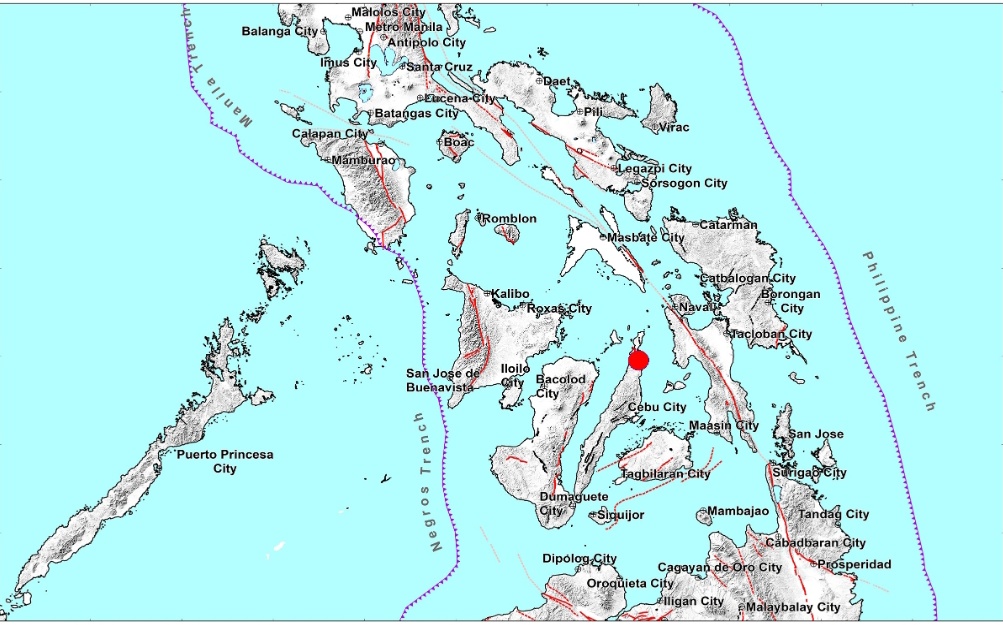
The earthquake occurred offshore at 9:59 PM Philippine Standard Time (PST) on September 30, 2025 (Tuesday), at a depth of 22 kilometres, the Philippine Institute of Volcanology and Seismology (PHIVOLCS) stated. It triggered tremors across central and northern Philippine islands and caused structural damage, injuries, and disruption to daily life.
PHIVOLCS released and lifted after three hours, a Tsunami Information of minor sea level disturbance for the coasts of Cebu, Leyte, and Biliran Provinces. It stated that citizen reports of seawater recession in Camotes Island will be further verified by PHIVOLCS. In case of another strong earthquake in the vicinity, people should be watchful and stay away from beaches and coasts, the government warned.
Municipal bulletins from affected cities—including Cebu City, Mandaue, Lapu-Lapu, Bogo, and surrounding municipalities—reported damages to residential buildings, minor injuries among residents, and temporary displacement of families. Authorities swiftly opened evacuation centres in community halls and schools, and local disaster offices mobilised search-and-rescue teams. Roads and bridges were inspected for damage, while power and water utilities were restored promptly in the most affected areas.
President Ferdinand Marcos Jr. issued a statement expressing solidarity with the affected communities, directing the National Disaster Risk Reduction and Management Council (NDRRMC) to prioritise life-saving operations and essential aid. Emergency shelters, food packs, medical supplies, and drinking water were dispatched to the hardest-hit municipalities. Helicopters and maritime units supported rapid relief delivery to isolated barangays.
The Office of Civil Defence (OCD) and local government units coordinated closely, issuing advisories to residents on safety measures, including avoiding unstable structures, aftershocks, and coastal areas prone to landslides.In a gesture of international solidarity, Prime Minister Narendra Modi of India conveyed condolences to the Philippine government and people, expressing support for ongoing relief and recovery efforts. His message underscored India’s readiness to extend assistance if required.
Local media coverage reported widespread concern among residents, though the early mobilisation of disaster response teams helped mitigate casualties. Schools in affected towns suspended classes for precautionary inspections, and hospitals remained on alert to handle injuries. Authorities cautioned residents about potential aftershocks and stressed adherence to evacuation advisories. This quake comes amid ongoing monitoring of the Philippines’ seismically active zones. PHIVOLCS continues to provide real-time updates and urges residents to report structural damage and seek immediate assistance where needed. Authorities emphasised that all relief and recovery operations are being coordinated at the barangay, municipal, and provincial levels to ensure efficiency and timely delivery of aid.
The Philippine government confirmed that damage assessment teams will conduct comprehensive inspections over the coming days to evaluate infrastructure impact and identify communities requiring extended support. Local officials noted that early warning systems and prior earthquake preparedness drills had significantly contributed to minimising loss of life.
The combined efforts of municipal disaster offices, the NDRRMC, OCD, and the Armed Forces of the Philippines, together with civic organisations and volunteers, are central to ongoing humanitarian assistance. As of the evening of 30 September, electricity restoration in affected areas exceeded 80 per cent, and potable water supplies were being delivered continuously to evacuation centres.
Residents and officials remain alert for aftershocks, and the government has urged people to follow official advisories and refrain from spreading unverified reports on social media, which could complicate rescue and relief efforts.
Between 1885 and 2013, at least eight significant earthquakes with magnitudes ranging from M5.0 to M7.2 affected Cebu and nearby provinces, according to historical records and the PHIVOLCS Earthquake Catalogue. The recent damaging earthquakes were the M6.9 event in Negros Oriental on February 6, 2012, and the M7.2 event in Bohol on October 15, 2013. In both earthquakes, several buildings and infrastructure were damaged in Cebu Province.
Cebu and neighbouring provinces are situated in one of the seismically active regions in the Philippines. Among the earthquake sources are the Bogo Fault, the Daanbantayan Lineament, and the Cebu Fault System. There are also local inland and offshore faults, some concealed by recent deposits, capable of generating earthquakes ranging from minor to strong magnitudes.
– global bihari bureau