 By Deepak Parvatiyar*
A hard-won ceasefire has steadied the Middle East, halting a 12-day clash between Israel and Iran that threatened a regional firestorm. On June 24, 2025, this ceasefire silenced missiles, offering a critical pause—peace’s fragile bloom in a region scarred by distrust. United States (U.S.) President Donald Trump, with characteristic boldness, declared on Truth Social: “It was my great honor to Destroy All Nuclear facilities & capability, and then, STOP THE WAR!” As Iran assesses its damaged nuclear sites, Israel mourns seven soldiers lost in a parallel fight against Hamas, and the world seeks a path forward, this armistice stands as a bold first step. Though nuclear uncertainties and regional tensions test its roots, resolute global calls for diplomacy—from the United Nations (UN) to Russia to India—forge a path toward lasting stability, nurturing the ceasefire’s tentative promise.
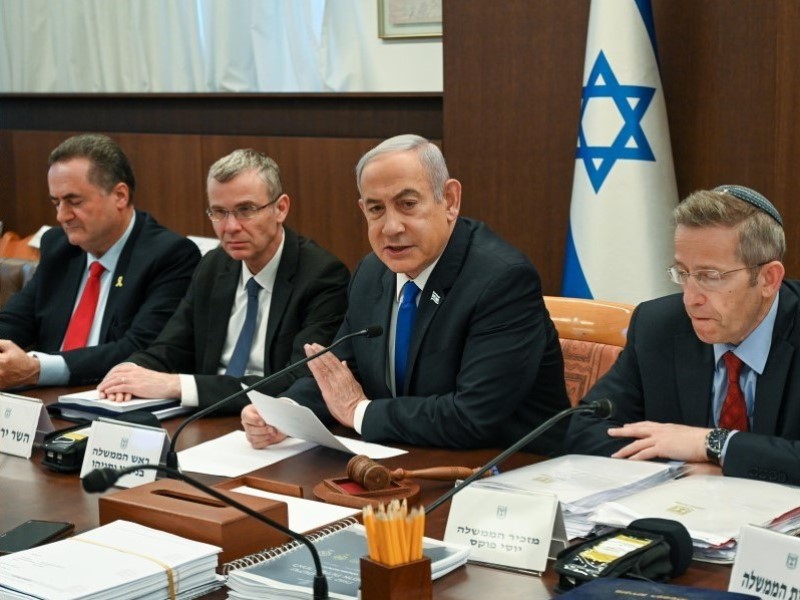
In Washington, State Department spokesperson Tammy Bruce hailed the ceasefire as a testament to Trump’s relentless diplomacy, forged through U.S. and Qatari mediation. She acknowledged early stumbles—Israel’s initial breaches sparked Trump’s frustration—but emphasised his conviction that both nations “wanted to stop the war, equally.” Qatar’s defence of the Al Udeid Air Base, where U.S. and Qatari forces intercepted missiles launched by Iran’s Islamic Revolutionary Guard Corps (IRGC), signals regional potential for collaboration. In Jerusalem, Prime Minister Benjamin Netanyahu spoke with the weight of a leader safeguarding survival, quoting a citizen’s poem, “A People as a Lion,” and hailing the strikes on Iran’s nuclear program as a “great victory” against an existential threat. The Israel Atomic Energy Commission confirmed the U.S. strike on Fordow rendered it inoperable, setting Iran’s nuclear ambitions back years. Yet, Israel’s UN representative, Danny Danon, warned that any violation would provoke a forceful response, and Israel Defense Forces (IDF) Chief of Staff Eyal Zamir’s assertion of the right to resume action reflects a nation on guard. Netanyahu’s praise for his government’s stability suggests a resilience that could nurture peace’s growth if channelled diplomatically.
Also read: 12-Day War Pauses, But Tehran Trembles
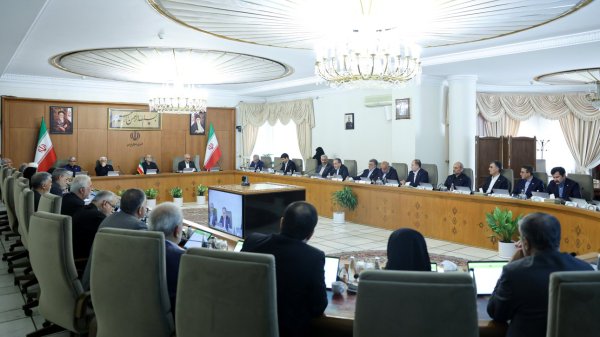
President Masoud Pezeshkian spoke of betrayal and resilience in Tehran, accusing adversaries of exploiting Iran’s divisions. Yet at the cabinet meeting today, he said that the actions of the Zionist regime have “heightened awareness” among Iranian officials that it is the entire population of Iran, not just a political party, minority, or specific group, that can defend the country. He emphasised the importance of recognising the Iranian people’s contributions and urged authorities to take actions that foster public trust in their services.
In a call with Pakistan’s Prime Minister Shehbaz Sharif, Pezeshkian condemned U.S. complicity in Israel’s June 13 strikes, despite Oman’s indirect negotiations. Yet, he embraced diplomacy, noting Russia’s proposals and hoping regional cohesion—bolstered by Pakistan’s condemnation—could build a “worthy future.” Iran’s UN envoy, Amir-Saeid Iravani, thanked Qatar and rejected terrorism accusations, insisting Tehran did not initiate the war. Pezeshkian’s vision of rebuilding social capital through local institutions signals a strength that could support the ceasefire’s bloom if directed toward dialogue. In Moscow, Foreign Minister Sergey Lavrov welcomed the ceasefire as a vital pause at the Primakov Readings Forum on June 24, 2025, highlighting Russia’s proposals to preserve Iran’s peaceful uranium enrichment while addressing security concerns. Russia, China, and Pakistan’s UN Security Council resolution to sustain the truce reflects Moscow’s mediation commitment, echoed by President Vladimir Putin’s talks with Iran’s Foreign Minister Abbas Araghchi.
The conflict’s roots reveal the fragility of this peace. On June 13, Israeli jets struck Iran’s nuclear sites at Arak, Esfahan, Fordow, and Natanz, followed by U.S. strikes on June 21 that crippled uranium enrichment capabilities but spared core components, per a U.S. intelligence assessment. Iran’s IRGC-led missile barrage on Al Udeid, mostly intercepted, left 400 Iranians dead and caused localised radioactive and chemical leaks at Fordow and Natanz, per the International Atomic Energy Agency (IAEA), with impact holes above Natanz’s underground halls and damaged access roads at Fordow. Satellite images of trucks leaving sites raise questions about relocated material. In Gaza, 700 Palestinians perished, many at aid distribution centres, as Hamas rejected ceasefire proposals—a parallel conflict complicating de-escalation. Iran has long provided Hamas with financial and military support, including funding, weapons, and training, reinforcing their strategic alignment against Israel amid regional tensions. The U.S. condemnation of a Syrian church attack, paired with support for Syria’s government via Ambassador Tom Barrack, underscores the region’s interconnected crises, threatening the truce’s delicate bloom.
Global concerns cast a long shadow over the ceasefire’s fragile roots, amplifying fears that peace could wither. India’s Ministry of External Affairs (MEA), in a June 24 statement, expressed “deep concern about the prospects for overall and sustained regional security and stability,” warning that nuclear risks and Gaza’s unrest could unravel the truce, a sobering alert from a non-aligned power. China’s Foreign Ministry spokesperson, fielding questions on Trump’s suggestion that Beijing continue buying Iranian oil, clarified that no sanctions relief was implied, urging calm and resumed nuclear talks to safeguard the non-proliferation regime—a cautious stance reflecting fears of enforcement gaps and energy market turmoil. In Washington, Bruce’s deflection on monitoring mechanisms and admission of a “fluid” situation exposed a critical vulnerability: without third-party oversight, the ceasefire teeters on collapse. Russia’s Lavrov condemned the U.S. and Israeli strikes as “gross violations” of the UN Charter and IAEA resolutions, warning they dealt a “major blow” to non-proliferation and accusing the U.S. of undermining credibility by withdrawing from the Joint Comprehensive Plan of Action (JCPOA) in 2018, while criticizing the European Troika—United Kingdom (UK), France, and Germany—for eroding trust with ambiguous IAEA reports. The BRICS group condemned the strikes as violations of international law, supporting Russia’s resolution while highlighting the looming spectre of legal and regional instability. These shared anxieties—nuclear risks, enforcement voids, and geopolitical distrust—threaten to uproot the ceasefire’s fragile bloom.
Yet a chorus of diplomatic resolve offers hope to nurture this peace. IAEA Director General Rafael Grossi urged resumed inspections to verify over 400 kilograms of 60%-enriched uranium, warning of lost “continuity of knowledge” since 2021. Germany’s UN delegate flagged Iran’s potential suspension of IAEA cooperation, while Slovenia noted the JCPOA’s objectives remain valid despite UN Security Council Resolution 2231’s looming expiration. Iran insists its program is peaceful, accusing European JCPOA signatories of failing commitments. Without a revived JCPOA or new talks, nuclear risks persist, yet Grossi’s readiness to meet Araghchi, Qatar’s mediation of nuclear talks, and Russia’s proposals offer a lifeline. Qatar’s role and Oman’s facilitation of indirect negotiations signal regional will for progress. The UN’s Under-Secretary-General for Political and Peacebuilding Affairs, Rosemary DiCarlo, called diplomacy the only path to ensure Iran’s nuclear program remains peaceful, a sentiment echoed globally. India’s MEA, beyond its concerns, warmly welcomed the ceasefire, praising the pivotal roles of the U.S. and Qatar. It reiterated that “there is no alternative to dialogue and diplomacy in order to address and resolve the multiple conflicts in the region,” emphasizing the truce as a model for de-escalating tensions in Gaza and beyond, and declared that “India stands ready to play its part in these efforts and hopes that all concerned parties will work towards sustained peace and stability,” reinforcing its role as a non-aligned advocate nurturing the ceasefire’s bloom.
Global reactions form a mosaic of hope and critique, reflecting the truce’s delicate balance. UN Spokesman Stéphane Dujarric, in a June 24 briefing, welcomed Trump’s announcement but stressed its fragility, urging Israel and Iran to respect the truce, as “the people of the two countries have already suffered too much.” Fielding questions, he navigated delicate debates: reporters pressed whether Israel’s strikes were lawful, to which he reiterated the UN’s call for adherence to international law without assigning blame. Queries on Iran’s missile attack as self-defence prompted a neutral stance, emphasising de-escalation. Questions about UN Security Council sanctions underscored the lack of consensus, with Dujarric noting the Council’s focus on reviving the JCPOA. He expressed hope for Gaza replication, aligning with UN Secretary-General António Guterres’s condemnation of Iran’s attack on Qatar and call for UN Charter compliance. European signatories decried Iran’s uranium stockpile—40 times the JCPOA limit—but advocated negotiation, with the European Union’s (EU) Stavros Lambrinidis stressing international involvement. The UN Security Council’s push to revive the JCPOA, supported by Panama and Sierra Leone, underscores multilateralism’s potential to strengthen the ceasefire’s roots.
Economically, the ceasefire offers tentative opportunities for growth. Trump’s oil comment aims to stabilise markets, while Pezeshkian’s neighbourhood-based economic vision, leveraging local institutions, could foster regional trade ties. Resumed IAEA inspections could unlock sanctions relief, enabling Iran to access over $100 billion in frozen funds and rebuild infrastructure like power grids and schools, offering tangible benefits for its people. U.S. sanctions and Israel’s security concerns may limit reintegration, but the State Department’s aid to U.S. citizens and Keith Kellogg’s success in freeing 14 political prisoners in Belarus highlight diplomacy’s broader impact, nurturing the truce’s fragile bloom.
This ceasefire’s ripples carry promise. Trump’s team, with Secretary of State Marco Rubio engaging North Atlantic Treaty Organization (NATO) allies, sees it as a milestone. Lavrov’s call for mediation, alongside voices from the UN, India, and China, sees dialogue as the path forward. The Middle East, scarred but resilient, stands at a crossroads. With diplomacy’s momentum building, this truce—peace’s fragile bloom—could grow into a new chapter of stability, its delicate roots strengthened by the world’s resolve.