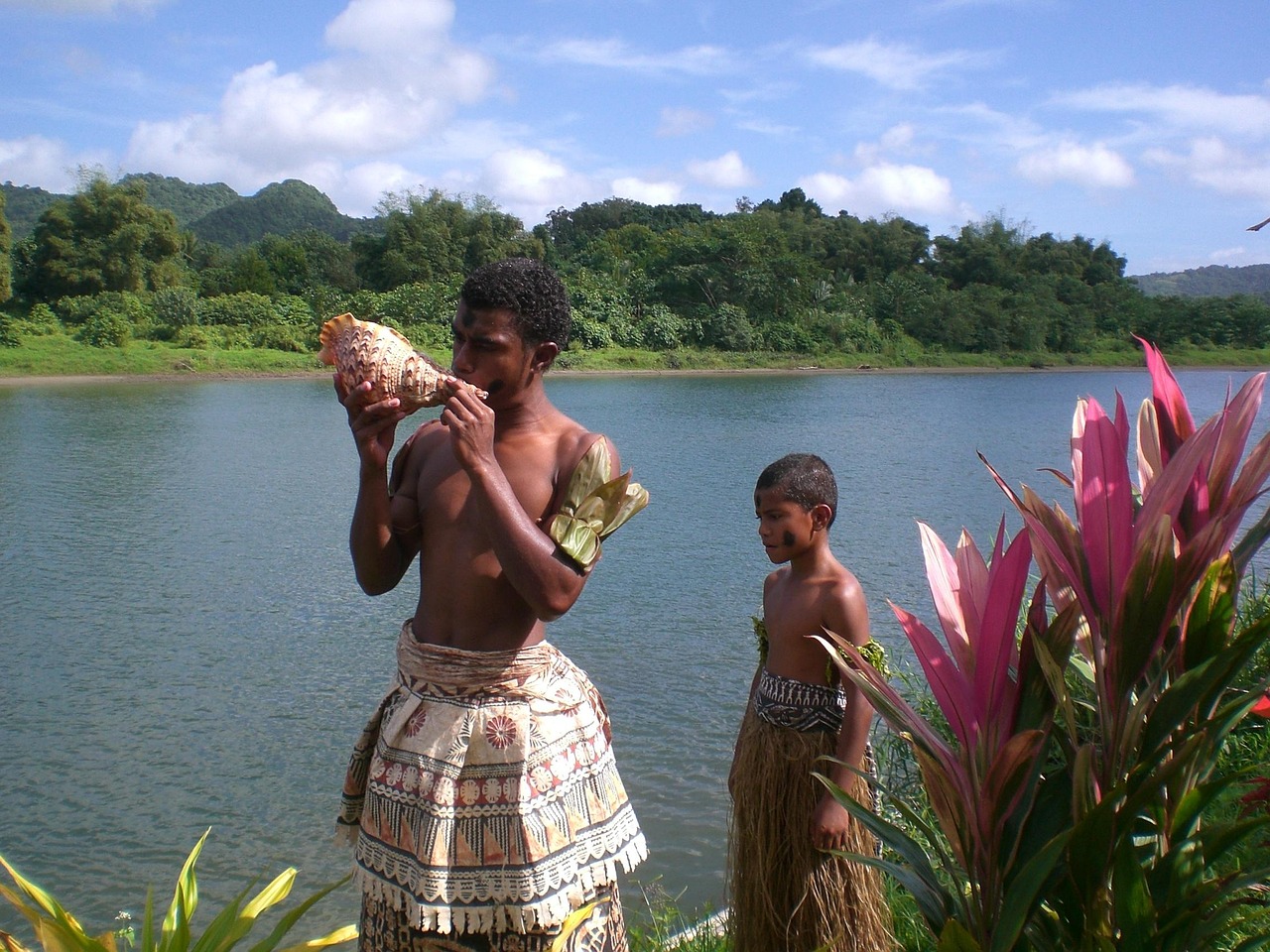
Fiji Ethnic
Fiji becomes the 26th country to eliminate trachoma
Suva/Manila/Geneva: The islands of Fiji have never seen a brighter dawn. In a milestone that blends science, persistence and community spirit, the World Health Organization (WHO) has officially declared that Fiji has eliminated trachoma as a public health problem — freeing the nation from the world’s leading infectious cause of blindness.
It is a victory etched not only in medical history but also in the hearts of thousands whose lives once teetered on the edge of preventable darkness. The achievement makes Fiji the 26th country globally to end trachoma as a public health threat — and the 58th worldwide to eliminate at least one neglected tropical disease (NTD).
“This is a precious gift to future generations,” said Dr Tedros Adhanom Ghebreyesus, WHO Director-General. “Fijians have been set free from the suffering that trachoma has inflicted on their ancestors.”
From Colonial Shadows to Clear Vision
Fiji’s fight against trachoma spans nearly a century. Medical reports from the 1930s and community surveys in the 1950s painted a grim picture — widespread disease, inflamed eyelids, and the looming threat of blindness, particularly in rural communities. By the 1980s, trachoma’s grip began to loosen, replaced by cataracts and refractive errors as leading causes of vision loss.
But just when it seemed the disease had faded into history, alarm bells rang again. In the early 2000s, rapid assessments revealed unexpectedly high rates of active trachoma in children, prompting a new wave of urgency. Fiji’s Ministry of Health and Medical Services responded with scientific precision and social resolve.
Since 2012, the nation has carried out an extensive campaign involving population-based surveys, laboratory testing, and internationally supported studies to map the disease’s true burden. The strategy combined school health programmes, water and sanitation initiatives, and community awareness drives, turning public health into a collective movement.
By 2025, the results spoke for themselves: trachoma transmission had been interrupted, and systems were firmly in place to detect and manage any future cases.
A Pacific Story of Perseverance
For the Pacific region, Fiji’s success carries symbolic weight. It’s not merely the eradication of a disease — it’s proof that local leadership, cultural solidarity, and international collaboration can rewrite the public health narrative.
“Fiji’s success is a beacon of what’s possible when communities, governments, and partners unite behind a shared goal,” said Dr Saia Ma’u Piukala, WHO Regional Director for the Western Pacific. “It’s a celebration of the power of Pacific leadership and the impact of sustained investment in health.”
Dr Ratu Atonio Rabici Lalabalavu, Fiji’s Minister of Health and Medical Services, called the validation “a defining moment for health equity in the Pacific.” He credited not just policymakers, but the country’s healthcare workers and villagers who drove change from the grassroots up.
“This achievement reflects years of coordinated action — across villages, health facilities and regional platforms — demonstrating the unwavering commitment of our healthcare workers and communities leading the change,” he said. “As we celebrate this milestone, we call on our donors and partners in the Pacific and beyond to continue supporting accelerated action on neglected tropical diseases.”
What Is Trachoma, and Why Does It Matter
Trachoma may sound like an illness of the past, but it remains an enduring enemy in many parts of the world. Caused by the bacterium Chlamydia trachomatis, it spreads easily through unwashed hands, shared towels, and even flies that land on infected eyes or nasal discharge. Repeated infections cause scarring, turning lashes inward until they scrape against the cornea, leading to irreversible blindness.
Globally, trachoma still lingers where clean water, sanitation, and healthcare access are limited — a reminder that disease is often rooted as much in inequality as biology.
Fiji’s Win, the World’s Gain
Fiji’s success is also part of a larger global momentum. According to WHO, more than 1 billion people worldwide still suffer from neglected tropical diseases. Yet the tide is turning. The WHO Road Map for NTDs (2021–2030) aims to eliminate or control 20 such diseases through global partnerships and national health system strengthening.
In the Western Pacific Region, which includes 38 countries and territories, 13 Member States have now been validated by WHO for eliminating at least one NTD. Of these, six — Cambodia, China, the Lao People’s Democratic Republic, Papua New Guinea, Vanuatu and Viet Nam — have already eliminated trachoma as a public health problem. Fiji’s addition to that list reinforces the region’s growing legacy of health leadership.
Seeing the Future Clearly
For a disease that once robbed generations of sight, Fiji’s victory is both practical and poetic. It is a triumph born from patience and persistence, from data and dialogue, from village nurses and government epidemiologists working in quiet partnership.
As Dr Tedros said, it is a gift — one wrapped not in ceremony but in sight, symbolising what can happen when determination meets cooperation.
In the words of one WHO official, “Fiji’s success is a glimpse of the future we all want — one where no one, anywhere, is left behind in the dark.”
– global bihari bureau