A Ceasefire That Buries Children Is Not Enough
Gaza/Geneva: A ceasefire that has slowed large-scale bombardment but failed to stop children from dying cannot be described as adequate, the United Nations Children’s Fund (UNICEF) warned today, as Gaza continues to face lethal violence, exposure to extreme winter conditions, and deepening humanitarian paralysis.
Despite the ceasefire announced in early October, more than 100 children have been killed in Gaza since then, UNICEF said, underscoring that the pause in fighting has not translated into meaningful safety for civilians, particularly the young.
“That is roughly one child killed every day during what is meant to be a ceasefire,” UNICEF spokesperson James Elder told reporters in Geneva, speaking from Gaza City.
According to UNICEF, children continue to die from a range of causes that reflect the ceasefire’s fragility. These include airstrikes, drone attacks — including suicide drones — tank shelling, live ammunition, and fire from remote-controlled quadcopters, Elder said, indicating that military activity has not ceased on the ground.
Beyond direct violence, winter itself has become a killer. At least six children have died of hypothermia in recent days, UNICEF reported, as families displaced by months of fighting struggle to survive in makeshift shelters with little protection from wind, rain, and cold.
“Strong coastal winds are tearing through tents pitched along the beach,” Elder said. “It’s bitterly cold. It’s bitterly wet.”
With fuel scarce and housing largely destroyed, humanitarian agencies warn that exposure-related deaths are likely to continue unless shelter conditions improve rapidly.
UNICEF acknowledged that the ceasefire has enabled limited humanitarian gains, particularly in healthcare. For the first time since hostilities intensified, primary health clinics have begun operating in northern Gaza, and childhood immunisation services are expanding through UNICEF and partner agencies.
However, medical evacuations for critically injured and ill children remain effectively stalled, Elder said, describing no meaningful improvement either in approvals to leave Gaza or in the willingness of host countries to receive evacuated children.
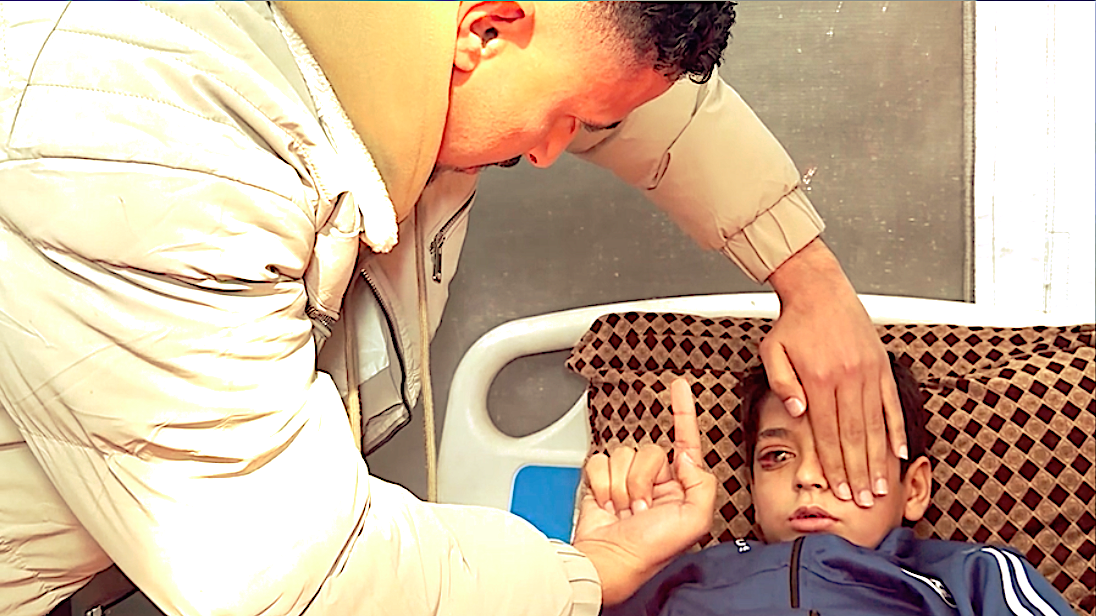
During his most recent mission, he encountered multiple families whose children had completed the formal evacuation process but remained trapped. Among them was a nine-year-old boy with shrapnel embedded in his eye, facing the loss of vision, and a young girl hospitalised at Al-Shifa Hospital in Gaza City, whose condition he warned could become fatal without urgent specialised care.
The ceasefire currently in place follows months of international mediation involving regional and global actors, including efforts by Egypt and Qatar, amid ongoing negotiations over Gaza’s future governance, security arrangements, and reconstruction. While large-scale hostilities have slowed since October, the truce remains fragile, with sporadic military incidents reported and no comprehensive political settlement finalised. Discussions over post-war administration, the role of Palestinian authorities, and security oversight remain unresolved, even as humanitarian agencies continue to operate under access restrictions and uncertainty over the durability of the ceasefire.
The humanitarian outlook may darken further. UNICEF raised concern over a recent Israeli decision to restrict the operations of international non-governmental organisations, a move due to take effect in the coming month. Elder warned that such restrictions risk disrupting life-saving assistance at a time when needs remain overwhelming.
He also renewed calls for international media access to Gaza, noting that journalists have not been allowed into the enclave despite the ceasefire.
“There needs to be far greater pressure to allow international journalists in,” he said, describing the destruction he has witnessed across the territory as total and unrelenting. “Every time I see it, the 360-degree devastation — the flattening of homes — my jaw drops.”
Beyond the immediate toll, UNICEF warned of deep and lasting psychological harm to Gaza’s children after more than two years of near-continuous conflict.
“The psychological damage remains largely untreated,” Elder said, cautioning that trauma is becoming harder to reverse the longer normal life remains suspended.
While diplomatic efforts continue and discussions over Gaza’s future governance remain unresolved, humanitarian agencies stress that children cannot wait for political outcomes. Violence, exposure, displacement, and untreated trauma continue to shape daily life.
“A ceasefire that slows the bombs is progress,” he said. “But a ceasefire that still buries children is not enough,” he added.
– global bihari bureau