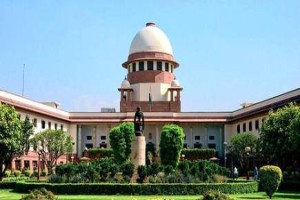
Supreme Court of India
Lawyers, Unions Seek Withdrawal of CJI Remarks
New Delhi: A broad coalition of lawyers, trade unions, women’s organisations and civil society groups has called on Chief Justice of India Justice Surya Kant to withdraw recent remarks made during court hearings on domestic workers and trade unions, describing them as prejudicial, factually incorrect and damaging to constitutional guarantees of equality and dignity.
The appeal follows oral observations made by the Chief Justice while hearing a public interest litigation seeking a comprehensive legal framework and enforcement of minimum wages for domestic workers. During the proceedings, Justice Surya Kant reportedly blamed trade unions for the slowdown of industries, questioned the utility of unionisation and suggested that fixing minimum wages could discourage households from employing domestic workers and lead to excessive litigation.
The All India Lawyers Association for Justice (AILAJ) has circulated an open letter urging “all like-minded lawyers, trade unionists, students and fellow citizens” to endorse a petition seeking withdrawal of the remarks. The letter cautions judges to avoid comments in judicial proceedings that may be construed as misogynistic or prejudicial to any segment of society, particularly workers in highly feminised and vulnerable sectors such as domestic labour.
The letter recalls that the Supreme Court itself had taken a sharply different position in its judgment of 29 January 2025 in Ajay Malik v. State of Uttarakhand. In that case, a Bench headed by Justice Surya Kant had acknowledged that domestic workers largely come from the Scheduled Castes, the Scheduled Tribes, Other Backward Classes and economically weaker sections, and that domestic work provides an important livelihood, bringing women closer to financial security and independence. The Court had also directed the constitution of an Expert Committee to examine the need for a specific legal framework to protect domestic workers and submit its report within six months. The present PIL, the letter notes, was filed only after the Union Government failed to act on those directions.
Civil society groups argue that the Chief Justice’s recent comments contradict this earlier judicial recognition of exploitation and vulnerability. They stress that minimum wages are not charity but a constitutional right, citing the Supreme Court’s own ruling in People’s Union for Democratic Rights v. Union of India (1982), which held that non-payment of minimum wages amounts to forced labour and is a cognisable offence.
The Campaign for Judicial Accountability and Reforms (CJAR) issued a detailed statement on 1 February condemning what it called “unconscionable remarks” made by the Chief Justice during two hearings on 29 January. According to CJAR, the observations undermined faith in the judiciary and represented a departure from the restraint expected of the country’s highest judicial office. It said the remarks were reflective of personal bias and risked influencing how courts respond to the lived realities of marginalised workers.
CJAR also objected to the Chief Justice’s role in staying the University Grants Commission’s 2026 regulations on Promotion of Equity in Higher Educational Institutions. The group said the order reversed the Court’s earlier position on the need for strong safeguards against caste-based discrimination and was based on hypothetical fears of misuse rather than constitutional defects. It criticised comments made during the hearing, suggesting that Dalit, Bahujan and Adivasi students might misuse the regulations, calling them insensitive and contrary to the goal of substantive equality.
The All India Democratic Women’s Association (AIDWA), in a statement issued on 30 January, strongly condemned the remarks on trade unions and minimum wages, describing them as reflective of a neo-liberal mindset that weakens workers’ struggles and undermines constitutionally protected labour rights. AIDWA noted that domestic work is a highly feminised sector marked by exploitation and that minimum wages are essential to ensure dignity and livelihood.
The organisation also rejected the claim that trade unions are responsible for the industrial slowdown, pointing to official data showing that industrial disputes have declined sharply in recent years. It argued that closures are driven by corporate failures, financialisation, stress on micro and small enterprises and the withdrawal of welfare measures, rather than by workers asserting their rights.
AIDWA further expressed concern over the timing of the remarks, coming just ahead of the nationwide general strike scheduled for 12 February against the labour codes, and reiterated its full support for the trade union movement and the strike call endorsed at its 14th conference.
In their joint appeal, trade unions, workers’ associations and civil society organisations have urged the Chief Justice to exercise restraint in court proceedings and adhere to the standards of judicial conduct befitting his office. They have requested the withdrawal of the remarks, stating that workers seek rights, not charity, dignity, not patronising attitudes, and freedom, not subordination.
The open letter campaign continues to gather endorsements, with organisers saying the issue goes beyond one set of comments and touches the core of constitutional commitments to social justice, equality and the protection of the most marginalised sections of society.
– global bihari bureau