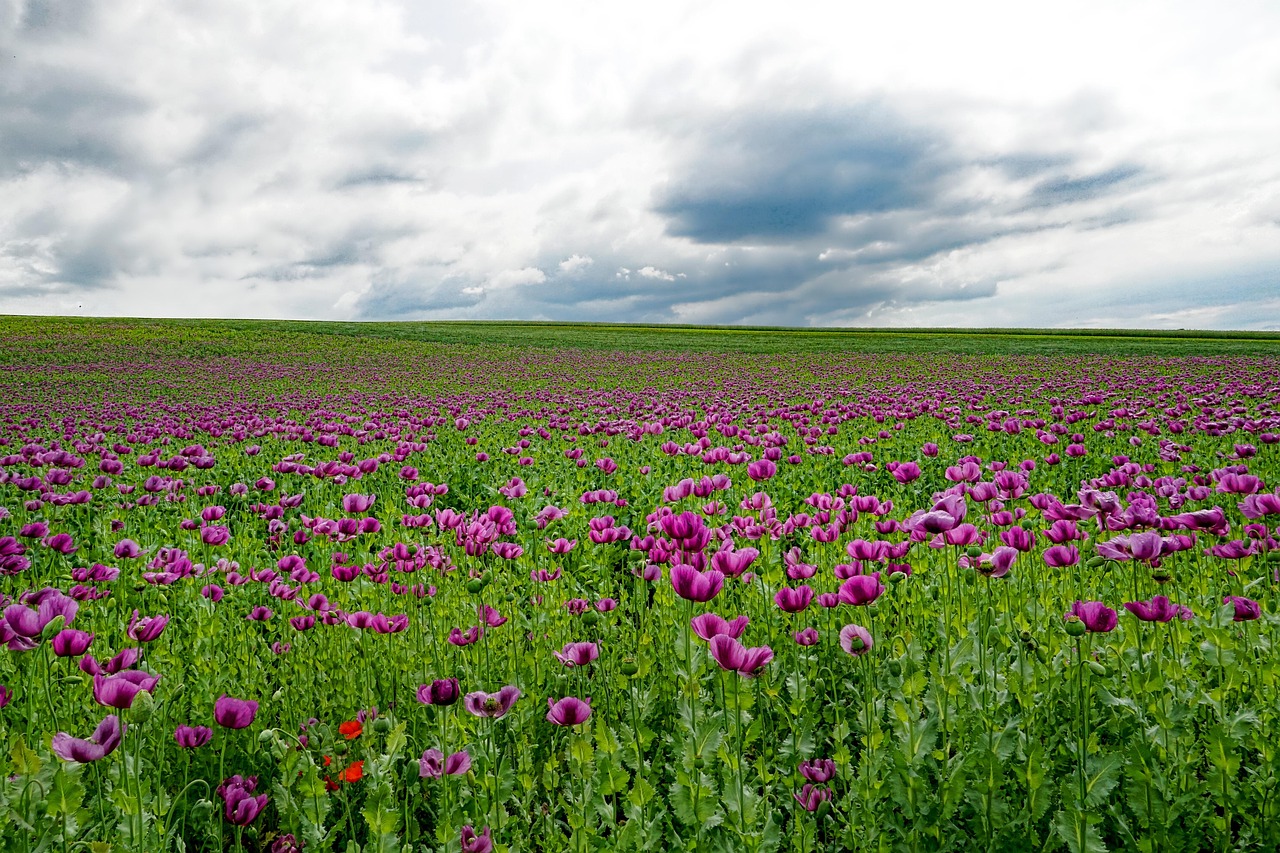
Poppy Field
1.21 Lakh Farmers Get Opium Cultivation Nod
New Policy Targets Self-Reliant Alkaloid Supply
New Delhi: The Union Government today announced the annual licensing policy for crop year 2025-26 during the Opium Crop Year from October 1, 2025, to September 30, 2026, of license for cultivation of opium poppy, for the farmers in the states of Madhya Pradesh, Rajasthan and Uttar Pradesh. The policy estimates that nearly 1.21 lakh farmers are eligible to receive licenses, marking a 23.5 per cent increase over the number of licenses actually issued in the previous crop year. This expansion includes approximately 15,000 additional farmers, bringing new participants into the regulated cultivation framework.
Under the policy’s general conditions, the 1.21 lakh eligible farmers reflect a significant uptick from the licenses issued last year, aiming to bolster opium cultivation across the three states. The Central Government continues to ensure an adequate supply of alkaloids to meet medical and palliative care needs. Concurrently, efforts are underway to augment processing capacity through indigenous and self-reliant measures, with a view to meeting the requirements of alkaloids for the production of essential narcotic drugs.
Key elements of the annual license policy include retention of existing opium gum cultivators who have achieved an average morphine yield (MQY-M) of 4.2 kg per hectare or above. Existing opium gum cultivators with morphine yields between 3.0 kg and 4.2 kg per hectare are now eligible to cultivate unlanced poppy straw under the Concentrate of Poppy Straw (CPS) method, with a five-year license validity. Furthermore, the digitisation of cultivators’ data since 1995-96 has enhanced inclusivity, enabling marginal farmers from past years to access licenses by meeting the prescribed eligibility and relaxed criteria.
The Government proposes to incentivise high-performing farmers, who have achieved yields of 900 kg/hectare and above of unlanced poppy straw, by offering them the option to switch to the traditional method of opium gum cultivation. This transition is intended to promote higher yields of opium from their holdings, while also serving as a positive reinforcement mechanism to reduce the risk of diversion from the field. Simultaneously, the Government will suspend licenses for the crop year 2025-26 for farmers under CPS cultivation who did not meet the prescribed Minimum Qualifying Yield (MQY) of 800 kg/hectare during the previous crop year (2024-25).
Further enhancements include upgrades to the Government’s Opium and Alkaloid Factories. Notably, this year, the Government Alkaloid Factory at Neemuch has achieved WHO GMP certification. The policy seeks to balance Atmanirbharta (self-reliance) for government-regulated alkaloid units, while simultaneously supporting Indian pharmaceutical companies in alkaloid APIs and formulations. By leveraging their technical expertise and brand credibility, the initiative aims to promote the “Make for World” vision.
– global bihari bureau