From Gaza’s Rubble, Bread and Hope Return
Gaza/Geneva/Cairo: Inside Gaza, where shattered homes stand amid debris and dust after more than two years of unrelenting conflict, Nour Hammad, Communications Officer for the World Food Programme (WFP), describes what she sees as “apocalyptic scenes.” The silence of the guns has brought momentary relief, but it hangs uneasily over a population still haunted by hunger and fear.
“I see on people’s faces the joy that the guns have fallen silent after all this time,” Hammad said from Gaza. “And the fear of whether the silence will last.”
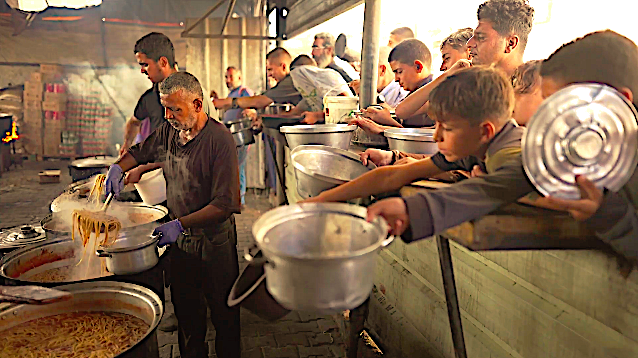
Across the enclave, queues form daily outside WFP distribution points — fragile oases of sustenance in a landscape of scarcity. People wait patiently for food parcels, fresh bread, or digital cash transfers, knowing that each delivery can mean the difference between survival and despair.
“In every distribution point I have been to across the Gaza Strip over the past couple of days, people tell me one thing: this assistance matters,” Hammad said. “After months of surviving on bits and pieces, rationing food, stretching one meal over days, they are finally receiving fresh bread, food parcels, cash transfers, nutrition and support.”
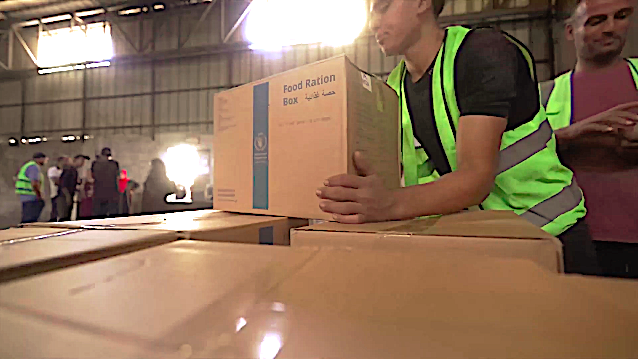
The World Food Programme, one of the United Nations’ key humanitarian agencies, has been operating under exceptionally difficult conditions. Since the start of the fragile ceasefire — now in its fourth week — the agency has reached around one million people across Gaza, distributing reduced food parcels designed to last ten days per household. Its goal is to reach 1.6 million people, roughly two-thirds of the Strip’s population, as part of what WFP calls “the broad operation to push back hunger in Gaza.”
Still, supplies remain scarce. “Each family is receiving a reduced food ration, which is one parcel, and that’s enough food for ten days,” said Abeer Etefa, Senior Spokesperson for WFP, speaking from Cairo. “To continue expanding operations to the level required and the level that we have committed to, we really need more access, more border crossings to be opened, and more access to key roads inside Gaza.”
For now, only two border crossings — Kerem Shalom in southern Gaza and Kissufim in central Gaza — remain operational. “This severely limits the quantity of aid that WFP and other agencies are able to bring in to stabilise the markets and to address people’s needs,” Etefa said. The United Nations Office for the Coordination of Humanitarian Affairs (OCHA) confirmed that no food convoy has reached northern Gaza via any direct crossings since 12 September. The continued closure of northern routes forces convoys to “follow a slow, difficult path from the south,” delaying the delivery of food to the areas worst affected by hunger.
The challenge of logistics compounds the crisis on the ground. Northern Gaza, where famine was declared at the end of August, remains critically undersupplied. In October, hundreds of thousands of people returned to these devastated areas, Etefa said, “but their access to food is severely limited.” Many have found their homes in ruins. Those still displaced in the south are “often living in tents and without access to food and services.”
To meet immediate needs, WFP has prioritised staples. About 700,000 people now receive fresh bread daily from 17 WFP-supported bakeries — nine in southern and central Gaza, and eight in the north. The agency aims to increase this network to 25 bakeries, restoring a measure of normalcy to families who have endured months of food insecurity. “This is where the journey to recovery starts,” Hammad said, noting that “bread has become both nourishment and reassurance that life still exists.”
Food Returns to Gaza Shelves, But Few Can Afford It
But even with aid arriving, Gaza’s markets remain volatile. “Food is slowly coming back to the shelves, but prices are still beyond reach for most families,” Hammad said. “They have depleted their resources to survive two years of war. Today, for example, I buy one apple at the cost of a kilo before the war.”
To offset the inflation, 200,000 of the most vulnerable people are now receiving digital cash transfers that allow them to purchase fresh food directly from local vendors. These cash top-ups are meant to complement the food parcels, but soaring prices have limited their impact. “Families are spending every shekel carefully,” Hammad said. “Many stretch a single meal for days.”
She recalled meeting a displaced mother in Gaza City who, despite receiving aid, tells her children not to eat all the rations immediately. “She cannot trust that tomorrow will bring food too,” Hammad said. Such stories, she added, “capture the uncertainty that defines life here.”
“Families invite us into their tents, worn out by winter cold and summer heat, and they want to show us their reality,” she said. “And their reality is that people need food. People need shelter. People need warm clothing because winter is around the corner, and they need continued support.”
Etefa, speaking from Cairo, echoed that call. She emphasised that humanitarian operations can only expand if border access improves and safe passage inside Gaza is guaranteed. “We really need more access, more border crossings to be opened, and more access to key roads inside Gaza,” she reiterated.
Despite limited entry points and damaged infrastructure, WFP convoys continue to move through the Strip, navigating blocked roads and unstable security conditions. The agency, along with other United Nations partners, has also appealed for sustained financial support from donors to ensure that food supplies, bakeries, and digital transfer systems can operate uninterrupted.
As Gaza braces for the coming winter, the need for assistance extends beyond food. Thousands of displaced families require shelter materials, blankets, and warm clothing. Yet for now, bread — simple, fresh, daily — remains the most visible sign of survival.
Two years of war have gutted Gaza’s economy, fractured families, and erased livelihoods. But as humanitarian workers distribute food parcels and bakers fire up their ovens, the smell of baking bread cuts through the acrid air — a reminder that even in devastation, endurance endures.
For the World Food Programme, each parcel delivered, each bakery reopened, and each loaf baked is not just an act of relief — it is a declaration of persistence. In a place where tomorrow is uncertain, Gaza’s struggle for bread has become a quiet but defiant affirmation of life itself.
– global bihari bureau