Food Waste Fuels Emissions, Costs $1 Trillion
Zero Waste Day Flags Global Food Loss Crisis
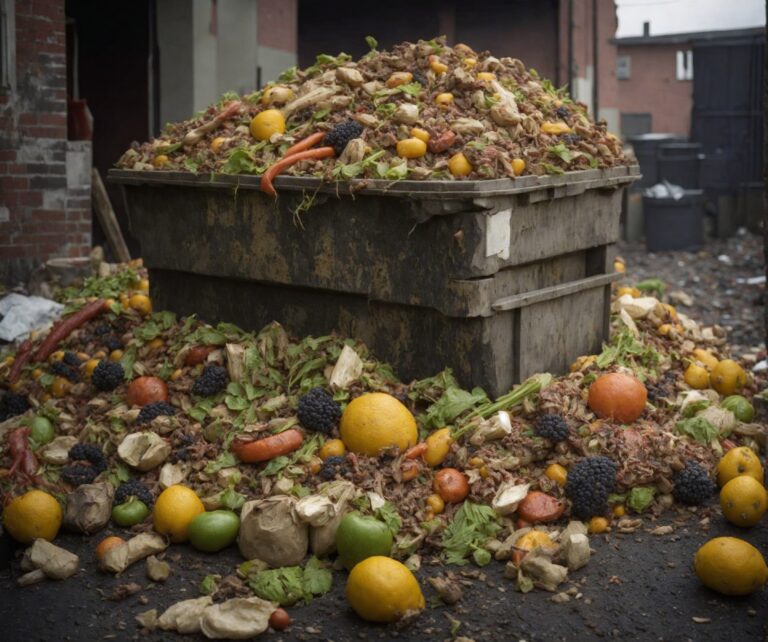
Nairobi/New York: The world wastes more than one billion tonnes of food each year—nearly one-fifth of what reaches consumers—even as hundreds of millions face hunger, a disparity that continues to drive emissions, economic losses and pressure on land, water and energy resources, as the International Day of Zero Waste on 30 March turned attention to the scale and impact of food waste.
Humanity generates up to 2.3 billion tonnes of municipal solid waste annually, reflecting unsustainable production and consumption patterns, with food waste forming a significant share of this total. More than one billion tonnes of food are wasted each year, accounting for 19 per cent of food available to consumers, while an additional 13 per cent is lost after harvest and before reaching retail markets, reinforcing the imbalance between availability and access.
The distribution of food waste shows that households account for 60 per cent, followed by food services at 28 per cent and retail at 12 per cent, with households alone responsible for wasting over one billion meals every day.
The observance was established following a resolution introduced in 2022 by Türkiye and 105 other Member States at the United Nations General Assembly (UNGA), and has been observed annually on 30 March since 2023 under the joint facilitation of the UN Environment Programme (UNEP) and UN-Habitat, highlighting national, subnational, regional and local zero-waste initiatives and their contribution to achieving sustainable development.
In a message marking the day, Türkiye’s First Lady, Emine Erdoğan, linked food waste to its human consequences, stating that it reflects deprivation experienced by those facing hunger and hardship, including in conflict-affected regions.
United Nations Secretary-General António Guterres said the observance highlights the scale of the food waste challenge and outlined actions across stakeholders. He noted that consumers can reduce waste through changes in purchasing and cooking practices, retailers can improve operations and redistribute surplus food, cities can expand organic waste separation, leverage technological innovations and strengthen procurement systems for schools and hospitals, and national governments can integrate food waste reduction into climate and biodiversity strategies while strengthening public-private partnerships.
Food loss and waste account for between 8 and 10 per cent of global greenhouse gas emissions, nearly five times the emissions from the aviation industry. Food waste alone contributes up to 14 per cent of global methane emissions, with methane having a warming potential approximately 84 times greater than carbon dioxide over a 20-year period. The economic cost of food loss and waste is estimated at US$1 trillion annually.
Inger Andersen, Executive Director of the UN Environment Programme, said reducing food waste is linked to addressing pressures including climate change, deforestation, water scarcity, land degradation, desertification and rising food prices. She noted that resources used to produce food that is not consumed—including land, particularly land at risk of deforestation, water and energy—represent avoidable losses, and that reducing food waste contributes to emission reductions, food security and more efficient resource use within a transition towards circular, low-emission systems.
Anacláudia Rossbach, Executive Director of the United Nations Human Settlements Programme, said cities that integrate food systems, water services and waste management demonstrate approaches that recover surplus food and convert organic waste into compost or energy. She noted that such systems can reduce costs, lower emissions and generate employment, and highlighted the role of informal workers, waste pickers and community water managers in strengthening local systems, supporting livelihoods and ensuring inclusion.
Member States marked the day at a high-level event at United Nations Headquarters in New York, convened by UNEP and UN-Habitat in partnership with the Republic of Türkiye and the Zero Waste Foundation, focusing on breakthroughs, innovative strategies and approaches to reducing waste across food value chains.
UNEP and the UN Tourism launched the “Recipe of Change” initiative to mobilise tourism businesses, chefs, and supply-chain actors to measure, prevent and reduce food waste within hospitality operations. Fourteen companies representing US$56.5 billion in annual revenues and serving 600 million guests annually have joined the initiative.
Events were held across multiple regions, including in Istanbul, where UNEP partnered with the United Nations Development Programme, UN-Habitat and the Zero Waste Foundation to demonstrate how households can reduce food waste in daily practices with support from governments and the private sector. In Osaka, an interactive workshop engaged young participants in examining food waste not as an individual failure but as a shared challenge shaped by culture, daily practices and system design. Additional events took place in Brasilia, Geneva, Nairobi, and in the Chinese provinces of Hainan and Shandong, among other locations.
Ahead of the observance, 20 cities were identified under the “20 Cities Towards Zero Waste” initiative, led by the Secretary-General’s Advisory Board on Zero Waste with support from UN-Habitat and UNEP, highlighting urban approaches to reducing waste and advancing circular economy systems.
A small but growing number of countries are demonstrating that reductions in food waste are achievable with policy measures, partnerships and measurement systems. Japan reported a 53 per cent reduction in total food loss and waste by 2022 compared to 2000 levels, while the United Kingdom reported a 22 per cent reduction since 2007 through coordinated public and private efforts and changes in consumer behaviour. However, most countries, including several Group of Twenty economies, still lack robust data to track progress towards halving food waste by 2030, representing a major gap in global action.
The broader response includes initiatives such as the Food Waste Breakthrough, launched at the 2025 United Nations Climate Change Conference in Brazil, which focuses on collaboration among cities and food businesses across data, policy, capacity building, advocacy and investment. The initiative aims to halve food waste by 2030, cut methane emissions by up to 7 per cent, and support the transition to more resilient, circular and resource-efficient food systems.
The International Day of Zero Waste calls for a shift towards a circular economy, emphasising reduced resource use and emissions across all stages of product life cycles as a means to address the triple planetary crisis of climate change, nature loss and pollution, while improving food system efficiency, sustainability and access.
– global bihari bureau