Representational photo
 By Vinod Raghavan*
Muscat: On May 3, 2025, a 38-year-old road accident victim underwent the country’s first major private-sector surgery—a complex Thoracic Endovascular Aortic Repair (TEVAR)—heralding a new era for medical innovation in Oman.
The patient, Mumtaz Ahmed, a heavy truck driver originally from Lahore, Pakistan, was critically injured in a severe car crash on April 25 in Kalba, Musandam. Seated in the rear without a seatbelt, he suffered a life-threatening tear in the aorta near his heart, fractured ribs, spine injuries, and liver damage when an oncoming vehicle collided with his car. “A seatbelt is a lifesaving mechanism,” said Dr. Ahmed Salim Mohammed al Aufi, Consultant Vascular and Trauma Surgery at Muscat Private Hospital, during a press conference. “This case underscores the need for all passengers, including those in the back seat, to wear seatbelts to minimise impact on vital organs like the heart and lungs.”
Initially treated at a government hospital in Khasab, Mumtaz was stabilised but faced a dire prognosis due to his aortic injury. Overcrowded emergency wards prevented his transfer to a government facility with advanced vascular treatment capabilities. After discussions with hospital authorities, he was airlifted to Muscat Private Hospital in Bousher to ensure timely care. “The transfer was critical to provide the best possible treatment,” said Raymond Elias, Medical Director.
At Muscat Private Hospital, Mumtaz was admitted to the Intensive Care Unit (ICU), where specialised medication controlled his blood pressure. On May 3, Dr. Ahmed al Aufi, a visiting vascular and trauma surgeon, led a multidisciplinary team in performing the TEVAR procedure. This minimally invasive operation involved inserting a stent through blood vessels to repair the torn aorta, executed with precision by Dr. Zahra (Consultant Anesthetist), cath lab nurses and technicians, operating theatre (OT) nurses, ICU and ward nurses, and support from Dr. Amr Hassan, Consultant and Head of the Heart Center, alongside marketing and administration staff.
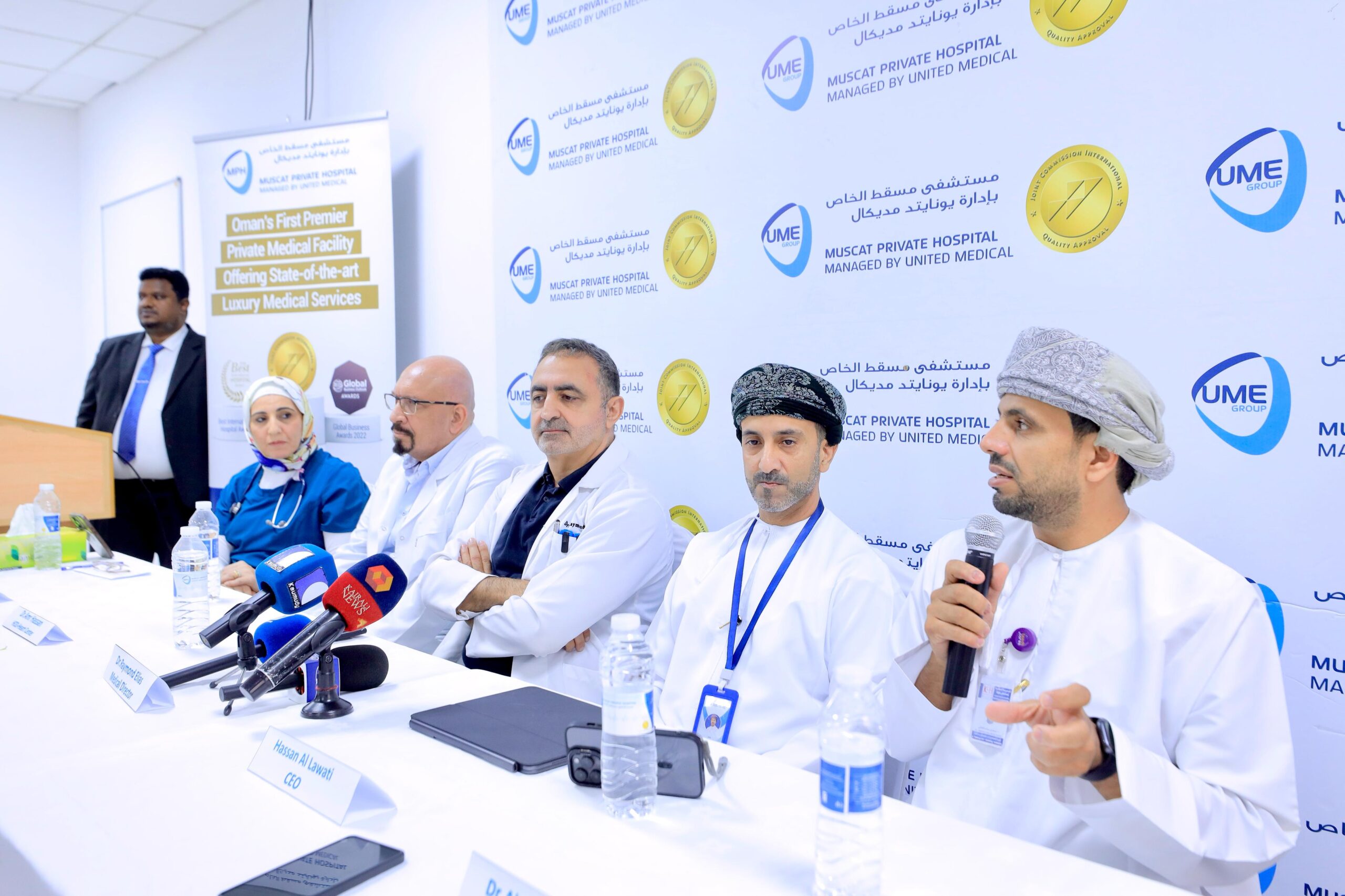
“This is a monumental achievement for Oman’s private healthcare sector,” Dr. Al Aufi declared. “The TEVAR procedure was a complete success. The patient is now conscious, stable, and undergoing physiotherapy. He’s expected to be discharged by the end of this week following routine follow-up scans.” The operation highlights Muscat Private Hospital’s advanced emergency and surgical capabilities, demonstrating rapid response, teamwork, and medical innovation.
Hassan al Lawati, CEO of Muscat Private Hospital, emphasised the collaboration between the government and the private sector. “This success reflects coordination across departments and with public hospitals, aligning with Oman Vision 2040,” he said. “We have top-calibre professionals—nurses, technicians, ambulance crews, radiology, pharmacy, laboratory, and biomedical teams—who are the unsung heroes of this milestone.”
The hospital’s commitment to quality, standards, and cutting-edge technology positions it as a pioneer in Oman’s healthcare landscape. “We don’t compete; we complete each other,” Al Lawati added, noting the public-private partnership’s role in setting a new standard. Dr. Al Aufi reinforced this, stating, “We operate under the Ministry of Health’s umbrella, supporting the nation’s healthcare goals.”
The accident sends a critical safety message. “Seatbelts must be mandatory for all passengers, front and back,” Dr. Al Aufi urged, highlighting how Mumtaz’s rear-seat position exacerbated his injuries. This historic surgery not only saved a life but also underscored the importance of safety measures and collaborative healthcare in Oman.
This landmark surgery at Muscat Private Hospital in Bousher, Muscat Governorate, has showcased the power of public-private partnerships in Oman’s healthcare sector, aligning with Oman Vision 2040.
*Senior journalist