Space debris
Oslo: On a crisp spring morning at the Norwegian Space Agency, Minister of Trade and Industry Cecilie Myrseth signed the Artemis Accords, making Norway the 55th nation to endorse a United States-led framework for lunar and deep-space exploration. The ceremony, attended by U.S. officials and the agency’s Director General, highlighted Norway’s growing role in space, building on a partnership with NASA that dates back to a 1962 suborbital rocket launch from Andøya Space. Yet, as the Accords gain traction—now spanning 55 countries from Angola to Uruguay—the absence of major space powers like Russia and China casts a shadow over the initiative, raising questions about its global legitimacy and the future of space governance.
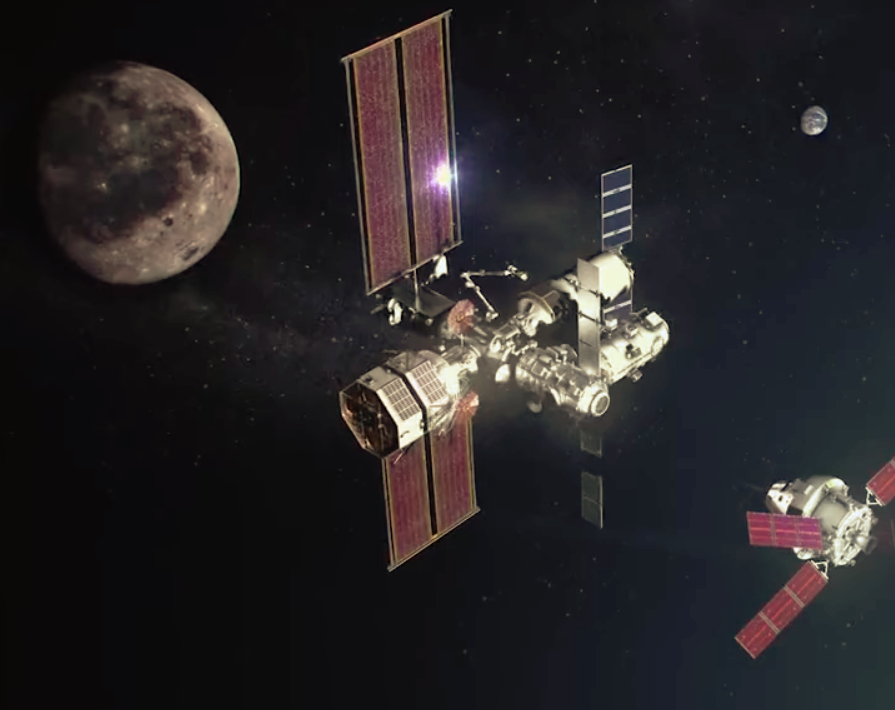
Launched in 2020 by the United States and seven allies—Australia, Canada, Italy, Japan, Luxembourg, the United Arab Emirates, and the United Kingdom—the Artemis Accords are a set of non-binding principles intended to guide responsible space exploration. Rooted in the 1967 Outer Space Treaty, they promote transparency, interoperability, emergency assistance, debris mitigation, and the preservation of space heritage. The Accords also introduce contentious concepts, such as “safety zones” to prevent interference and the right to extract space resources without claiming celestial territory. Managed by NASA and the U.S. Department of State, the framework supports the Artemis programme, which aims to return humans to the Moon by 2027 and prepare for Mars missions.
The Accords’ roster has grown steadily, with Bangladesh signing as the 54th member on April 8, 2025, and Norway following suit. Recent 2024 signatories include Panama and Austria (December 11), Chile and Cyprus (October 25), the Dominican Republic (October 4), and Estonia (October 13). The coalition now includes 27 European nations, 10 Asian, seven South American, five North American, three African, and two Oceanian countries. Here is the complete list of the signatory nations that affirmed the Accords’ principles for sustainable civil space activity. – Angola, Argentina, Armenia, Australia, Austria, Bahrain, Bangladesh, Belgium, Brazil, Bulgaria, Canada, Chile, Colombia, the Republic of Cyprus, Czech Republic, Denmark, Dominican Republic, Ecuador, Estonia, Finland, France, Germany, Greece, Iceland, India, Israel, Italy, Japan, Liechtenstein, Lithuania, Luxembourg, Mexico, Netherlands, New Zealand, Nigeria, Norway, Panama, Peru, Poland, the Republic of Korea, Romania, Rwanda, Saudi Arabia, Singapore, Slovakia, Slovenia, Spain, Sweden, Switzerland, Thailand, Ukraine, the United Arab Emirates, the United Kingdom, United States of America, and Uruguay.
Norway’s participation strengthens its space ties with the U.S., including collaborations with the U.S. Space Force and defence industry, aligning with its Arctic satellite capabilities and ambitions for advanced space technologies.
However, the Accords face significant scepticism, particularly from Russia and China, two of the world’s top spacefaring nations. Russia has dismissed the framework as a U.S.-dominated project that sidelines multilateral institutions like the United Nations. In 2020, Roscosmos head Dmitry Rogozin called the Artemis programme “too American” and likened resource extraction provisions to colonialism, arguing they breach the Outer Space Treaty’s ban on national appropriation. Russia’s exclusion is further complicated by strained U.S.-Russia relations, exacerbated by geopolitical tensions over Ukraine, which have curtailed space cooperation since 2022.
China, meanwhile, is restricted from NASA partnerships due to the U.S. Congress’s 2011 Wolf Amendment, which cites national security risks. Rather than joining the Accords, China has partnered with Russia to develop the International Lunar Research Station (ILRS), a rival lunar base planned for the 2030s. The ILRS has attracted 13 nations, including Pakistan, Belarus, Venezuela, and South Africa—none of which have signed the Accords. This competing vision has sparked concerns about a bifurcated lunar future, with analysts warning of potential conflicts over resource-rich sites like the Moon’s south pole, where water ice could support long-term missions.
Other non-signatories include Pakistan, which has aligned with China’s ILRS, and several African and Latin American nations, though Angola, Nigeria, and Rwanda have joined the Accords. The framework’s critics, including scholars in journals like *Science*, argue that its bilateral structure—negotiated directly between the U.S. and individual nations—bypasses the UN’s inclusive treaty-making process, risking a U.S.-centric bias in space law. The resource extraction clause, while framed as compliant with the Outer Space Treaty, has drawn scrutiny for potentially enabling commercial overreach, especially by U.S. companies like SpaceX, which are integral to Artemis but not directly bound by the Accords. The lack of explicit regulations for private entities fuels fears of unchecked corporate activity in space.
Supporters counter that the Accords fill a gap in global space governance, offering practical norms where the Outer Space Treaty is vague. The inclusion of diverse nations, from Slovenia to Rwanda, suggests broad appeal, and principles like open scientific data sharing aim to benefit all humanity. Yet, the Accords’ rapid expansion—10 new signatories in 2024 alone—has not quelled doubts about their inclusivity. At the 2022 International Astronautical Congress, discussions underscored the need for technical expertise and diplomatic outreach to bridge divides, particularly with non-aligned nations.
Norway’s signing reflects a pragmatic choice to align with a U.S.-led coalition, leveraging its space expertise for global influence. But the Accords’ long-term success hinges on addressing the concerns of holdouts like Russia and China, whose absence risks fragmenting lunar governance. As Artemis II prepares for a 2026 lunar flyby, the stakes are high: will the Accords unify the world’s space ambitions, or deepen divisions in the final frontier?
– global bihari bureau