Netherlands Backs Yamuna Revival with New Water Resilience Hub
New Delhi: The Netherlands, in collaboration with the National Mission for Clean Ganga (NMCG) and the Indian Institute of Technology (IIT) Delhi, will establish a Centre of Excellence on Urban Water Resilience to support the preparation of the Urban River Management Plan (URMP) for Delhi, aimed at restoring the Yamuna River.
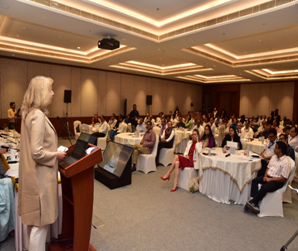 At the Inception Stakeholder Workshop held here today, Marisa Gerards, Ambassador of the Netherlands to India, stated that the Centre of Excellence will play a key role in URMP preparation and emphasised the integration of the Dutch “Water as Leverage” concept into the URMP framework to enhance its robustness and practicality. She highlighted the India-Netherlands partnership in water management, and also praised the River Cities Alliance for galvanising collective action around river health and underscored the significance of creative public engagement in addressing urban water crises.
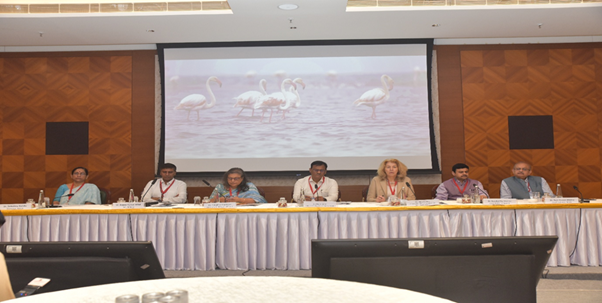
The workshop, organised by the NMCG under the Ministry of Jal Shakti, in collaboration with the National Institute of Urban Affairs (NIUA) and the Government of the National Capital Territory (NCT) of Delhi, marked the formal initiation of a coordinated planning approach to clean and rejuvenate the Yamuna River. The event was presided over by the Chief Secretary of Delhi, Dharmendra, with Secretary of the Department of Water Resources, River Development and Ganga Rejuvenation, Debashree Mukherjee, serving as the Guest of Honour. Participants included the Director General of NMCG, Rajeev Kumar Mital, Chief Executive Officer of the Delhi Jal Board (DJB), Kaushal Raj Sharma, Rebecca Epworth from the World Bank, Laura Sustersic, Project Director at GIZ, Rajiv Ranjan Mishra, Chief Advisor for Water and Environment at NIUA, Sandeep Mishra, Member Secretary of the Delhi Pollution Control Committee, Debolina Kundu, Director at NIUA, and Professor C.R. Babu, Professor Emeritus at the University of Delhi.
The workshop brought together representatives from 14 key departments and agencies, forming a Multi-Stakeholder Group established by the Department of Urban Development, Government of NCT of Delhi, to foster a shared understanding of the URMP approach and its development process for Delhi.
Director General of NMCG, Rajeev Kumar Mital, emphasised the need for a collaborative approach to restore the Yamuna River, describing the URMP as a dynamic planning and action tool grounded in scientific analysis, risk-based assessment, and stakeholder engagement, designed to integrate river-sensitive thinking into Delhi’s urban planning for long-term sustainability.
Chief Secretary Dharmendra stated that the Yamuna’s improvement is essential for Delhi’s progress, calling for immediate, tangible outcomes through a practical and actionable plan. He highlighted the river’s role as the city’s lifeline and urged stakeholders to address challenges such as upgrading drain treatment and sewage infrastructure while fostering a renewed connection between Delhi and its river to enhance residents’ quality of life.
Secretary Debashree Mukherjee noted that a revitalised Yamuna would improve the health and well-being of Delhi’s residents, emphasising water management’s role in urban planning amid climate change. She described the URMP as a collective movement involving government, media, partner institutions, and citizens to restore the river and ensure a resilient future for the capital.
Rebecca Epworth from the World Bank presented an Australian case study on urban river management, noting that the URMP’s elements, such as stakeholder involvement and institutional frameworks, address past urban planning errors. The World Bank expressed its support for URMP development. Representatives from IIT Delhi highlighted the role in flood risk assessment and management, a key focus of the URMP. Professor C.R. Babu underscored the importance of nature-based solutions and biodiversity for Yamuna rejuvenation.
The workshop outlined the URMP’s structure and roadmap, to be jointly prepared by NIUA and IIT Delhi with support from the forthcoming Centre of Excellence. The plan will address pollution, wetland management, encroachments, and water reuse through coordinated multi-agency efforts, monitored via a new Urban River Management Index tracking ten key domains. The initiative will culminate in actionable projects and Detailed Project Reports, funded through government resources, viability gap funding, and Urban Local Body contributions.
Interactive sessions, quizzes, and activities during the workshop emphasised public participation in river restoration. The success of the URMP depends on sustained, cross-sectoral cooperation and broad engagement. The workshop underscored Delhi’s commitment to reclaiming the Yamuna as the heart of a resilient and vibrant city, marking a shift from fragmented efforts to a unified, action-oriented vision for river restoration, supported by scientific insight, international collaboration, and active citizen involvement.
– global bihari bureau