Mylakkadu RS Wall Failure Triggers 378-site Soil Review
NHAI Rolls Out Massive Soil Tests
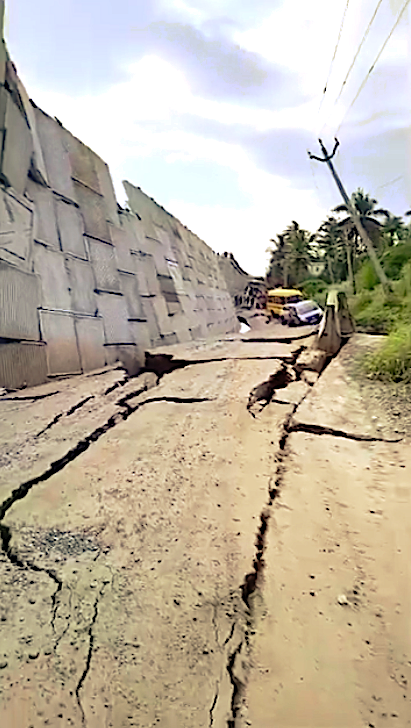
Kollam: The National Highways Authority of India (NHAI) continues to investigate the collapse of a reinforced-soil (RS) wall on National Highway (NH) 66 near Mylakkadu, Kollam district, which occurred on December 5, 2025. The wall, forming the approach to a vehicular underpass on the Kollam–Kadambattukonam project, subsided onto the service road, trapping several vehicles, including a school bus. All passengers were safely evacuated. Preliminary assessments indicate that the failure was caused by deep-seated shear or bearing-capacity issues, with weak soil at the foundation unable to support the fill.
Following the incident, NHAI temporarily suspended Shivalaya Constructions, the concessionaire, and the independent engineer Feedback-Satra Joint Venture from bidding on future projects. Show-cause notices were issued for potential debarment, and the project manager of the concessionaire and the resident engineer of the independent engineer were removed from the site. A high-level expert committee, including Dr Jimmy Thomas of the Indian Institute of Technology (IIT) Kanpur and Dr T.K. Sudheesh of IIT Palakkad, visited the site on 6 December to investigate the causes of the failure and suggest remedial actions. Recommendations from an earlier committee formed after the Kooriyad RS wall incident in May 2025 are also being implemented.
The Mylakkadu collapse occurred on reclaimed paddy fields and wetlands, areas known to have low bearing capacity. Residents had previously raised concerns about waterlogging and soil instability. Standard Penetration Test (SPT) values at some points were extremely low. Verified facts indicate that insufficient foundation strength and inadequate soil preparation were central to the failure.
Traffic on the affected stretch was temporarily suspended, resulting in detours and delays for commuters and commercial vehicles. Public scrutiny of NH‑66 safety intensified, with calls for inspections and audits of other reinforced-soil wall sections along the corridor.
Under NHAI norms, subgrade soil must be tested at least every few kilometres or whenever soil type changes, using field and laboratory evaluations including SPT, California Bearing Ratio (CBR), compaction, Atterberg limits, permeability, and deeper boreholes in weak soils. Verified reports suggest that while initial soil tests were conducted, coverage may have been insufficient or recommended soil-strengthening measures inadequately implemented. NHAI’s current initiative to test RS wall foundations across NH‑66 now addresses these gaps, with the first 100 sites targeted within a month and the remaining locations within three months.
Based on these comprehensive field and lab reports, the design and construction of every RS Wall will be re-checked. RS Walls will only be accepted after this process is complete and quality is confirmed. Accountability will be fixed for all lapses found during this review. The timeline of events underscores the significance of geotechnical diligence. Prior warnings from expert panels highlighted weak soils and recommended reinforcement measures. The wall collapse on December 5, 2025, prompted the expert committee visit on December 6, followed by deployment of multiple geotechnical agencies to conduct soil testing, review RS wall designs, and implement remedial measures, including potential dismantling and reconstruction. Safety audits for other elevated-road projects along NH‑66 have been expanded to proactively identify further structural risks.
The incident emphasises the importance of rigorous, systematic soil testing and adherence to geotechnical norms, particularly in Kerala’s coastal, water-prone terrain. Verified investigations, audits, and laboratory analyses will determine not only the restoration of the Mylakkadu site but also influence construction and monitoring standards for reinforced-soil walls across India, aiming to prevent similar failures and ensure public safety.
– global bihari bureau