 By Brijesh Vijayvargia*
Chambal Sanctuary Protected: Mining Banned
Jaipur/Kota/Bhilwara/Bhopal: The National Green Tribunal’s Central Zonal Bench in Bhopal delivered a landmark 120-page judgment on October 16, 2025, in Original Application No. 189/2023(CZ), Babu Lal Jajoo Vs. State of Rajasthan & Ors., imposing a total environmental compensation of Rs 7.20 crore equally split between Nagar Nigam Kota and Kota Super Thermal Power Station for their pivotal roles in polluting the Chambal River, recognised as India’s only Gharial Sanctuary.
India’s flagship gharial conservation initiative, the Chambal River Sanctuary, established in 1979 across Madhya Pradesh, Rajasthan, and Uttar Pradesh, spanning 5,400 square kilometres, bans fishing, mining, and industry in core zones with anti-poaching patrols and enforced e-flows like the mandated 5,000 cusecs weekly, underpinning the species’ recovery through natural breeding and habitat protection under tri-state collaboration. Captive breeding at centres like Kevlar in Uttar Pradesh and Madhya Pradesh’s Gharial Project, run by the Madras Crocodile Bank Trust and forest departments, has hatched thousands of eggs since the 1970s, head-starting juveniles for >80% survival before reintroduction of over 1,000 since 1990 by the Wildlife Institute of India, with nest protection yielding 70-90% hatch rates and Wildlife Protection Act Schedule I prohibitions.
The NGT order, reserved following detailed hearings concluded on October 10, 2025, was authored by Judicial Member Hon’ble Justice Sheo Kumar Singh and Expert Member Sudhir Kumar Chaturvedi, who underscored the river’s severe degradation caused by untreated sewage from 18 identified polluted drains, unchecked industrial effluents, rampant illegal sand mining, and widespread encroachments along its banks.
The tribunal invoked core environmental principles, including the Polluter Pays Principle, Precautionary Principle, and the Public Trust Doctrine as established in the Supreme Court’s ruling in M.C. Mehta v. Kamal Nath (1997), holding respondents accountable for violations of the Water (Prevention and Control of Pollution) Act, 1974, and the Solid Waste Management Rules, 2016. It highlighted the Chambal’s ecological significance as a biodiversity hotspot supporting endangered species such as gharials, whose population has shown a marginal increase from 900 individuals in 2020 to 976 in 2022, alongside Gangetic dolphins, both now imperiled by toxic discharges, habitat fragmentation, and altered river morphology that also jeopardizes drinking water supplies for millions across districts including Kota, Jaipur, Bhilwara, Bundi, and adjacent regions.
Kota’s municipal sewage management system exposes a profound infrastructural deficit, with the city generating 236.17 million liters per day (MLD) of wastewater yet treating only 80.84 MLD through eight sewage treatment plants boasting a total capacity of 158 MLD, thereby allowing a staggering 155.33 MLD of untreated effluent to cascade into the river via major drains like Shaji Dada ka Bada Nala, Adharshila ka Bada Nala, Godavari Dharm Nallah, and Kansua Nallah. Rajasthan State Pollution Control Board (RSPCB) monitoring data embedded in the judgment reveals critical parameter exceedances at these discharge points, including biochemical oxygen demand (BOD) levels climbing to 37.4 mg/L, chemical oxygen demand (COD) up to 184 mg/L, and fecal coliform counts exceeding 1,600 most probable number (MPN) per 100ml, flagrantly breaching Central Pollution Control Board (CPCB) Class C standards designated for drinking water sources post-conventional treatment and disinfection.
Specific STP performance failures were dissected, with facilities at Balita and Sajidheda recording elevated phosphate concentrations of 1.48 mg/L against a permissible limit of 1 mg/L and total suspended solids at 39 mg/L surpassing the 20 mg/L threshold, indicative of operational lapses and inadequate maintenance that perpetuate non-compliance with prior NGT directives aimed at preserving the Chambal’s pristine quality. The judgment critiques the partial rollout of planned 300 MLD wastewater treatment under ongoing projects, where only 56 MLD remains functional, exacerbating the untreated overflow and linking it to broader administrative inertia in urban planning and waste management.
Industrial pollution from Kota Super Thermal Power Station (KSTPS) drew sharp scrutiny for its massive abstraction of 2,989,715 kiloliters per day (KLD) from the Chambal, contrasted against discharges of untreated boiler blowdown and once-through cooling water amounting to 1,056,000 KLD across Stages I to III through Mix Drains I and II, generating thermal pollution with effluent temperatures exceeding intake by over 5°C in direct contravention of consent stipulations under the Water Act, 1974. While entities like DCM Shriram Integrated Complex and Shriram Rayons possess RSPCB approvals for treated outflows of 8,070 KLD and 4,125 KLD respectively, the tribunal observed these still integrate into the contaminated municipal network, and dismissed KSTPS’s interim measures—such as a forthcoming 7,200 KLD effluent treatment plant targeted for April 2025 and cooling tower retrofits—as insufficient absent an instantaneous cessation of raw effluent releases.
The judgment references a pivotal show-cause notice issued to KSTPS on March 11, 2024, for flouting Ministry of Environment, Forest and Climate Change notifications from 2015, along with subsequent amendments in 2021 and 2022, which mandate stringent emission controls and zero-liquid discharge protocols for thermal power plants, thereby reinforcing the need for comprehensive upgrades to align with national thermal power sector norms.
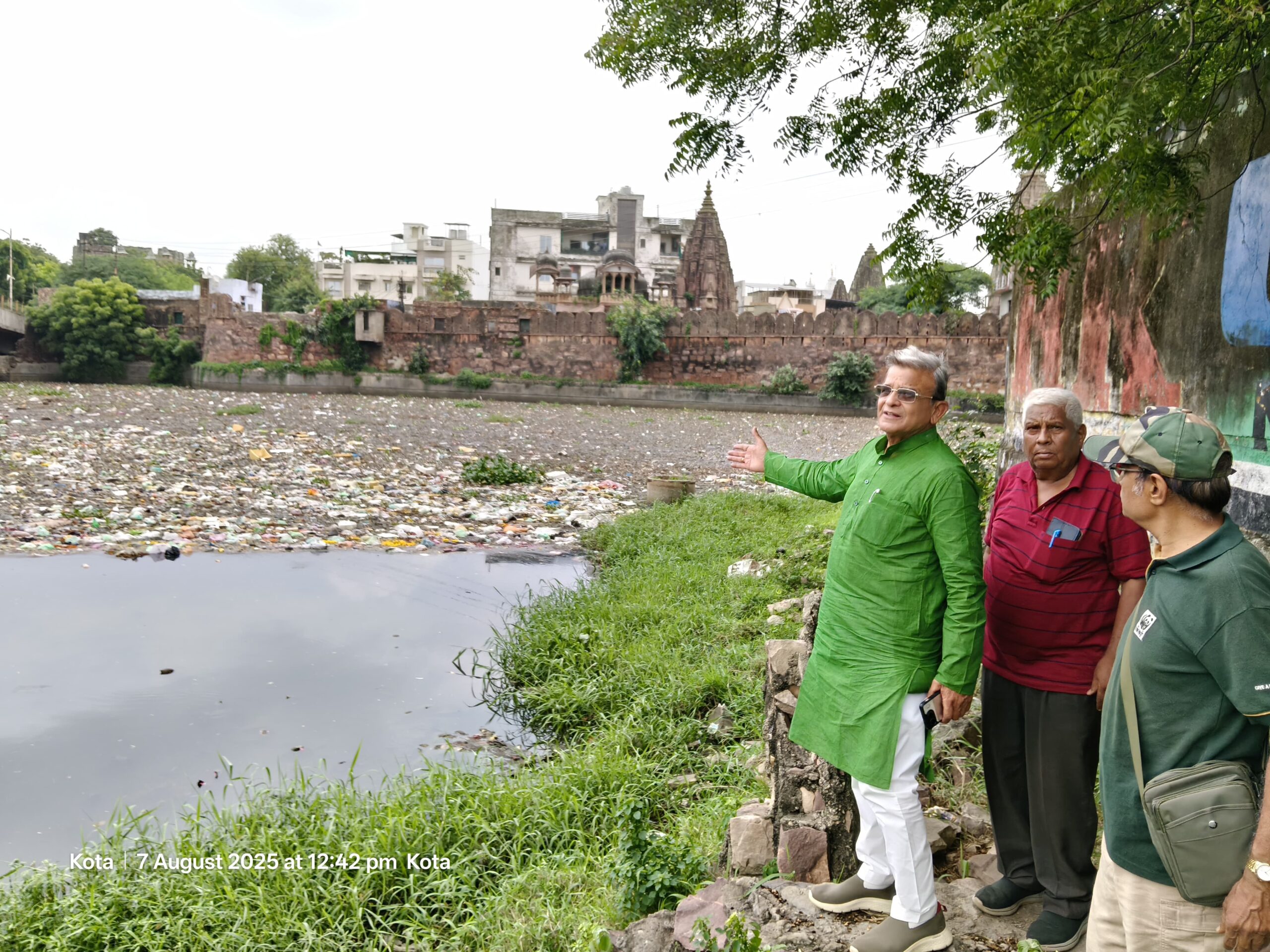
Pivotal evidence marshaled by applicant Babu Lal Jajoo, ably advocated by Diksha Chaturvedi, underpinned the tribunal’s findings, encompassing GPS-tagged photographs and videos capturing the 18 drains disgorging black, plastic-clogged sewage, bolstered by a 2019 Rajasthan Technical University contamination analysis, the Ministry of Jal Shakti’s 2021 river pollution assessment, and exposés in Times of India and Dainik Bhaskar from 2018 to 2023 chronicling crocodile fatalities from chemical accumulation and an illicit fishing trade generating Rs 12 crore yearly.
A South Asia Network on Dams, Rivers & People report dated May 8, 2022, cited in the order, unmasks pervasive illegal sand mining proximate to Rajghat bridge in Morena and stockpiling at Bhupura and Nagra sites, persisting despite Supreme Court prohibitions and devastating breeding sandbanks vital for gharials, Indian skimmers, and roofed turtles through irreversible habitat obliteration.
Further, a February 27, 2022, Times of India piece references a Rajasthan State Biodiversity Board investigation quantifying illegal fishing revenues at Rs 5.28 crore from 55 boats and Rs 7 crore via 128 tube-and-net operators, aggravated by lax forest patrols and employment of blasting methods that amplify ecological harm.
Environmental compensation is calibrated at Rs 5 lakh monthly per offending drain or STP commencing April 1, 2020, aggregating to Rs 3.60 crore apiece for Nagar Nigam Kota—reprehended for linking merely 49,890 of 141,568 households to 750 km out of requisite 1,053 km sewer infrastructure—and KSTPS, with RSPCB empowered to collect into a dedicated restoration fund, subject to offsets upon compliance audits and backed by asset attachment for delinquencies.
The order spotlights 76 illegal sand mining prosecutions in Kota spanning three years, yielding Rs 31.5 lakh in penalties, though 28 linger unresolved, fomenting bank scouring and biodiversity erosion, and compels fidelity to the 2016 Sustainable Sand Mining Management Guidelines and 2020 Enforcement & Monitoring Guidelines, with threats of operational shutdowns for recidivism. It also flags defaults in tree afforestation pledges under the Kota-Chittorgarh-Bundi four-lane highway initiative and malfunctions at purification setups like Sagidehra, permitting soiled water infiltration contrary to NGT protocols.
Nagar Nigam Kota is enjoined to secure universal sewer linkages and reroute all nallahs to STPs by March 2026, embedding the Ministry of Housing and Urban Affairs’ River Centric Urban Planning Guidelines, encompassing six-month floodplain demarcation, outright bans on riverine brick kilns, bed mining, and solid waste incursions. The Environment Secretary is directed to assemble a competent authority panel to eradicate encroachments and illicit mining, devising a phased rejuvenation blueprint integrating vegetative rehabilitation, soil-moisture preservation, and engineering solutions to perpetuate e-flows at 5,000 cusecs weekly, indispensable for pollutant attenuation and quality amelioration under the Rs 258.48 crore Namami Gange scheme that has serviced just 36 MLD demands.
Fisheries and Forest Departments must impose an absolute prohibition on pernicious fishing tactics involving chemicals, electrocution, explosives, or fine-meshed nets—substantiated by seven incidents and 63.45 kg contraband seizures—while instituting buffered zones for cremation sites equipped with sanitation mandates to curb organic loadings. Irrigation, Water Resources, and Forest entities are to forge green belts riverside within six months, synchronising e-flow stewardship to shield aquatic realms, as the ruling accentuates the Chambal’s centrality amid Kota’s burgeoning industrial-educational milieu and undercounted transient demographics beyond 2011 census figures.
RSPCB and District Collector Kota should shoulder oversight for eliminating untreated inflows, tendering quarterly CPCB updates, culminating in application disposal to expedite remediation over protracted adjudication. The tribunal extolled Diksha Chaturvedi’s virtuoso advocacy, lauding her legal acumen, drafting precision, preparatory diligence, persuasive oratory, environmental jurisprudence devotion, and justice fervour that propelled the proceedings via exhaustive inquiry and evidentiary rigour.
Babu Lal Jajoo acclaimed the verdict as a watershed for revitalising the river’s essence, attributing its force to the bench’s endorsement of his fieldwork.
*Senior journalist